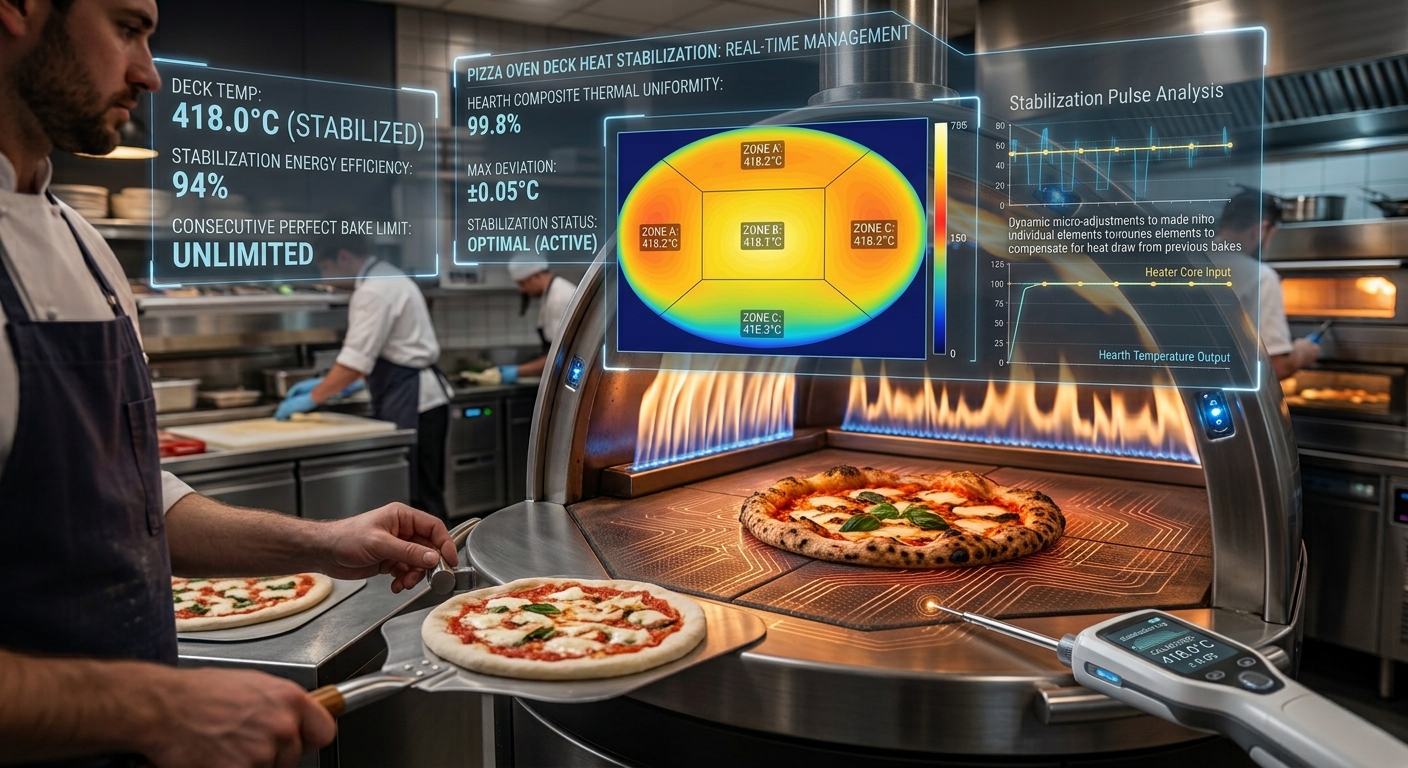
The pursuit of the perfect Neapolitan pizza, with its blistered crust and perfectly cooked toppings, hinges on one crucial element: a pizza oven with a stable deck temperature. A fluctuating heat source leads to inconsistent results, burning the bottom of your pizza while leaving the top undercooked, or vice-versa. Achieving that coveted even bake is not just about the oven’s maximum temperature, but its ability to maintain that temperature consistently, especially on the cooking surface itself. This is where understanding and implementing pizza oven deck heat stabilization becomes paramount for any serious pizza maker, whether in a professional kitchen or a backyard setup.
This deep dive explores the science and practical applications of stabilizing your pizza oven’s deck temperature. We’ll cover the factors influencing heat retention, materials that play a vital role, and techniques to ensure your oven consistently delivers that perfect pizza crust, every single time.
Mastering this aspect of pizza oven operation can elevate your pizza-making from amateur to artisan, ensuring each slice is a testament to your dedication and skill.
Key Takeaways
- Deck Material Matters: Different materials like fire brick, cordierite, and cast iron offer varying heat retention and thermal conductivity, significantly impacting deck temperature stability.
- Insulation is Crucial: Proper insulation around and beneath the oven deck prevents heat loss, allowing the deck to reach and maintain higher, more stable temperatures.
- Thermal Mass: A heavier, denser deck material absorbs and stores more heat, releasing it gradually and evenly to stabilize cooking temperatures.
- Preheating Time: Adequate preheating is essential for the entire oven, including the deck, to reach its optimal working temperature and build thermal mass.
- Fuel Management: Consistent fuel supply and management (wood, gas, or electric) are key to maintaining a steady ambient oven temperature, which directly influences deck heat.
- Ventilation and Airflow: Controlling airflow is vital for combustion efficiency and heat distribution, preventing hot spots and ensuring even heating of the deck.
- Temperature Monitoring: Accurate temperature monitoring of the deck is essential for understanding its behavior and making necessary adjustments.
:max_bytes(150000):strip_icc()/sea-indoor-outdoor-pizza-ovens-primary-nsimpson-32-ea5bb3691d2647e89a0b9eb7fbc30e17.jpeg "Pizza Oven Deck Heat Stabilization: How to Maintain Consistent Baking Temperature 2")
Credit: www.seriouseats.com
Understanding Heat Dynamics In Pizza Ovens
The heart of any pizza oven lies in its ability to generate and retain heat. For the deck, this means not just reaching a high temperature, but holding it steady under the thermal load of a pizza. This is a complex interplay of heat transfer mechanisms: conduction, convection, and radiation.
Conduction: Heat Transfer Through Contact
Conduction is the primary mode of heat transfer to the pizza base from the oven deck. Heat energy moves from the hotter deck material to the cooler pizza dough through direct physical contact. The thermal conductivity of the deck material dictates how efficiently heat is transferred. Materials with high thermal conductivity, like certain types of stone, will transfer heat quickly. However, for stability, we also need materials with good thermal mass, meaning they can absorb and store a significant amount of heat.
Convection: Heat Transfer Through Fluid Movement
Convection involves the movement of hot air (or gases) within the oven cavity. Hot air circulates around the pizza, cooking the top and sides. In a wood-fired oven, the rising convection currents carry heat from the fire or burner and distribute it throughout the oven.
Efficient convection ensures that the ambient temperature of the oven is high enough to support the deck’s cooking temperature and prevents significant temperature drops when the oven door is opened.
Radiation: Heat Transfer Through Electromagnetic Waves
Radiation is the direct transfer of heat energy via electromagnetic waves. The hot dome of the oven and the flames (in a wood-fired oven) radiate intense heat downwards onto the pizza. This is crucial for achieving the characteristic char and rapid cooking of traditional pizzas.
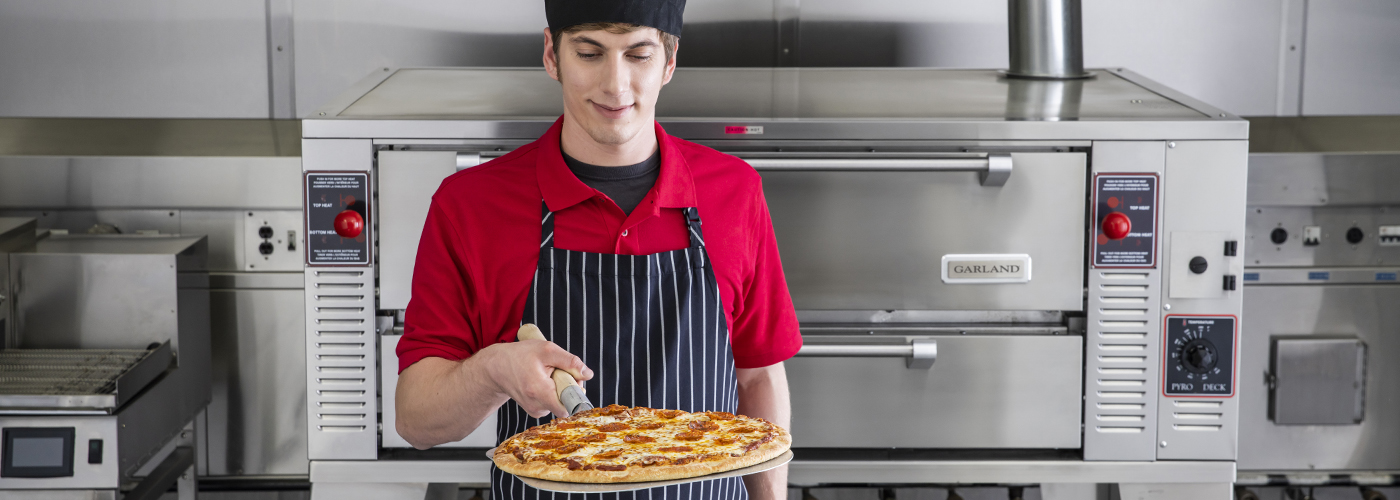
A stable deck temperature complements radiant heat by ensuring the base cooks at the same rate as the top, preventing a pale, undercooked bottom or a burnt top.
Credit: www.garland-group.com
The Role Of Deck Materials In Heat Stabilization
The material chosen for your pizza oven’s deck is arguably the most significant factor in its ability to stabilize heat. Different materials possess unique properties that affect their heat retention, thermal conductivity, and durability under extreme temperatures.
Fire Brick: The Traditional Workhorse
Fire bricks are a staple in traditional pizza ovens, especially wood-fired ones. They are made from refractory clay and are designed to withstand very high temperatures and thermal shock.
- Pros: Excellent thermal mass, meaning they absorb and store a large amount of heat, releasing it slowly and evenly. This is crucial for maintaining a stable deck temperature during cooking cycles. They are also highly durable and resistant to thermal cycling.
- Cons: Can take a long time to preheat fully due to their density. Their thermal conductivity isn’t as high as some specialized materials, meaning heat transfer to the pizza might be slightly slower initially. They can also be prone to cracking if subjected to rapid temperature changes or if they are of lower quality.
- Typical Use: The primary cooking surface in most wood-fired brick ovens.
Cordierite: The Modern Performer
Cordierite is a synthetic ceramic material that has gained popularity for pizza oven decks, particularly in portable and gas-fired ovens. It offers a balance of properties that make it effective for heat stabilization.
- Pros: Excellent thermal shock resistance, meaning it can handle rapid temperature changes without cracking, which is beneficial for frequent use and quick cool-downs. It generally has good thermal conductivity, leading to faster heat transfer to the pizza. It’s also lighter than traditional fire brick.
- Cons: While good, its thermal mass might be slightly less than dense fire brick, potentially leading to a more noticeable temperature drop when a pizza is placed on it, especially in ovens with less overall thermal mass. It can be more expensive than standard fire bricks.
- Typical Use: Common in manufactured pizza ovens (both indoor and outdoor), pizza stones for home ovens, and some commercial pizza ovens.
Cast Iron: The Heat Conductor
Cast iron is known for its excellent heat retention and conductivity, making it a viable option for pizza oven decks, though less common than stone or brick for full decks.
- Pros: Exceptional thermal conductivity, transferring heat very quickly and evenly to the pizza base. It holds heat very well once up to temperature.
- Cons: Very heavy, making ovens with cast iron decks less portable. It can be prone to rust if not seasoned and maintained properly. Its thermal mass is significant but can sometimes lead to a very aggressive bottom bake if not managed carefully. It can also be more susceptible to thermal shock than cordierite if subjected to extreme and rapid temperature changes.
- Typical Use: Often used for griddle plates or as inserts in some commercial ovens, but less common as the primary deck material for traditional pizza ovens.
Other Materials And Considerations
While fire brick, cordierite, and cast iron are the most common, other materials like silica-based refractory materials and high-alumina bricks are also used in highly specialized or industrial ovens for their extreme heat resistance and stability. The thickness of the deck material is also a critical factor; thicker decks have greater thermal mass and will retain heat more effectively.
The Importance Of Insulation And Thermal Mass
Beyond the deck material itself, the overall construction of the pizza oven plays a vital role in deck heat stabilization. Insulation and thermal mass are two interconnected concepts that are fundamental to achieving and maintaining consistent high temperatures.
Insulation: Keeping The Heat In
Insulation is the barrier that prevents heat from escaping the oven cavity. A well-insulated oven loses heat much slower, allowing the deck to stay hotter for longer. This is critical for several reasons:
- Reduced Fuel Consumption: Less heat loss means the oven requires less fuel to maintain its temperature, making operation more efficient.
- Consistent Temperatures: Insulation helps buffer against external temperature fluctuations and prevents rapid temperature drops when the oven door is opened.
- Even Heating: By trapping heat, insulation promotes more uniform heating of the entire oven interior, including the deck.
Common insulating materials used in pizza ovens include:
- Ceramic Fiber Blanket: This is a highly effective, lightweight insulation material that can withstand very high temperatures. It’s typically layered around the oven dome and beneath the deck.
- Calcium Silicate Board: Another high-temperature resistant insulation board that provides excellent thermal and structural support.
- Perlite or Vermiculite: These lightweight, granular materials are often mixed with cement to create insulating concrete layers, particularly beneath the oven floor.
Pro Tip: For backyard pizza ovens, ensuring at least 2-4 inches of high-quality ceramic fiber blanket insulation beneath the oven deck and around the dome is crucial for optimal performance and heat stabilization.
Thermal Mass: The Heat Battery
Thermal mass refers to a material’s ability to absorb, store, and release heat energy. Materials with high thermal mass, like dense fire bricks or thick concrete, act as a “heat battery.” Once heated, they store a large amount of thermal energy, which they then radiate back into the oven cavity and conduct to the pizza.
- How it helps deck stabilization: A deck with high thermal mass will experience less of a temperature drop when a cool pizza is placed on it. It can “absorb” the initial thermal shock and continue to provide consistent heat to the base.
- Oven Dome vs. Deck Mass: While the oven dome also contributes to thermal mass and radiant heat, the deck’s thermal mass is specifically important for the bottom crust. A well-balanced oven will have sufficient thermal mass in both the dome and the deck.
- Preheating is Key: The effectiveness of thermal mass is directly tied to proper preheating. The materials need time to absorb enough heat energy to become fully saturated. A common mistake is not preheating long enough, leading to insufficient thermal mass being “charged.”
Example: Consider two ovens, both preheated to 700°F (370°C). One has a thin fire-clay deck with minimal insulation, while the other has a 4-inch thick fire brick deck with substantial ceramic fiber insulation. When a pizza is placed in the first oven, the deck temperature might drop to 550°F (290°C). In the second oven, the temperature might only drop to 650°F (340°C), allowing for a much better base bake.

Credit: pizzamaster.com
Preheating Strategies For Optimal Deck Temperature
Preheating is not merely about getting the oven hot; it’s about saturating the oven’s thermal mass, including the deck, with heat energy. This process requires patience and a strategic approach to ensure consistent results.
The Importance Of Gradual Heating
For ovens built with traditional refractory materials like fire brick, gradual preheating is essential to prevent thermal shock and potential cracking.
- Initial Firing: For a brand-new oven or one that has been cold for an extended period, the first few fires should be at lower temperatures for shorter durations. This allows the moisture trapped within the refractory materials to escape slowly. Rapid heating can turn this moisture into steam, which expands and can damage the oven structure.
- Incremental Temperature Increase: Over several uses, gradually increase the oven temperature and duration. This process “cures” the oven, making it more resilient to high temperatures and improving its thermal performance.
- Understanding Your Oven: Each oven is unique. Learning its preheating characteristics, how long it takes to reach specific temperatures and how long it holds heat, is part of becoming a proficient pizza maker.
Sufficient Preheating Time
The most common pitfall in achieving stable deck temperatures is inadequate preheating. The deck needs time to absorb and store enough heat energy to counteract the cooling effect of the pizza dough.
- Minimum Time: For most wood-fired or high-temperature gas ovens, a minimum preheating time of 60-90 minutes is often recommended to ensure the deck and dome are fully saturated with heat. Portable gas ovens may have shorter preheating times, but consistency is still key.
- Visual Cues: In wood-fired ovens, you’ll often see the dome turn white or clear as soot burns off, indicating it’s reached high temperatures. For the deck, this is harder to judge visually, hence the reliance on time and temperature monitoring.
- Temperature Monitoring: Using an infrared thermometer to check the deck temperature directly is the most reliable method. Aim for your target cooking temperature (typically 700-900°F or 370-480°C for Neapolitan-style pizza) on the deck surface.
Fuel Management During Preheating
The type of fuel and how it’s managed significantly impacts preheating efficiency and subsequent heat stabilization.
- Wood-Fired Ovens:
- Building the Fire: Start with smaller kindling and gradually add larger pieces of seasoned hardwood. Maintain a brisk fire that heats the dome and walls effectively.
- Maintaining Heat: Once the oven is hot, you’ll typically push the burning embers to the back or side of the oven. The residual heat from the dome and walls, combined with the embers, will maintain the deck temperature. Consistent feeding of small pieces of wood can help maintain ambient temperature without creating excessive flames that could scorch the pizza top.
- Gas-Fired Ovens:
- Burner Control: Gas ovens rely on precise burner control. During preheating, the burner is typically set to maximum to rapidly bring the oven up to temperature.
- Post-Preheat Adjustment: Once preheated, the burner setting might be reduced to maintain temperature, or the oven may rely on retained heat from its refractory materials. Understanding how your specific gas oven’s burner system works is key to maintaining stability. Some have burners that run continuously at a lower setting, while others cycle on and off.
- Electric Ovens:
- Element Power: Electric ovens rely on heating elements. Ensure the elements are functioning correctly and that the oven has sufficient time to heat soak.
- Thermostat Accuracy: The accuracy of the oven’s thermostat is crucial for maintaining a stable temperature.
Techniques For Enhancing Deck Heat Stability
Even with the right materials and adequate preheating, certain techniques can further enhance your pizza oven’s deck heat stabilization. These involve managing the cooking process itself to minimize temperature fluctuations.
Managing The Pizza Load
The number and size of pizzas you cook consecutively will impact the deck temperature.
- Single Pizza Cooking: For the first pizza, the deck should be at its hottest. As you cook more pizzas, the deck will inevitably cool slightly with each addition.
- Staggered Cooking: If cooking multiple pizzas, allow a brief recovery period (a few minutes) between each pizza. This gives the deck time to reabsorb heat from the oven walls and any residual embers.
- Pizza Size and Thickness: Larger or thicker pizzas will draw more heat from the deck than smaller, thinner ones. Adjust your cooking time accordingly.
Airflow And Ventilation Control
Proper airflow is critical for efficient combustion and heat distribution. In wood-fired ovens, controlling the chimney damper and the oven door opening can help manage heat.
- Wood-Fired Ovens:
- Door Management: Minimizing the time the oven door is open prevents heat from escaping and cold air from entering. Some cooks use a partially opened door or a specialized pizza peel with a handle to act as a temporary door.
- Chimney Draft: A good draft pulls hot air and combustion gases through the oven, contributing to convection and maintaining high temperatures. However, too strong a draft can pull heat away too quickly.
- Gas-Fired Ovens:
- Ventilation Ports: Many gas ovens have adjustable vents. Understanding how these affect airflow and temperature is important. Closing vents can help retain heat, but excessive closure can starve the burner of oxygen, leading to incomplete combustion and soot.
Using A Pizza Peel Effectively
The pizza peel is not just for launching pizzas; it can be a tool for managing heat.
- Pre-warming the Peel: Some experienced cooks will briefly place their peel inside the hot oven before launching the pizza. This warms the peel, reducing the initial cooling effect on the deck when the pizza is transferred.
- Quick Transfers: Aim for swift, decisive movements when launching and retrieving pizzas. The less time the oven door is open, the better for heat retention.
Rotating Pizzas For Even Cooking
Even with a stable deck, the heat distribution within the oven might not be perfectly uniform.
- Rotation: Regularly rotating the pizza 180 degrees during cooking ensures that all sides of the crust receive even exposure to the heat source, compensating for any slight variations in deck temperature or radiant heat.
Monitoring Deck Temperature: Tools And Techniques
Accurate temperature monitoring is essential for understanding your oven’s performance and making informed adjustments. Relying solely on guesswork can lead to consistent under or overcooking.
Infrared Thermometers: The Go-to Tool
An infrared thermometer (IR thermometer) is an indispensable tool for any serious pizza maker. These non-contact thermometers measure the surface temperature of objects by detecting the infrared energy they emit.
- How to Use: Aim the thermometer directly at the oven deck surface where you intend to place the pizza. Take readings from multiple spots to identify any hot or cool zones.
- Accuracy Considerations: IR thermometers can be affected by surface reflectivity. Highly polished surfaces might give slightly lower readings. Ensure you are pointing directly at the deck material, not at any debris or ash.
- When to Measure: Measure the deck temperature after the recommended preheating time and just before launching your pizza. Also, measure periodically during cooking if you suspect significant temperature drops.
Oven Thermometers: Ambient Vs. Deck
Many pizza ovens come equipped with an ambient temperature gauge, often located in the dome. While useful for understanding the overall oven environment, it doesn’t directly measure the deck temperature.
- Dome Thermometers: These indicate the air temperature within the oven. For Neapolitan pizza, you want the dome temperature to be high (often 800°F / 425°C or more) to cook the top rapidly, but the deck temperature is equally critical for the base.
- Deck Probes (Less Common): Some high-end commercial ovens might have integrated deck temperature probes, but these are rare in consumer models.
Thermal Imaging Cameras (advanced)
For those seeking the ultimate understanding of heat distribution, a thermal imaging camera can reveal temperature variations across the entire oven deck and dome in real-time. While expensive and perhaps overkill for most home users, they offer unparalleled insights into hot spots and heat flow.
Example: Using an IR thermometer, you might notice your oven deck consistently reads 750°F (400°C) at the front but only 680°F (360°C) at the back. This information allows you to adjust your pizza placement or cooking technique (e.g., rotating the pizza sooner or placing it slightly further back) to achieve a more even bake.
Common Issues And Troubleshooting Deck Heat Stability
Even with the best intentions and equipment, you might encounter challenges in maintaining a stable deck temperature. Understanding common problems and their solutions can save your pizza night.
Rapid Temperature Drop After Pizza Insertion
This is perhaps the most frequent issue. Placing a cool, dense dough onto a hot surface draws a significant amount of heat away.
- Possible Causes:
- Insufficient preheating: The deck hasn’t stored enough heat.
- Deck material has low thermal mass: It can’t hold enough heat.
- Deck is too thin: Lacks sufficient thermal storage capacity.
- Oven insulation is inadequate: Heat dissipates too quickly from the overall structure.
- Solutions:
- Increase Preheating Time: Allow at least an extra 15-30 minutes.
- Use Thicker Deck Material: If possible, upgrade or ensure your oven has a sufficiently thick deck.
- Improve Oven Insulation: Add more ceramic fiber blanket or insulating concrete.
- Preheat the Peel: As mentioned earlier, a warm peel transfers less thermal shock.
- Manage Fuel: For wood-fired ovens, ensure embers are actively contributing heat. For gas, ensure the burner is performing as expected.
Hot Spots Or Uneven Baking
This indicates that heat is not being distributed evenly across the deck.
- Possible Causes:
- Uneven fuel distribution (wood-fired): Embers are concentrated in one area.
- Burner issues (gas-fired): The flame pattern is uneven.
- Deck material inconsistencies: Some areas are denser or have different properties.
- Oven construction flaws: Uneven heating from the dome or walls.
- Solutions:
- Regular Pizza Rotation: Crucial for evening out the bake.
- Adjust Fuel Placement: Rake embers or adjust gas burner settings if possible.
- Check Deck Integrity: Ensure the deck is level and free of cracks that might affect heat flow.
- Use a Peel to Block Heat: Temporarily place a metal peel over a consistently hotter spot to shield the pizza base.
Deck Temperature Too Low, Even After Long Preheating
If your oven simply won’t reach or maintain the desired deck temperature, the issue likely lies with the core heating or insulation.
- Possible Causes:
- Undersized Fuel Source: Not enough wood or gas being supplied.
- Poor Combustion: Insufficient oxygen reaching the fire or burner.
- Major Insulation Failure: Significant heat loss through cracks or degraded insulation.
- Incorrect Material Choice: The deck material itself may not be suitable for the required temperatures.
- Solutions:
- Increase Fuel Input: Use larger pieces of wood or run the gas burner at maximum for longer.
- Improve Airflow: Check vents and chimney for blockages. Ensure adequate air intake for combustion.

As the author of the “Ultimate Pizza Guide: Recipes, Tips & Secrets Revealed,” I’m dedicated to sharing my love for pizza and empowering others to create delicious homemade pizzas with ease. Join me on a journey to uncover the secrets to perfecting your pizza game!


