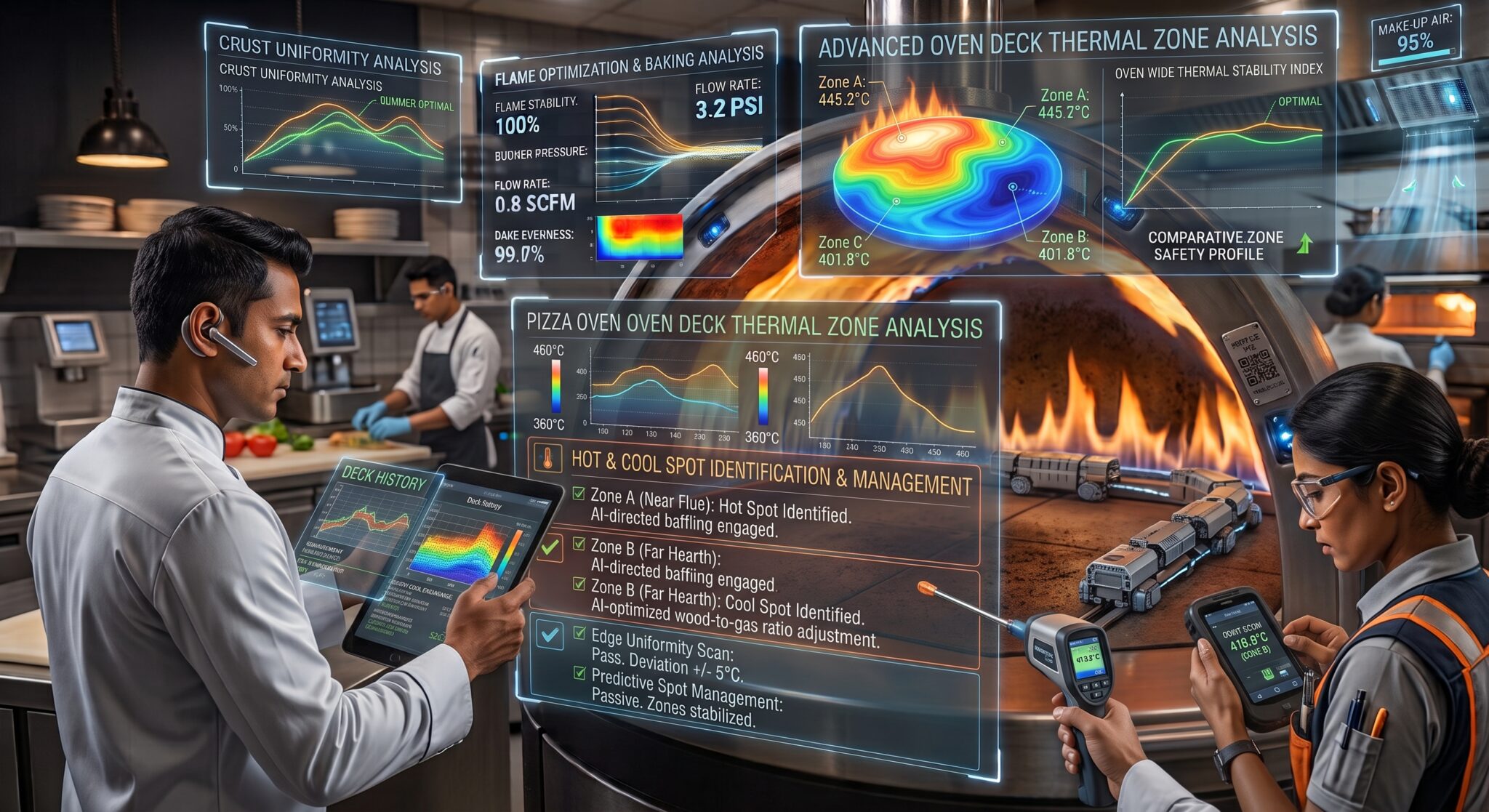
“Pizza Oven Deck Temperature Zones”
Mastering the art of pizza making, especially in a traditional oven, hinges on understanding and controlling the pizza oven deck temperature. This seemingly simple surface is the silent conductor of your culinary orchestra, dictating the crispiness of your crust, the melt of your cheese, and the overall success of your pie. Unlike a conventional home oven, wood-fired and high-temperature pizza ovens create distinct temperature zones across their floor, a phenomenon crucial for achieving authentic Neapolitan-style pizzas and other artisanal creations.
The difference between a perfectly cooked pizza and a charred, undercooked mess often comes down to how effectively you manage these temperature gradients. A skilled pizzaiolo doesn’t just aim for a single oven temperature; they actively utilize the varying heat across the deck to their advantage.
This nuanced approach allows for precise cooking, where different parts of the pizza can be exposed to slightly different heat levels, ensuring a balanced bake. Ignoring these zones means leaving the potential of your oven untapped, leading to inconsistent results and a frustrating baking experience.
Key Takeaways
- Temperature Zones are Crucial: Pizza oven decks are not uniformly hot; they develop distinct temperature zones that skilled bakers utilize.
- Front vs. Back: The deck closest to the oven opening is typically cooler than the area towards the back or center.
- Heat Source Impact: Wood-fired ovens create more pronounced zones due to radiant heat from flames and embers, while gas and electric ovens might offer more consistent, albeit less dynamic, heat.
- Ideal Deck Temperatures: For Neapolitan pizza, deck temperatures between 750°F (400°C) and 900°F (480°C) are ideal, with the crust cooking in 60-90 seconds.
- Measuring Temperature: Infrared thermometers are essential for accurately gauging deck temperatures across different zones.
- Zone Management: Rotating the pizza is key to ensuring even cooking and preventing burning.
- Crust Development: The deck temperature directly impacts oven spring, leoparding, and overall crust texture.
- Oven Type Matters: Each oven type (wood-fired, gas, electric, portable) will have unique temperature zone characteristics.
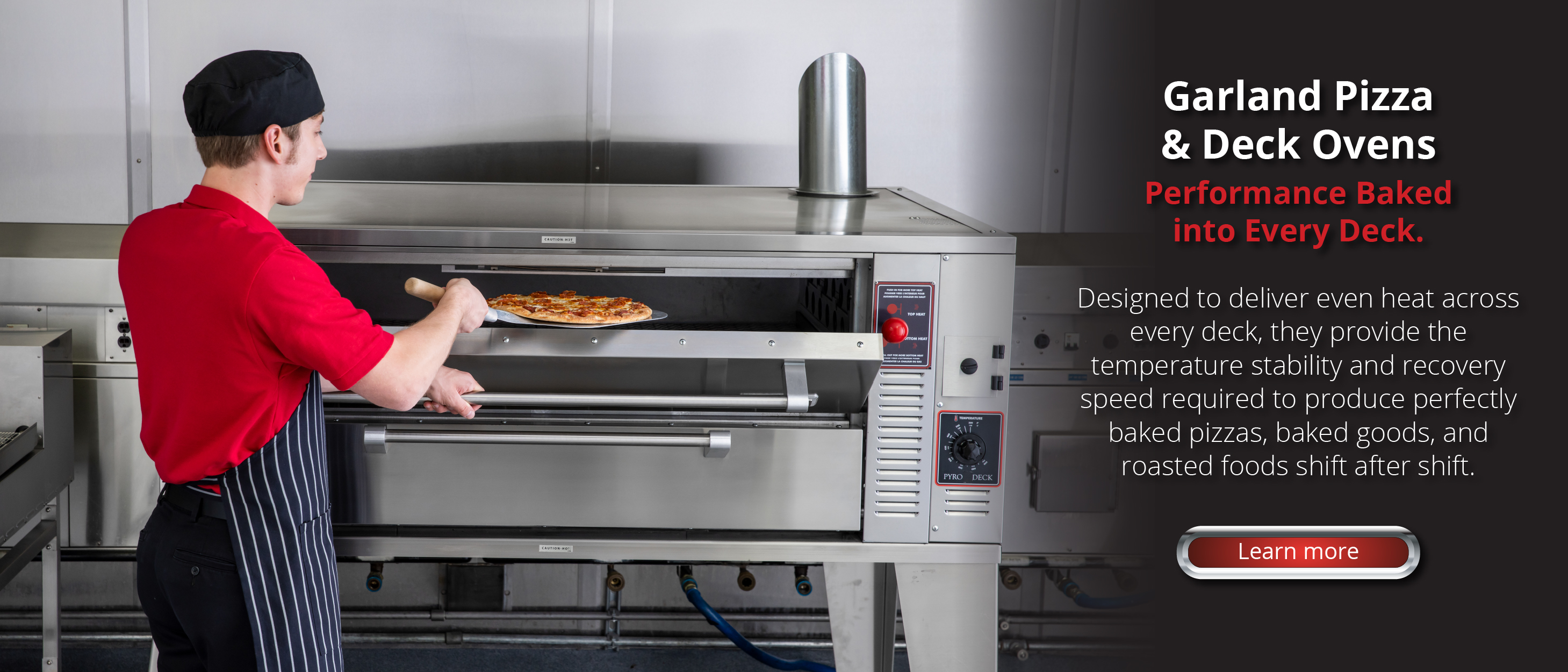
Credit: www.garland-group.com
Understanding Pizza Oven Deck Temperature Dynamics
The floor of a pizza oven, often referred to as the deck or hearth, is where the magic truly happens. It’s the surface that directly contacts your pizza dough, transferring heat from the oven’s interior to the base of your creation. However, this heat transfer isn’t uniform. Several factors contribute to the formation of distinct temperature zones across the deck.
The primary driver of these temperature variations is the oven’s heat source and its placement. In a wood-fired oven, the fire is typically located at the rear or side of the cooking chamber. This means the area closest to the fire will be significantly hotter than the area near the oven mouth.
Radiant heat from the flames and embers directly heats the deck in their vicinity, creating a high-temperature zone. Conversely, the deck closer to the oven opening receives less direct radiant heat and is more influenced by the ambient air temperature within the oven, making it cooler.
Gas and electric ovens, while often designed for more even heat distribution, can still exhibit subtle temperature gradients. The heating elements or burners are positioned to heat the entire oven chamber, but the direct proximity of the cooking surface to these elements can still lead to slight variations.
For example, in a gas oven, the burner might be located at the back, creating a hotter zone there. In electric ovens, the heating elements might be above and below, but the deck itself can still conduct heat differently based on its position relative to the primary heat source.
The Role Of Materials
The material of the deck itself also plays a role. Most traditional pizza ovens use firebricks or cordierite stone. These materials are excellent heat conductors and retain heat well, which is vital for cooking the pizza base quickly. However, they also absorb and radiate heat, contributing to the thermal mass of the deck. Different types of bricks and stones have varying thermal conductivity and heat retention properties, which can subtly influence how quickly and evenly heat is distributed across the deck. A denser, thicker firebrick might hold heat longer and create more stable zones compared to a thinner cordierite slab.
Heat Retention And Recovery
Another critical factor is heat retention and recovery. Once you place a cool pizza onto the hot deck, it absorbs a significant amount of heat. A good deck material will transfer this heat efficiently to the dough. Following this, the deck needs to “recover” its heat from the oven’s ambient temperature. The rate at which it recovers depends on the oven’s overall thermal mass and the intensity of the heat source.
In a high-temperature oven, the deck can lose heat rapidly with each pizza, and the speed at which it regains that heat is crucial for maintaining consistent cooking temperatures for subsequent pies. This recovery rate can also vary across the deck, especially if one area is closer to the direct heat source.
Airflow And Convection
While deck temperature is primarily about conduction, airflow within the oven also contributes to temperature dynamics. Convection currents can move hot air around the oven chamber, influencing the temperature of the deck surface. In wood-fired ovens, the movement of flames and smoke creates significant convection, which can help distribute heat. In gas ovens, the burner’s flame itself can create localized convection. Understanding these airflow patterns can help explain why even areas that appear equidistant from the heat source might behave differently.
Identifying And Measuring Temperature Zones
Accurately measuring the temperature of your pizza oven deck is not just about getting a single reading; it’s about understanding the temperature map of your cooking surface. This map will reveal the distinct zones and guide your pizza placement and rotation strategies. The most effective tool for this is an infrared thermometer.
Using An Infrared Thermometer
An infrared thermometer works by detecting the infrared energy emitted by a surface. You simply point it at the deck, and it provides an almost instantaneous temperature reading. For best results, aim for a thermometer with a distance-to-spot ratio of at least 12:1, meaning at a distance of 12 inches, it measures a spot size of 1 inch. This ensures you’re getting a focused reading of the specific area you’re interested in.
When measuring, take readings at several key locations:
- The Area Closest to the Oven Mouth (Front): This is typically the coolest part of the deck.
- The Center of the Deck: Often a good balance between the front and back.
- The Area Furthest from the Oven Mouth (Back): This is usually the hottest zone, especially in wood-fired ovens.
- Areas Near the Heat Source: If your oven has a specific burner or firebox location, measure directly adjacent to it.
- Areas Away from the Heat Source: Measure the opposite side.
By systematically taking these readings, you’ll develop a clear picture of your oven’s unique temperature profile. For instance, you might find the front of your deck reads 600°F (315°C), the center is 750°F (400°C), and the back is a scorching 900°F (480°C).
This data is invaluable for planning your bake.
Visual Cues
While an infrared thermometer provides precise numbers, experienced cooks also learn to read visual cues.
- Flour or Cornmeal: Sprinkle a small amount of flour or cornmeal on the deck. Observe how quickly it browns or burns in different areas. Darkening quickly indicates a hotter zone, while slower browning suggests a cooler one. Be cautious not to do this too often as it can create a smoky mess.
- Dough Test: Placing small pieces of dough on different areas of the deck and observing their cooking rate can also provide valuable insights.
- Color of the Deck: In some ovens, the deck might appear to have a slightly different color or sheen in hotter areas, though this is a less reliable indicator.
Thermocouple Thermometers
Some high-end pizza ovens come equipped with built-in thermocouple thermometers, which often measure the ambient air temperature inside the oven dome. While useful for general oven temperature, these do not directly measure the deck temperature. You will still need an infrared thermometer for accurate deck readings.
Pro Tip: Regularly check your deck temperatures, especially when your oven is fully preheated and you’re ready to bake. Ovens can fluctuate, and understanding these variations is key to consistent pizza making.
Ideal Deck Temperatures For Different Pizza Styles
The “ideal” deck temperature is highly dependent on the style of pizza you aim to create. Different styles require different cooking times and crust characteristics, which are directly influenced by the heat transfer from the deck.
Neapolitan Pizza
The benchmark for high-temperature pizza making, Neapolitan pizza, is characterized by a soft, tender crust with characteristic charring and blistering known as leoparding. This style is traditionally cooked in wood-fired ovens at extremely high temperatures.
- Ideal Deck Temperature: 750°F to 900°F (400°C to 480°C).
- Cooking Time: 60 to 90 seconds.
At these temperatures, the deck rapidly cooks the bottom of the pizza, creating a crisp exterior while the high ambient oven temperature cooks the toppings and inflates the crust (oven spring). The short cooking time is essential to prevent the crust from drying out and becoming tough.
The intense heat from the deck causes rapid moisture evaporation from the dough’s surface, leading to quick puffing and charring.
New York-style Pizza
New York-style pizza is known for its larger size, foldable crust, and a balance of crispness and chew. It’s typically cooked at lower temperatures than Neapolitan pizza, allowing for a longer bake time.
- Ideal Deck Temperature: 550°F to 650°F (290°C to 340°C).
- Cooking Time: 4 to 6 minutes.
The slightly lower deck temperature allows the crust to cook through more evenly without burning the toppings. The longer bake time enables the development of a more robust crust structure that can support the weight of the toppings and be easily folded.
Roman Pizza (pizza Al Taglio And Tonda Romana)
Roman pizza comes in two main forms: *pizza al taglio* (pizza by the slice, often rectangular and thicker) and *tonda romana* (round, thin, and crispy).
- Pizza al Taglio:
- Ideal Deck Temperature: 500°F to 600°F (260°C to 315°C).
- Cooking Time: 10 to 15 minutes.
This style benefits from a moderate deck temperature to ensure the thicker dough cooks through completely without becoming dense.
- Tonda Romana:
- Ideal Deck Temperature: 600°F to 700°F (315°C to 370°C).
- Cooking Time: 3 to 5 minutes.
This thin, crispy style requires a hotter deck than *al taglio* but less intense than Neapolitan, allowing the dough to crisp up beautifully.
Other Styles (e.g., Detroit-style, Chicago Deep Dish)
These styles are often baked in pans and may use different oven types (conventional ovens, deck ovens with specific pan capabilities).
- Detroit-Style: Typically baked in rectangular pans, often in conventional or deck ovens at temperatures around 450°F to 500°F (230°C to 260°C) for 15-20 minutes. The pan does most of the “deck” work here.
- Chicago Deep Dish: Also baked in deep pans, usually in conventional ovens at 425°F to 475°F (220°C to 245°C) for 25-40 minutes.
The key takeaway is that your pizza oven deck temperature is a primary variable you control to achieve the desired crust texture and cooking time for any given pizza style.

Credit: www.ebay.com
Managing Temperature Zones For Perfect Baking
Once you understand your oven’s temperature zones and the ideal temperatures for your desired pizza style, the next step is to actively manage these zones during the baking process. This involves strategic placement of the pizza and skillful rotation.
The Importance Of Rotation
In almost all high-temperature pizza ovens, especially wood-fired ones, the deck is not uniformly hot. The area closest to the fire will cook the pizza base much faster, risking burning. Conversely, the area further away might cook too slowly, resulting in a pale, undercooked crust. This is where pizza rotation becomes paramount.
The goal is to ensure that all parts of the pizza crust receive adequate and even heat exposure. When you launch your pizza into the oven, you’ll typically place it in a zone that matches your target temperature. However, as it bakes, you’ll need to turn it.
- Wood-Fired Ovens: You’ll likely place the pizza slightly off-center, away from the direct flames but still in a hot area. As the crust begins to cook and puff, you’ll use a pizza peel to rotate it 180 degrees, then perhaps another 90 degrees, to ensure even browning and cooking. The front of the pizza, closer to the oven opening, will naturally be exposed to less intense heat, so rotating it towards the back or center can help it catch up.
- Gas/Electric Ovens: While heat might be more even, rotation is still beneficial. It helps compensate for any slight cooler spots and ensures the crust cooks uniformly, especially around the edges.
A common technique is to launch the pizza into the hottest part of the oven (often the back) and then, after about 30-45 seconds, rotate it towards the cooler front area to finish cooking. This allows the base to set quickly while preventing the edges from burning before the center is cooked.
Strategic Pizza Placement
Where you initially place the pizza is also a strategic decision.
- For Neapolitan: Launch directly into the hottest part of the deck that you’ve measured. You’ll need to be ready to rotate within seconds.
- For New York-Style: You might place it slightly further back than you would for Neapolitan, allowing for a longer, more controlled bake.
Using Different Zones For Different Purposes
Some pizzaiolos even utilize the temperature gradient creatively. For example, they might:
- Sear the base: Place the pizza briefly in the hottest part of the oven to get an initial sear and rapid oven spring.
- Move to a cooler zone: Then slide it to a slightly cooler part of the deck to finish cooking the rest of the crust and toppings without burning.
This technique requires a good understanding of your oven’s heat dynamics and quick reflexes.
Managing Oven Recovery
After baking a pizza, especially multiple pizzas in quick succession, the deck temperature will drop. The recovery time, how long it takes for the deck to return to its target temperature, is critical.
- Wood-Fired Ovens: Adding more wood and allowing the fire to build back up is necessary. You’ll need to monitor the deck temperature with your infrared thermometer and wait until it reaches the desired level before launching the next pizza. This can take 10-20 minutes.
- Gas/Electric Ovens: These often recover heat more quickly, but you still need to be mindful of the temperature drop. Some ovens have indicators for when they’ve reached temperature, but checking the deck with an infrared thermometer is always more accurate.
Understanding and actively managing these temperature zones through rotation and placement is what separates a good pizza maker from a great one. It’s a dynamic process that requires observation, practice, and a willingness to adapt.
Oven Type And Its Impact On Deck Temperature Zones
The type of pizza oven you use significantly influences the nature and intensity of its deck temperature zones. Each heating method, wood, gas, electric, and even portable options, creates a unique thermal environment.
Wood-fired Ovens
These are the traditionalists, celebrated for the unique flavor they impart and the dynamic heat they produce.
- Zone Characteristics: Highly pronounced temperature zones. The area closest to the fire (often the back or side) is significantly hotter than the area near the oven mouth. Radiant heat from flames and embers is the dominant factor.
- Management: Requires active management. Pizzaiolos must constantly monitor temperatures with an infrared thermometer and rotate pizzas frequently. The heat is less consistent, fluctuating with the fire’s intensity.
- Pros: Unmatched flavor, intense heat for rapid cooking, beautiful charring.
- Cons: Steep learning curve, requires constant attention, inconsistent heat without skill, longer preheat times.
Gas-fired Ovens
Gas ovens offer a more controlled and often more consistent heat source.
- Zone Characteristics: Generally more even heat distribution than wood-fired ovens, but distinct zones can still exist. Burner placement (often at the back) can create a hotter area there. Some models have multiple burners or flame tamers to spread heat more evenly.
- Management: Easier to maintain a set temperature. Preheat times are typically faster than wood-fired. Rotation is still important for perfect evenness, but less critical for preventing immediate burning.
- Pros: Easier temperature control, faster preheat, consistent heat, less labor-intensive than wood.
- Cons: Flavor profile differs from wood-fired, can sometimes dry out pizzas if not managed correctly, potential for unevenness depending on burner design.
Electric Ovens
Electric ovens are known for their precision and ease of use, especially in indoor settings.
- Zone Characteristics: Often the most even heat distribution, especially models with top and bottom heating elements. However, some electric decks might still have slightly hotter spots directly above or near the heating elements.
- Management: Excellent temperature stability. Set-and-forget operation for temperature. Preheat times vary but are often moderate.
- Pros: Easiest to control temperature, consistent heat, ideal for indoor use, quick to heat up.
- Cons: May lack the intense radiant heat of wood/gas ovens for authentic charring, flavor is neutral, requires electricity.
Portable Pizza Ovens
These compact ovens, often running on propane or wood pellets, have become increasingly popular.
- Zone Characteristics: Varies greatly by design. Many portable ovens use a U-shaped burner or a wood-pellet system that creates a very hot zone at the rear, with cooler temperatures moving towards the front. Some wood-pellet models can achieve very high temperatures, similar to larger wood-fired ovens, leading to pronounced zones.
- Management: Requires careful rotation. Often have a “sweet spot” where pizzas cook best. Preheat times are usually very fast (10-20 minutes).
- Pros: Portable, relatively affordable, fast preheat, can achieve high temperatures.
- Cons: Smaller cooking surface, zones can be intense and require quick rotation, fuel consumption can be high for propane models.
Understanding your oven type is the first step in anticipating its thermal behavior and learning how to work with its specific temperature zones.
The Science Behind The Crust: Deck Temperature’s Impact
The pizza oven deck temperature is arguably the most critical factor influencing the final texture, appearance, and structure of your pizza crust. It dictates the speed of cooking and the types of reactions that occur within the dough.
Oven Spring And The Deck
Oven spring refers to the rapid expansion of the pizza dough that occurs when it first hits the heat. This is driven by the sudden increase in temperature causing the water in the dough to turn to steam, and the yeast to produce a final burst of carbon dioxide gas.
- High Deck Temperatures (750°F+ / 400°C+): Lead to rapid oven spring. The intense heat from the deck causes the bottom to set almost instantly. The moisture in the dough rapidly turns to steam, pushing the crust upwards. This quick setting of the base allows the gases to expand freely, resulting in a puffy, airy crust structure, characteristic of Neapolitan pizza.
- Moderate Deck Temperatures (550°F-650°F / 290°C-340°C): Result in a more gradual oven spring. The dough has more time to expand before the crust sets. This allows for a more even bake throughout the crust, leading to a crispier, more uniformly cooked base, typical of New York-style pizza.
Crust Browning And Charring (maillard Reaction And Caramelization)
The deck temperature directly influences the browning of the crust through two primary chemical processes: the Maillard reaction and caramelization.
- Maillard Reaction: This complex series of reactions between amino acids and reducing sugars occurs at temperatures above 280°F (140°C). It’s responsible for the desirable browning, complex flavors, and aromas of baked goods. On the pizza deck, it happens rapidly at high temperatures.
- Caramelization: This is the browning of sugars when heated. It occurs at higher temperatures than the Maillard reaction, typically above 320°F (160°C) for sugars.
In high-temperature ovens:
- The intense deck heat promotes rapid Maillard reactions and caramelization on the bottom of the crust, leading to the characteristic leoparding (dark spots or blisters) on Neapolitan pizzas.
- The short cooking time means these reactions happen quickly and intensely, creating a crisp exterior with a soft interior.
In lower-temperature ovens:
- The Maillard reaction and caramelization occur more slowly and evenly across the entire bottom surface of the crust

As the author of the “Ultimate Pizza Guide: Recipes, Tips & Secrets Revealed,” I’m dedicated to sharing my love for pizza and empowering others to create delicious homemade pizzas with ease. Join me on a journey to uncover the secrets to perfecting your pizza game!


