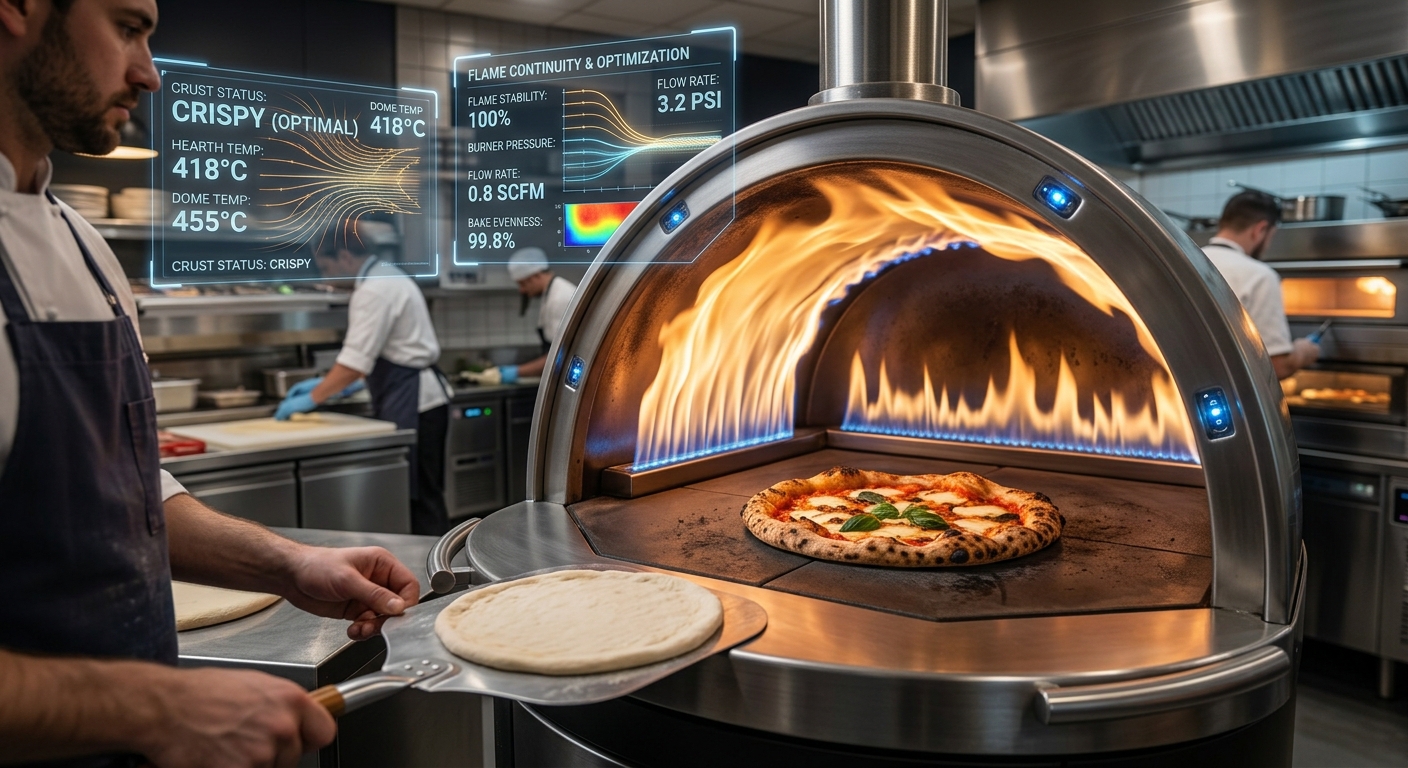
The mesmerizing dance of flames in a pizza oven is more than just a visual spectacle; it’s the heartbeat of perfect pizza. A consistent, vibrant flame is crucial for achieving that sought-after crispy crust, perfectly cooked toppings, and that unmistakable smoky aroma. Understanding pizza oven flame continuity is key for any home cook or professional pizzaiolo aiming for authentic, Neapolitan-style pizzas. It’s about mastering the interplay of fuel, airflow, and heat management to create an environment where dough transforms into culinary art.
This isn’t merely about lighting a fire; it’s a nuanced process. The type of oven, the fuel used, and even the ambient weather conditions can all influence the flame’s behavior. A sputtering, weak flame will result in undercooked dough and unevenly heated ingredients, while an overly aggressive, uncontrolled flame can scorch the pizza before it’s cooked through.
Achieving that perfect, sustained flame requires knowledge and practice, turning a potentially intimidating aspect of pizza making into a controllable and rewarding element.
Key Takeaways
- Flame continuity is vital for achieving optimal pizza cooking temperatures, even heat distribution, and the characteristic smoky flavor.
- Fuel type significantly impacts flame characteristics, with wood offering complexity and gas providing ease of use and control.
- Proper airflow management is essential for maintaining a strong, consistent flame and preventing smoke buildup.
- Oven design plays a crucial role, with dome shape, insulation, and chimney placement influencing heat retention and flame behavior.
- Regular maintenance and cleaning are necessary to ensure efficient operation and prevent issues that can disrupt flame continuity.
- Understanding and adapting to environmental factors like wind and humidity can help maintain a stable cooking environment.
Understanding The Fundamentals Of Pizza Oven Flames
The flame in a pizza oven is the engine that drives the cooking process. It’s not just about heat; it’s about the *quality* of that heat and how it interacts with the pizza. A consistent flame provides the high, radiant heat necessary to cook the pizza base rapidly while simultaneously melting cheese and cooking toppings. This rapid cooking is what creates the signature crispy yet tender crust characteristic of authentic pizzas.
The Role Of Fuel
The choice of fuel is arguably the most significant factor determining flame characteristics. Broadly, pizza ovens are fueled by wood, gas, or a combination of both.
- Wood-fired ovens are revered for the complex, smoky flavor they impart to pizzas. The flame in a wood-fired oven is dynamic, influenced by the type of wood used (hardwoods like oak or maple are preferred for their long, hot burn), how it’s seasoned (dry, seasoned wood burns cleaner and hotter), and how it’s arranged. A well-managed wood fire will produce a roaring flame that ignites the dome, creating radiant heat, and a bed of embers that provides conductive heat to the oven floor. The challenge here lies in maintaining a consistent burn rate and temperature, requiring active tending of the fire.
- Gas-fired ovens, typically running on natural gas or propane, offer unparalleled ease of use and precise temperature control. The flame is generally more stable and predictable, making it easier for beginners and those who prioritize convenience. Gas flames are typically adjusted via a control knob, allowing for quick temperature changes. However, they often lack the nuanced smoky flavor that wood imparts, though some models incorporate wood chip boxes to add a smoky element.
- Hybrid ovens attempt to bridge the gap, offering both wood and gas options. This provides flexibility, allowing users to enjoy the flavor of wood-fired cooking with the convenience and control of gas.
Airflow: The Unsung Hero
Without adequate airflow, even the best fuel will struggle to produce a vigorous flame. Air is essential for combustion. In a pizza oven, airflow is managed through strategically placed vents and the chimney.
- Primary Air Intake: This is the air that feeds the fire directly, fueling combustion. In wood-fired ovens, this might be controlled by adjusting the amount of wood or opening/closing vents at the base. In gas ovens, it’s often integrated into the burner design.
- Secondary Air Intake: This air helps to burn off smoke and volatile gases, contributing to a cleaner, hotter flame and a more efficient burn. It also plays a role in circulating heat within the oven dome.
- Chimney/Flue: The chimney draws smoke and combustion gases out of the oven, creating a draft that pulls fresh air in. The size and placement of the chimney are critical. A well-designed chimney ensures a strong, steady draft, which in turn promotes a consistent flame and prevents smoke from accumulating inside the oven, which can impart a bitter taste and obscure the cooking process.
Heat Transfer Mechanisms
Understanding how heat moves within the oven is crucial for appreciating flame continuity. There are three primary mechanisms at play:
- Conduction: Heat transfer through direct contact. The pizza base cooks primarily through conduction from the hot oven floor (or pizza stone/steel).
- Convection: Heat transfer through the movement of hot air and gases. Convection currents circulate hot air around the pizza, cooking the toppings and the top of the crust.
- Radiation: Heat transfer through electromagnetic waves. The roaring flame and the intensely hot dome radiate heat downwards onto the pizza, a critical factor for rapid cooking.
A continuous, robust flame ensures that all three heat transfer mechanisms are working effectively. It heats the dome to high temperatures for radiant heat, creates hot air currents for convection, and maintains the oven floor temperature for conduction.
Achieving And Maintaining A Consistent Flame
The ideal flame for pizza making is often described as a rolling flame or a lifting flame. It should be bright, active, and consistently licking the inside of the dome. This state is achievable through a combination of proper oven preparation, fuel management, and airflow control.
Preparing Your Oven
Before you even think about launching a pizza, your oven needs to be properly heated. This is not a quick process, especially for wood-fired ovens.
- Wood-Fired Ovens: Start by building a fire in the center or back of the oven. Use small kindling to get it going, then gradually add larger pieces of seasoned hardwood. Allow the fire to burn vigorously for at least 45-90 minutes (depending on oven size and insulation). The goal is to heat the oven dome and floor thoroughly. You’ll know the oven is ready when the dome turns from black (soot) to white/clear, indicating the soot has burned off, and the floor is at the desired temperature (typically 700-900°F or 370-480°C). Once the oven is fully heated, you’ll typically push the main fire to the side or back of the oven, leaving a rolling flame that encircles the cooking area.
- Gas-Fired Ovens: Preheat the oven according to the manufacturer’s instructions, usually turning the burner to its highest setting for 15-30 minutes. Once the desired temperature is reached, you can adjust the flame using the control knob. For optimal pizza cooking, you want a flame that is vigorous enough to heat the dome but can be controlled to avoid scorching the pizza.
Fuel Management Techniques
How you manage your fuel directly impacts flame continuity.
- Wood-Fired Ovens:
- Wood Selection: Always use dry, seasoned hardwood. Wet or green wood produces more smoke, less heat, and a weaker flame. Avoid treated lumber or softwoods, which can impart unpleasant flavors or creosote buildup.
- Wood Size: Start with smaller pieces for initial heating and gradually transition to larger logs or splits as the fire establishes. For maintaining the flame during cooking, use appropriately sized pieces that fit comfortably in the oven without overcrowding.
- Adding Fuel: Add wood incrementally. Overloading the oven with too much wood at once can smother the flame and cause the temperature to drop erratically. Adding too little will cause the flame to die down. Aim to add a piece or two every 10-20 minutes, depending on the oven’s heat retention and the flame’s intensity.
- Arrangement: In wood-fired ovens, the position of the fuel is crucial. For cooking, the fire is typically moved to the side or back, creating a “flame curtain” that licks the dome and heats the cooking surface. This ensures direct radiant heat from the flame and the hot dome, alongside conductive heat from the floor.
- Gas-Fired Ovens:
- Burner Settings: Understand your oven’s burner settings. Most have a high, medium, and low setting, or a continuous adjustment knob. For preheating, use the highest setting. For cooking, you’ll often use a medium-high setting, adjusting as needed.
- Flame Height: The goal is a consistent, active flame. Too low, and the oven won’t reach or maintain cooking temperature. Too high, and you risk burning the pizza before it’s cooked. Many gas ovens are designed to have the flame roll around the dome, similar to a wood-fired oven, but controlled via the gas valve.
Airflow Control For Optimal Combustion
The draft created by the chimney and the intake vents are vital for maintaining a strong flame.
- Wood-Fired Ovens:
- Chimney Damper: If your oven has a damper, learn how it affects the draft. Fully open it during preheating. During cooking, you might partially close it to retain heat, but be careful not to restrict airflow so much that the flame weakens or smoke builds up.
- Door Opening: Opening the oven door significantly impacts airflow and temperature. Minimize door openings during cooking. If you need to add wood or turn the pizza, do so quickly and efficiently.
- Ventilation: Ensure any primary air vents are clear and unobstructed.
- Gas-Fired Ovens:
- Ventilation: Gas ovens typically have less user-adjustable airflow control. Their design inherently manages combustion air. However, ensure the area around the oven’s air intakes is clear.
- Chimney: The chimney’s primary role is to vent exhaust gases. Its design influences the draft, but it’s usually not adjustable during cooking.

Credit: www.traveljuneau.com
Common Issues Affecting Pizza Oven Flame Continuity
Even with the best practices, challenges can arise. Recognizing and addressing these issues promptly is key to consistent pizza perfection.
Weak Or Sputtering Flame
A flame that is too low or inconsistent is a common problem, especially in wood-fired ovens.
- Causes:
- Insufficient Fuel: Not enough wood is being added, or the pieces are too small.
- Wet or Unseasoned Wood: This is a major culprit. It burns inefficiently, producing steam and smoke instead of a hot flame.
- Poor Draft: The chimney may be blocked, or the damper is too closed, preventing adequate airflow.
- Oven Not Fully Heated: Trying to cook before the oven dome and floor are sufficiently hot.
- Overcrowding: Too much wood or fuel can smother the fire.
- Solutions:
- Add larger, seasoned pieces of hardwood.
- Ensure your wood is properly seasoned (less than 20% moisture content).
- Check the chimney for blockages (e.g., ash, debris) and ensure the damper is open enough to create a good draft.
- Allow more time for preheating.
- Remove some fuel if the oven is overloaded.
Excessive Smoke
While some smoke is desirable for flavor, excessive smoke indicates inefficient combustion.
- Causes:
- Wet or Unseasoned Wood: As mentioned, this is the primary cause.
- Insufficient Airflow: The fire isn’t getting enough oxygen to burn cleanly. This can be due to a blocked chimney, closed vents, or too much fuel.
- Cold Oven: Trying to burn wood in a cold oven results in smoldering and smoke.
- Incorrect Wood Type: Using softwoods or unsuited woods can produce excessive smoke.
- Solutions:
- Use only dry, seasoned hardwood.
- Ensure adequate airflow by checking the chimney and vents.
- Allow the oven to preheat thoroughly until the dome is clear of soot.
- Stick to recommended fuel types.
Uneven Heating Or “hot Spots”
This isn’t strictly a flame continuity issue but is often related to how the flame distributes heat.
- Causes:
- Uneven Fuel Distribution: In wood-fired ovens, if the fire is concentrated in one area, that side will be hotter.
- Poor Air Circulation: Inadequate convection currents mean heat isn’t evenly distributed around the dome.
- Oven Design Flaws: Some oven designs may inherently have hot or cold spots.
- Incorrect Pizza Placement: Placing the pizza too close to the fire or in a consistently cooler part of the oven.
- Solutions:
- Actively manage the fire to ensure even heat distribution. Move logs as needed.
- Rotate the pizza frequently (every 20-30 seconds) to ensure even cooking.
- Learn the “hot zones” of your specific oven and adjust pizza placement accordingly.
- For gas ovens, ensure the burner flame is designed to circulate properly.
Flame Extinguishing During Cooking
This is particularly problematic as it halts the cooking process.
- Causes:
- Fuel Depletion: Running out of wood without replenishing it.
- Severe Draft Issues: A sudden downdraft or blockage can extinguish the flame.
- Gas Supply Interruption: For gas ovens, this could be a propane tank issue or a malfunction.
- Solutions:
- Wood-Fired: Have enough seasoned wood readily available and add fuel proactively before the flame dies down.
- Both: Check for any obvious obstructions to airflow. For gas, ensure the gas supply is stable.

Credit: pro.alfaforni.com
The Impact Of Oven Design On Flame Continuity
The physical structure of a pizza oven is intrinsically linked to how it maintains heat and supports a consistent flame. Different designs excel in different ways.
Dome Shape And Material
The classic Neapolitan pizza oven features a hemispherical dome. This shape is acoustically and thermally efficient.
- Heat Reflection: The curved shape effectively reflects the heat from the fire downwards onto the pizza.
- Air Circulation: It promotes natural convection currents, helping to circulate hot air evenly around the cooking chamber.
- Material: Ovens are typically constructed from refractory materials like firebricks, clay, or castable refractory cement. These materials have high thermal mass, meaning they absorb a significant amount of heat during preheating and release it slowly and steadily, helping to maintain consistent temperatures and a stable flame environment. The better the insulation (often achieved with ceramic fiber blankets), the less fuel is needed to maintain high temperatures.
Chimney Placement And Size
The chimney’s location and dimensions are critical for establishing the correct draft.
- Placement: Ideally, the chimney is located towards the front of the dome, just outside the main cooking opening. This placement helps draw air across the oven floor and up through the dome, ensuring the flame sweeps across the cooking area and heats the dome effectively. Chimneys placed too far back can lead to stagnant air and less efficient heating.
- Size: The diameter and height of the chimney determine the strength of the draft. A chimney that is too small won’t vent enough smoke and combustion gases, leading to poor airflow and a weak flame. A chimney that is too large can create an overly strong draft, pulling too much heat out of the oven and making it difficult to maintain temperature.
Insulation And Thermal Mass
These two factors work together to determine how well the oven retains heat.
- Thermal Mass: Refers to the oven’s material (bricks, clay). A high thermal mass oven takes longer to heat up but holds heat exceptionally well, providing a stable environment for a consistent flame and cooking temperature.
- Insulation: High-performance insulation (like ceramic fiber blankets) is crucial, especially in wood-fired ovens, to minimize heat loss through the oven walls and dome. This allows the oven to reach and maintain higher temperatures with less fuel, contributing directly to flame stability.
Comparing Oven Types For Flame Continuity
| Oven Type | Fuel | Flame Control | Flame Consistency | Flavor Profile | Ease of Use | Typical Use Case |
|---|---|---|---|---|---|---|
| **Wood-Fired** | Wood | Active Management | Variable | Smoky, Complex | Challenging | Authentic Neapolitan, Rustic |
| **Gas-Fired** | Natural Gas/Propane | Dial/Knob Control | High | Clean (less smoke) | Easy | Convenience, Consistency, Home Use |
| **Hybrid** | Wood & Gas | Combination | High | Smoky (optional) | Moderate | Flexibility, Flavor with Control |
| **Electric** | Electricity | Dial/Thermostat | Very High | None (no smoke) | Very Easy | Indoor Use, Precision |
*Note: Electric ovens, while offering excellent flame/heat continuity, do not produce the characteristic flame or smoke flavor associated with traditional pizza ovens.*
Environmental Factors And Their Influence
The environment in which you operate your pizza oven can significantly impact flame performance. Being aware of these factors allows for proactive adjustments.
Wind
Wind is a major consideration, particularly for outdoor ovens.
- Strong Winds: Can cause inconsistent drafts, potentially blowing out the flame or drawing excessive air, cooling the oven rapidly. It can also blow ash and debris into the cooking area.
- Solutions: Position the oven in a sheltered location if possible. Use windbreaks (e.g., walls, screens). For wood-fired ovens, you may need to add fuel more frequently or adjust the chimney damper (if applicable) to counteract strong drafts. Be extra vigilant about fire safety in windy conditions.
Rain And Humidity
Moisture is the enemy of a good fire.
- Rain: Directly extinguishes flames and can make it difficult or impossible to start or maintain a fire in wood-fired ovens. It also cools the oven mass considerably.
- High Humidity: Can make wood burn less efficiently, producing more smoke and less heat. It can also affect the oven’s ability to retain heat.
- Solutions: Protect your oven from rain when not in use using a cover. Ensure wood is stored in a dry place and is completely dry before use. In humid conditions, allow extra time for preheating and be prepared to use slightly more fuel.
Ambient Temperature
The outside air temperature affects how quickly the oven heats up and cools down.
- Cold Weather: The oven will take longer to preheat as it needs to overcome the cold mass of the oven and the surrounding cold air. Heat loss will also be greater during cooking, requiring more frequent fuel additions.
- Hot Weather: The oven may preheat faster, but ambient heat can sometimes make the cooking environment feel even hotter, requiring careful flame management to avoid burning pizzas.
- Solutions: In cold weather, allow ample preheating time and be diligent about maintaining the fire. In hot weather, be mindful of the increased radiant heat and adjust cooking times or flame intensity accordingly.
Advanced Techniques For Flame Mastery
Once you have a solid understanding of the basics, you can explore techniques to further refine your pizza-making process and achieve even better results.
Understanding Oven “breathing”
Ovens, especially wood-fired ones, have a rhythm. They “breathe” as air is drawn in and combustion gases are expelled. Learning to read this rhythm helps in anticipating temperature changes and flame behavior. A strong, steady draft indicates the oven is “breathing” well.
Signs of poor breathing include excessive smoke, a lazy flame, or difficulty maintaining temperature.
The Art Of Wood Stacking
For wood-fired ovens, the way you stack wood influences the burn rate and flame shape.
- Log Cabin Style: Stacking logs in a crisscross pattern allows for good airflow initially but can collapse as it burns.
- Lean-To Style: Leaning logs against a base provides a more controlled burn and directs heat towards the dome.
- Maintaining the Flame Curtain: During cooking, the goal is often to maintain a consistent flame that rolls along the dome. This is achieved by adding smaller, split logs or pieces rather than large logs, which can momentarily dampen the flame.
Using Thermometers Effectively
While visual cues are important, temperature readings provide objective data.
- Infrared Thermometer: Essential for measuring the temperature of the oven floor (deck temperature). Aim for 700-900°F (370-480°C) for Neapolitan-style pizzas.
- Oven Thermometer: Some ovens have built-in thermometers for ambient dome temperature. This helps gauge the overall heat level.
- Using Data: Track how long it takes your oven to preheat, how quickly the temperature drops, and how different fuel loads affect the temperature. This data helps you become more efficient and consistent.
Example Case Study: The Home Pizza Enthusiast’s Journey
Mark, a passionate home cook, invested in a mid-sized wood-fired pizza oven. Initially, he struggled with inconsistent results. His pizzas were either burnt on the outside and raw inside, or the crust lacked crispness. He realized his preheating was insufficient, and he was adding wood haphazardly.
- Problem: Inconsistent oven temperature, weak flame, burnt crust edges.
- Action: Mark committed to a full 90-minute preheating routine, using only seasoned oak. He learned to arrange the wood to

As the author of the “Ultimate Pizza Guide: Recipes, Tips & Secrets Revealed,” I’m dedicated to sharing my love for pizza and empowering others to create delicious homemade pizzas with ease. Join me on a journey to uncover the secrets to perfecting your pizza game!


