The aroma of perfectly baked pizza, the satisfying crackle of a wood-fired crust, and the vibrant, communal experience of sharing a pie are all hallmarks of a great pizza oven. Whether you’re a seasoned restaurateur or a passionate home cook, your pizza oven is a significant investment. Like any sophisticated piece of equipment, it requires regular care to ensure it performs optimally, lasts for years, and continues to deliver those coveted culinary results. Neglecting maintenance can lead to costly repairs, reduced efficiency, and even safety hazards. This is where a pizza oven preventive service plan becomes not just a good idea, but an essential strategy for safeguarding your culinary asset.
A well-structured preventive service plan is more than just a checklist; it’s a proactive approach to equipment longevity and performance. It involves scheduled inspections, cleaning, minor adjustments, and part replacements before they become major issues. By investing a small amount in regular, professional maintenance, you can avoid the much larger expenses associated with unexpected breakdowns and premature equipment failure.
This plan acts as an insurance policy for your pizza oven, ensuring consistent quality in your cooking and peace of mind in your operation.
Key Takeaways
- A pizza oven preventive service plan is crucial for maintaining performance, extending lifespan, and avoiding costly repairs.
- Regular maintenance addresses issues like thermal degradation, fuel system clogs, and insulation wear before they escalate.
- Plans typically include inspections, cleaning, calibration, and component checks tailored to oven type (wood-fired, gas, electric).
- Benefits include consistent cooking temperatures, improved energy efficiency, enhanced safety, and minimized downtime.
- Choosing a plan involves assessing your oven type, usage frequency, and the provider’s expertise and service offerings.
- DIY checks can supplement professional servicing, focusing on basic cleaning and visual inspections.
- Investing in preventive service is more cost-effective than reactive repairs in the long run.

Credit: oxmaint.com
Understanding The Importance Of Preventive Maintenance For Pizza Ovens
Pizza ovens, regardless of their fuel source, operate under demanding conditions. High temperatures, repeated heating and cooling cycles, and exposure to various elements can take a toll on their components. Without a structured approach to maintenance, these stresses can lead to gradual degradation, ultimately resulting in reduced efficiency and potential failure.
Think of your pizza oven like a high-performance vehicle. You wouldn’t drive a car for thousands of miles without an oil change or tire rotation; similarly, a pizza oven needs regular attention to keep it running smoothly. A preventive service plan is designed to catch small issues before they become significant problems, saving you time, money, and the frustration of an oven that’s out of commission.
Thermal Stress And Material Degradation
The core function of a pizza oven relies on generating and maintaining extremely high temperatures. This constant thermal cycling causes materials to expand and contract repeatedly. Over time, this can lead to micro-fractures in refractory materials, cracks in insulation, and weakening of metal components.
A preventive service technician will inspect for signs of thermal stress, such as hairline cracks in the dome or hearth, and assess the integrity of the insulation. Addressing minor cracks early can prevent them from widening and compromising the oven’s heat retention capabilities.
Fuel System Integrity And Efficiency
For gas and wood-fired ovens, the fuel delivery system is critical. Gas ovens can suffer from clogged burners, misaligned igniters, or leaks. Wood-fired ovens can experience issues with chimney blockages, ash accumulation affecting airflow, or problems with the door seal.
A service plan will ensure that fuel lines are clear, burners are clean and properly ignited, and airflow is optimized. This not only ensures consistent heat but also improves fuel efficiency and reduces the risk of carbon monoxide buildup in gas ovens.
Insulation And Heat Retention
The insulation in a pizza oven is vital for maintaining consistent temperatures and minimizing heat loss. Over time, insulation can settle, become compressed, or even degrade, especially in wood-fired ovens where ash and soot can accumulate. A technician will assess the insulation’s condition, checking for voids or damage that could lead to uneven heating or increased preheat times.
Proper insulation ensures that your oven reaches its target temperature quickly and holds it efficiently, saving fuel and improving cooking performance.
Structural Integrity And Safety
Beyond the functional components, the overall structural integrity of the oven is paramount for safety. This includes checking for any signs of structural damage, ensuring that doors and hinges are functioning correctly, and verifying that any external components are secure.
For gas ovens, regular checks of gas lines and connections are essential to prevent leaks. A comprehensive service plan includes a thorough safety inspection to identify any potential hazards before they can cause an accident.
Components Of A Comprehensive Pizza Oven Service Plan
A robust pizza oven preventive service plan is typically customized based on the type of oven (wood-fired, gas, or electric) and its usage intensity. However, most plans will cover a core set of inspections and maintenance tasks designed to keep the oven in peak condition.
Initial Assessment And Baseline Performance Check
The first step in any preventive service plan is a thorough assessment of the oven’s current state. This involves a detailed inspection of all visible components, checking for any existing damage or wear. Technicians will also perform a baseline performance check, measuring key parameters like preheat time, maximum temperature achieved, and temperature stability.
This data serves as a benchmark for future service visits, allowing technicians to track any changes in performance over time.
Detailed Inspection Of Key Components
A service plan will systematically inspect all critical parts of the oven. For wood-fired ovens, this includes:
- Dome and Hearth: Checking for cracks, spalling (surface flaking), or deterioration of refractory materials.
- Flue and Chimney: Inspecting for blockages from soot, creosote, or debris; ensuring proper draft.
- Door and Seal: Verifying the seal’s integrity to prevent heat loss.
- Ash Management: Ensuring ash removal systems are clean and functional.
For gas ovens, the inspection focuses on:
- Burners and Ignition System: Cleaning burners, checking igniter function and flame pattern.
- Gas Valves and Lines: Inspecting for leaks and proper operation.
- Thermostat and Controls: Calibrating temperature sensors and ensuring control accuracy.
- Ventilation: Ensuring proper exhaust flow.
For electric ovens, the focus shifts to:
- Heating Elements: Checking for signs of wear, damage, or reduced output.
- Thermostats and Control Boards: Verifying accuracy and functionality.
- Wiring and Connections: Inspecting for damage or corrosion.
- Insulation: Assessing its condition and effectiveness.
Cleaning And Lubrication
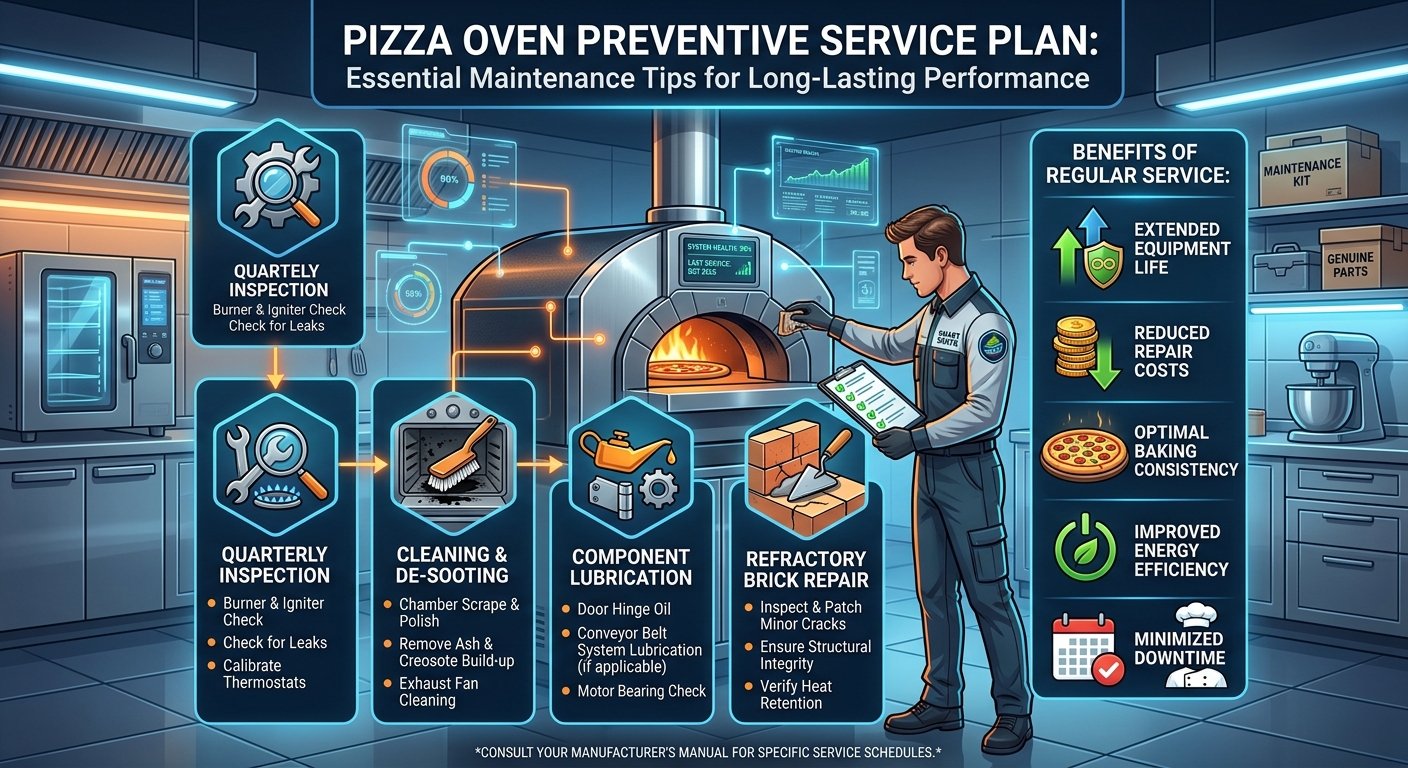
Regular cleaning is a cornerstone of preventive maintenance. This can involve removing ash and soot buildup in wood-fired ovens, cleaning gas burners to ensure optimal combustion, or removing food debris from electric oven interiors. Lubrication of moving parts, such as oven door hinges, is also performed to ensure smooth operation and prevent wear.
Calibration And Adjustments
Over time, temperature sensors and control systems can drift, leading to inaccurate temperature readings. A service plan includes calibration of thermostats and temperature probes to ensure the oven maintains the precise temperatures required for perfect pizza. Minor adjustments to gas flow, burner positioning, or door seals may also be made to optimize performance.
Minor Repairs And Part Replacements
Preventive maintenance aims to identify and address minor issues before they cause major problems. This might include sealing small cracks in refractory materials, replacing worn door gaskets, tightening loose fittings, or replacing igniter components that are showing signs of failure.
By addressing these small issues proactively, you can prevent them from escalating into expensive repairs or equipment downtime.
Safety Checks
Safety is a paramount concern, especially with high-temperature appliances. A service plan will include comprehensive safety checks, such as:
- Gas Leak Detection: For gas ovens.
- Carbon Monoxide Testing: For gas and wood-fired ovens.
- Electrical Safety Checks: For electric ovens.
- Structural Integrity Assessment: To ensure the oven is stable and secure.
Documentation And Recommendations
A professional service provider will document all work performed, including inspections, cleaning, calibration, and any parts replaced. They will also provide a report detailing the oven’s condition and offer recommendations for any further actions needed, such as upcoming part replacements or adjustments to usage patterns.
Types Of Pizza Ovens And Their Specific Maintenance Needs
The design and operation of different pizza oven types dictate unique maintenance requirements. Understanding these distinctions is key to selecting the right preventive service plan.
Wood-fired Ovens
These ovens rely on combustion to generate heat, making them susceptible to issues related to ash, smoke, and creosote buildup.
- Hearth and Dome: Refractory materials are prone to thermal shock and cracking. Regular inspection for hairline fractures is crucial. A Pro Tip: Apply a specialized refractory sealant to small cracks as soon as they are detected to prevent water ingress and further damage.
- Chimney and Flue: Soot and creosote accumulate, potentially causing blockages and reducing draft. Regular sweeping is essential.
- Ash Management: Ash buildup can insulate the hearth and affect airflow. Frequent removal is necessary.
- Door Seal: A tight seal is vital for heat retention. Over time, the seal can degrade and require replacement.
Gas Ovens
Gas ovens offer convenience and precise temperature control but require attention to their fuel and ignition systems.
- Burner Cleaning: Clogged burners lead to uneven flames and inefficient combustion. Regular cleaning is a must.
- Ignition System: Spark igniters or pilot lights can fail. They need to be kept clean and properly aligned.
- Gas Pressure and Flow: Ensuring correct gas pressure and flow is vital for consistent temperatures and safety.
- Thermostat Calibration: Gas ovens rely on accurate thermostats for temperature regulation. Periodic calibration is needed.
Electric Ovens
Electric ovens are generally low-maintenance but still require attention to their electrical components and heating elements.
- Heating Elements: These can degrade over time, leading to reduced heat output. Visual inspection for signs of wear or damage is important.
- Thermostat and Controls: Similar to gas ovens, electric ovens need accurate temperature control. Calibration is often necessary.
- Wiring and Connections: Loose or corroded connections can cause performance issues or safety hazards.
- Interior Cleaning: While less prone to combustion byproducts, interiors can accumulate food debris.

Credit: www.adirondackcsd.org
Benefits Of A Pizza Oven Preventive Service Plan
Investing in a pizza oven preventive service plan offers a multitude of advantages that extend beyond mere equipment upkeep. These benefits directly impact operational efficiency, cost savings, and the quality of the final product.
Enhanced Performance And Consistency
Regular maintenance ensures that your pizza oven operates at its optimal capacity. Clean burners, well-maintained insulation, and properly calibrated thermostats contribute to consistent, even heating. This is critical for achieving the perfect crust, evenly cooked toppings, and the desired char on your pizzas.
Inconsistent temperatures can lead to burnt bottoms or undercooked tops, impacting the quality of every pie.
Extended Equipment Lifespan
Pizza ovens represent a significant capital investment. By proactively addressing wear and tear, and performing necessary cleaning and minor repairs, a preventive service plan significantly extends the operational life of your oven. This means you can rely on your equipment for longer, delaying the need for costly replacements and maximizing your return on investment.
Reduced Risk Of Costly Breakdowns And Downtime
Unexpected equipment failures are not only expensive to repair but also lead to significant business disruption. A pizza oven preventive service plan identifies potential issues before they cause a breakdown, allowing for scheduled repairs during off-peak hours. This minimizes lost revenue and customer dissatisfaction caused by an out-of-service oven. For businesses where pizza is a core offering, such downtime can be catastrophic.
Improved Energy Efficiency
A well-maintained oven operates more efficiently. For wood-fired ovens, this means better airflow and heat retention, requiring less fuel. For gas and electric ovens, it means components like burners and heating elements are working at peak efficiency, and insulation is preventing unnecessary heat loss.
This translates to lower energy bills, contributing to reduced operating costs.
Enhanced Safety
High-temperature appliances inherently carry safety risks. Regular inspections by qualified technicians can identify potential hazards such as gas leaks, electrical faults, or structural weaknesses before they lead to accidents. This is particularly important in commercial settings where safety regulations are stringent.
Cost Savings Over Time
While there is an upfront cost associated with a service plan, it is almost always more economical than reactive repairs. The cost of routine maintenance, including inspections, cleaning, and minor part replacements, is significantly lower than the expense of repairing a major component failure or replacing an entire oven prematurely.
This long-term cost-effectiveness is a primary driver for adopting a preventive maintenance strategy.
Choosing The Right Pizza Oven Service Provider
Selecting the right service provider is as critical as the service plan itself. An experienced and reputable provider will ensure that your oven receives the best possible care.
Expertise And Certifications
Look for service technicians who have specific training and experience with your type of pizza oven. Are they certified by the manufacturer? Do they understand the unique challenges of high-temperature refractory materials or gas combustion systems? A provider with a strong track record and relevant certifications offers greater assurance of quality service.
Scope Of Services Offered
Compare the services included in different plans. Does the plan cover all the critical components for your specific oven type? Does it include routine cleaning, diagnostics, calibration, and safety checks? Some plans might offer tiered services, allowing you to choose the level of coverage that best suits your needs and budget.
Response Time And Availability
For commercial operations, minimizing downtime is crucial. Inquire about the provider’s typical response time for service calls, especially for urgent issues. Do they offer emergency service? Understanding their availability and commitment to timely service can prevent prolonged periods of equipment unavailability.
Cost And Value
While cost is a factor, it should be weighed against the value offered. A cheaper plan that provides superficial service might not be as beneficial as a slightly more expensive plan that offers comprehensive inspections and expert care. Request detailed quotes and understand what is included in the price.
Consider the long-term benefits of preventing costly repairs.
Customer Reviews And Reputation
Check online reviews, ask for testimonials, or seek recommendations from other businesses that use similar equipment. A provider with a strong reputation for reliability, professionalism, and excellent customer service is more likely to meet your expectations.
Contractual Terms And Conditions
Carefully review the service contract. Understand the duration of the plan, the frequency of visits, what is covered, and what constitutes an extra charge. Clarity on these terms prevents misunderstandings and ensures you know exactly what you are paying for.
Diy Checks: Supplementing Professional Service
While professional servicing is essential, there are several basic checks and maintenance tasks that oven owners can perform themselves to supplement the professional plan and keep their equipment in good working order between service visits. These DIY tasks are typically focused on cleaning and visual inspections.
Regular Cleaning
- Ash Removal: For wood-fired ovens, regularly remove ash from the hearth and firebox. This improves airflow and prevents excessive heat buildup. Use a metal ash shovel and a sturdy metal bin for safe disposal.
- Soot and Creosote: Periodically inspect the flue and chimney for excessive soot or creosote buildup. While professional sweeping is recommended annually, visual checks can alert you to potential issues sooner.
- Interior Wiping: For all oven types, wipe down the interior surfaces to remove crumbs and food debris after the oven has cooled. Use a damp cloth or a soft brush.
Visual Inspections
- Cracks: Carefully examine the dome, hearth, and walls for any new or expanding cracks. Note their location and size.
- Door and Seals: Check the oven door for proper alignment and operation. Inspect the door seal for signs of wear, tearing, or compression.
- Burners (Gas Ovens): Visually inspect the gas burners for any signs of blockage or damage. Ensure the flame pattern is consistent and blue when the oven is operating.
- Heating Elements (Electric Ovens): Look for any visible signs of damage, discoloration, or corrosion on the electric heating elements.
Monitoring Performance
- Preheat Time: Pay attention to how long it takes your oven to reach its desired temperature. A significant increase in preheat time could indicate insulation issues or problems with the heat source.
- Temperature Stability: Observe how well the oven holds its temperature during cooking. Fluctuations that are more pronounced than usual might signal a need for recalibration or repair.
Example: When I first started using my wood-fired oven, I noticed it took much longer to preheat on cooler days. A quick visual inspection revealed a small gap in the door seal. Replacing the gasket myself, a simple and inexpensive fix, restored its preheating efficiency. This simple DIY check saved me from potentially booking a costly service call for a minor issue.
These DIY tasks, when performed regularly, can help you catch minor issues early and provide valuable information to your professional service technician during their scheduled visits. However, it’s crucial to remember that these are not substitutes for professional expertise, especially when dealing with gas systems or complex electrical components.
Frequently Asked Questions
What Is The Typical Frequency For Preventive Maintenance On A Pizza Oven?
The frequency of preventive maintenance depends largely on the type of oven and how often it is used. For commercial operations that use their ovens daily, quarterly or semi-annual inspections are generally recommended. For home use, an annual service might suffice. Wood-fired ovens, due to their intense use and exposure to combustion byproducts, may benefit from more frequent checks, especially for chimney and flue cleaning. Gas ovens should have their fuel systems checked at least annually.
How Much Does A Pizza Oven Preventive Service Plan Typically Cost?
The cost of a pizza oven preventive service plan varies significantly based on factors such as the oven type and size, the provider’s location, and the scope of services included. For residential ovens, plans can range from $200 to $600 per year. For commercial-grade ovens, which are larger and more complex, the cost can range from $500 to $1,500 or more annually, often including more frequent visits and priority response times. It’s always best to get detailed quotes from multiple providers.
Can I Perform Preventive Maintenance Myself, Or Is Professional Service Always Necessary?
While you can perform basic DIY maintenance such as regular cleaning of ash and debris, wiping down interiors, and conducting visual inspections for obvious damage, professional service is highly recommended for tasks requiring specialized knowledge and tools. This includes gas system checks for leaks, burner calibration, electrical component diagnostics, and assessment of refractory material integrity. Professionals have the expertise to identify subtle issues that could lead to costly repairs or safety hazards if overlooked.
What Happens If I Skip Preventive Maintenance On My Pizza Oven?
Skipping preventive maintenance can lead to a cascade of negative consequences. You risk reduced cooking performance, such as inconsistent temperatures and longer preheat times. The likelihood of unexpected breakdowns increases significantly, leading to costly emergency repairs and business downtime. Over time, neglect can also shorten the lifespan of your oven, forcing you to replace it sooner than necessary. Furthermore, safety risks, particularly with gas ovens, can escalate.
How Does A Preventive Service Plan Differ From A Repair Service?
A preventive service plan is proactive; it focuses on scheduled inspections, cleaning, and minor adjustments designed to *prevent* problems from occurring or escalating. A repair service, on the other hand, is reactive; it addresses issues *after* a problem has already arisen, such as a breakdown or malfunction. While repair services fix immediate issues, preventive maintenance aims to minimize the need for such repairs in the first place, thereby saving money and reducing operational disruptions in the long run.
Ultimately, a pizza oven preventive service plan is a strategic investment for anyone who relies on their oven for culinary excellence or business operations. It’s about safeguarding your equipment, ensuring consistent performance, and maintaining a safe operating environment. By understanding the components of a good plan, the specific needs of your oven type, and the benefits of proactive care, you can make an informed decision that will pay dividends in delicious pizzas and operational peace of mind for years to come.

As the author of the “Ultimate Pizza Guide: Recipes, Tips & Secrets Revealed,” I’m dedicated to sharing my love for pizza and empowering others to create delicious homemade pizzas with ease. Join me on a journey to uncover the secrets to perfecting your pizza game!