
The perfect pizza oven isn’t just about achieving scorching temperatures; it’s about managing heat effectively. For any pizzaiolo, from the home enthusiast to the professional restaurateur, understanding and optimizing pizza oven deck thermal recovery is paramount. This crucial aspect dictates how quickly your oven can bounce back to its ideal cooking temperature after a pizza is loaded, directly impacting cooking times, crust quality, and overall efficiency. A well-recovered deck ensures consistent heat transfer to the pizza base, leading to that coveted crispy, chewy crust, while a poorly recovered deck can result in soggy bottoms and longer cooking cycles. Mastering this element transforms a good pizza oven into a great one, capable of delivering consistent, restaurant-quality results batch after batch.
Key Takeaways
- Thermal recovery is the rate at which a pizza oven’s deck reheats after a pizza is placed on it, crucial for consistent cooking.
- Deck material (cordierite, firebrick, stainless steel) significantly influences heat retention and recovery speed.
- Oven insulation is vital; better insulation means less heat loss and faster recovery.
- Preheating duration and temperature are foundational; a fully saturated deck recovers faster.
- Fuel type (wood, gas, electric) affects heat delivery and recovery dynamics.
- Oven design and construction (dome shape, airflow) play a role in how heat is distributed and retained.
- Optimizing thermal recovery leads to crispier crusts, shorter cooking times, and increased oven efficiency.
Understanding Pizza Oven Thermal Recovery
At its core, pizza oven thermal recovery refers to the process by which the oven’s cooking surface, the deck, regains its optimal temperature after it has been lowered by the introduction of a cooler pizza. When you slide a pizza onto the hot deck, the deck’s heat transfers to the pizza’s base. This transfer inevitably causes the deck’s temperature to drop. The speed and efficiency with which the deck reheats to its target temperature is its thermal recovery rate. This rate is influenced by a complex interplay of factors, including the materials used in the oven’s construction, the quality of its insulation, the type of fuel used, and the oven’s overall design.
For pizzas requiring high temperatures, like Neapolitan style which cooks in 60-90 seconds at around 800-900°F (425-480°C), the deck must be able to rapidly transfer heat to the dough. If the deck’s temperature plummets and takes a long time to recover, the bottom of the pizza will not cook quickly enough, leading to a pale, undercooked, and potentially soggy crust, even if the top cooks perfectly.
Conversely, an oven with excellent thermal recovery can handle back-to-back pizzas with minimal temperature drop, ensuring each pizza cooks evenly and quickly. This consistent heat delivery is what separates a home oven’s limitations from the capabilities of a dedicated pizza oven.
The Science Behind Heat Retention And Release
The ability of a pizza oven deck to retain heat and then release it efficiently is governed by fundamental principles of thermodynamics. Specific heat capacity and thermal conductivity are two key properties of deck materials. Specific heat capacity is the amount of heat energy required to raise the temperature of one unit of mass of a substance by one degree Celsius. Materials with high specific heat capacity, like dense firebrick, can absorb a large amount of heat energy and store it. Thermal conductivity, on the other hand, measures how well a material transfers heat. A material with high thermal conductivity will transfer heat quickly, while one with low thermal conductivity will act as an insulator.
When a pizza is placed on the deck, heat is transferred from the deck to the pizza primarily through conduction. The rate of this conductive heat transfer depends on the temperature difference between the deck and the pizza, and the thermal properties of both the deck and the pizza dough. After the pizza is removed, the deck begins to reheat, absorbing radiant and convective heat from the oven’s chamber. The speed of this reheating process is its thermal recovery. A deck material that can store a lot of heat (high specific heat capacity) and release it effectively (good thermal conductivity) will generally offer better thermal recovery, provided the oven itself is well-insulated to prevent heat from escaping.
Why Consistent Deck Temperature Matters
The importance of a consistent deck temperature cannot be overstated for achieving superior pizza. The base of the pizza receives the majority of its heat directly from the deck. This direct conductive heat is essential for developing the characteristic crispness and “leoparding” (charred spots) on the crust, particularly for styles like Neapolitan.
If the deck temperature fluctuates wildly, or recovers too slowly between pizzas, the dough may not get enough initial heat to puff up properly and achieve the desired texture.
Imagine baking multiple pizzas in rapid succession. With poor thermal recovery, the deck temperature drops significantly with each pizza. The first pizza might be perfect, but the second and third might suffer from a pale, soft bottom. This inconsistency is frustrating for both the baker and the diner.
Professional pizzerias, especially those serving high volumes of Neapolitan or New York-style pizzas, rely on ovens with robust thermal recovery to maintain a steady cooking environment. This allows them to serve a consistent product without compromising on quality or speed, ensuring every customer receives a pizza with a perfectly cooked base.
Factors Influencing Pizza Oven Deck Thermal Recovery
Several critical elements contribute to how well a pizza oven’s deck recovers its heat. Understanding these factors allows for informed choices when selecting, building, or operating a pizza oven, ultimately leading to better baking results.
Deck Material Properties
The material directly in contact with your pizza is perhaps the most significant factor in thermal recovery. Different materials possess distinct thermal properties that dictate their heat absorption, retention, and release capabilities.
- Cordierite: This is a popular choice for many modern pizza ovens, especially those designed for home use or as portable units. Cordierite has a high thermal mass, meaning it can absorb and store a good amount of heat. It also has a relatively good thermal conductivity, allowing it to release this heat effectively. Its primary advantage is its durability and resistance to thermal shock, meaning it’s less likely to crack when subjected to rapid temperature changes. However, it can take a considerable amount of time to reach its peak temperature initially.
- Firebrick (Clay/Terracotta): Traditional pizza ovens often utilize dense firebricks for their decks. Firebrick has excellent heat retention properties due to its high specific heat capacity. It can absorb a tremendous amount of heat and hold it for extended periods. This makes it ideal for maintaining stable temperatures over long baking sessions. However, firebrick typically has lower thermal conductivity compared to some other materials, meaning it might release heat slightly slower, and it can be prone to cracking if subjected to extreme thermal shock, especially older or lower-quality bricks.
- Stainless Steel: Some portable or specialized pizza ovens use stainless steel decks. Stainless steel heats up very quickly, offering fast initial preheating. However, it has a lower thermal mass than stone or brick, meaning it doesn’t retain heat as well. This can lead to a more rapid temperature drop when a pizza is introduced, and potentially a slower recovery if the heat source is not powerful enough. While convenient for quick cooks, it may not be the best choice for achieving the deep, even crust characteristics of high-mass stone decks.
- Cast Iron: Less common for pizza oven decks, cast iron offers excellent heat retention and even heat distribution. However, it is extremely heavy and can be prone to rust if not properly maintained. Its primary use is often in specific types of ovens or as an insert for enhanced thermal mass.
Example: A typical cordierite deck might take 45-60 minutes to reach 750°F (400°C) initially, while a dense firebrick deck might take longer, perhaps 60-90 minutes, but will hold its heat more stubbornly. A thin stainless steel deck might reach 750°F in 15-20 minutes but will cool down faster.
Oven Insulation Quality
The insulation surrounding the oven chamber is as critical as the deck material itself for thermal recovery. Insulation prevents heat from escaping the oven, ensuring that the heat energy is directed towards heating the deck and maintaining high temperatures. Ovens with poor insulation will lose heat rapidly to the environment, forcing the heat source to work harder and longer to reheat the deck.
- Ceramic Fiber Blanket: This is a highly effective and common insulation material used in most modern pizza ovens. It offers excellent thermal resistance at high temperatures and is relatively lightweight. Multiple layers of ceramic fiber blanket provide superior insulation, minimizing heat loss.
- Refractory Mortar/Castable Refractories: These materials are used to form the oven’s dome and hearth. High-quality refractory materials with good insulation properties help to contain heat within the oven chamber. Some are formulated with insulating aggregates to improve their thermal resistance.
- Air Gaps: While not ideal, sometimes air gaps can be incorporated as a form of insulation. However, uncontrolled air circulation can lead to heat loss, so well-designed insulation systems minimize these.
Data Point: A well-insulated oven can retain up to 90% of its heat, whereas a poorly insulated oven might lose a significant portion of its heat rapidly, requiring much longer recovery times. For instance, an oven with 4 inches of ceramic fiber insulation will perform vastly better than one with only 1 inch.
Preheating Duration And Temperature
The initial preheating process is the foundation upon which good thermal recovery is built. Simply getting the oven to a target temperature isn’t enough; the deck material must be fully “saturated” with heat. This means allowing sufficient time for the heat to penetrate deep into the material, not just the surface.
- Time: For stone or firebrick decks, this typically means preheating for at least 45-90 minutes, depending on the oven’s size, material, and insulation, until the deck reaches and maintains the desired temperature. For higher-temperature cooking, the deck might need to be heated even hotter than the target cooking temperature, as it will inevitably cool down when the pizza is introduced.
- Temperature: The target preheating temperature is crucial. For Neapolitan pizzas (800-900°F / 425-480°C), the deck itself might need to be preheated to 750-850°F (400-450°C) or even higher, allowing for a 50-100°F (25-55°C) drop when the pizza is added. For lower-temperature pizzas, the preheating requirements will be less extreme.
Pro Tip: Use an infrared thermometer to accurately gauge the deck temperature. Aim for consistency across the entire cooking surface.
Fuel Type And Heat Source
The type of fuel used to heat the oven directly impacts how quickly and effectively the deck can be reheated.
- Wood-Fired Ovens: These ovens rely on burning wood to generate intense heat. The recovery rate can be influenced by the type of wood (hardwoods burn hotter and longer), the size and consistency of the fire, and how the fire is managed. A roaring fire directly under or beside the deck can significantly speed up recovery. However, managing the fire to maintain a consistent temperature can be challenging.
- Gas-Fired Ovens: Gas ovens offer more consistent and controllable heat. Burners are often positioned to direct flames across the deck or heat the dome, which then radiates heat down. The BTU output of the burner is a key factor in recovery speed. Higher BTU ovens generally recover faster.
- Electric Ovens: Electric ovens provide precise temperature control but may have limitations in their heating element power. While they offer convenience and consistency, their recovery rate might be slower than powerful gas or well-managed wood-fired ovens, especially in larger capacities or when attempting very high temperatures.
Oven Design And Airflow
The overall design of the pizza oven plays a role in how heat is circulated and retained, influencing thermal recovery.
- Dome Shape: A well-designed dome helps to reflect heat efficiently down onto the deck and the pizza. For high-temperature pizzas, a low dome is often preferred as it concentrates heat more effectively.
- Airflow (Ventilation): Proper airflow is essential for combustion (in wood/gas ovens) and for circulating heat. The placement and size of the chimney/vent affect how hot air moves through the oven. Optimized airflow ensures that heat is efficiently transferred to the deck and maintained. Too much airflow can lead to rapid heat loss, while too little can stifle combustion and lead to incomplete heating.
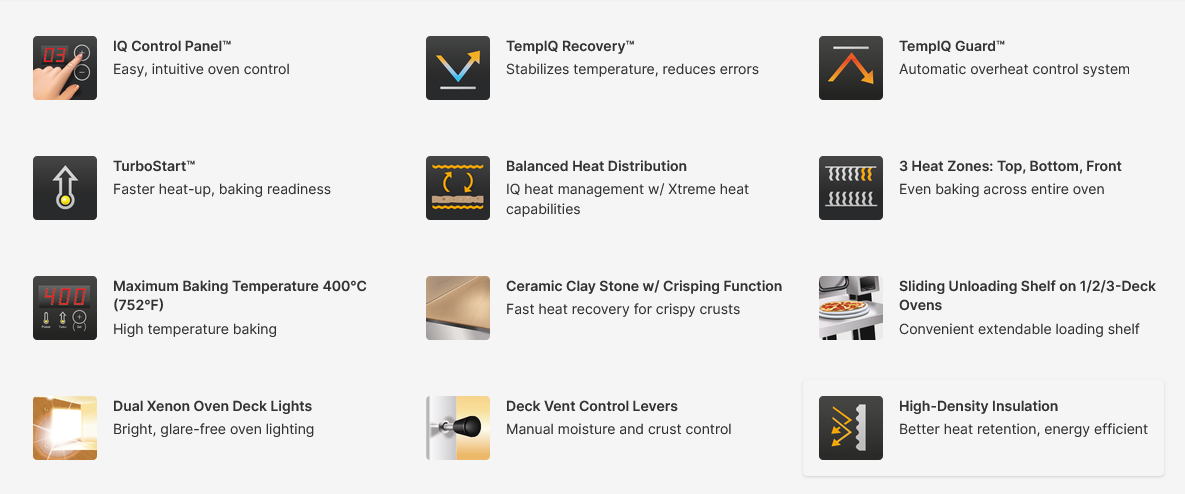
Credit: pizzaovens.com
Optimizing Your Pizza Oven For Thermal Recovery
Achieving excellent thermal recovery isn’t just about the oven’s inherent design; it also involves smart operation and maintenance practices. By implementing these strategies, you can maximize your oven’s performance and consistently produce delicious pizzas.
The Art Of Preheating
As mentioned, preheating is non-negotiable. However, the *way* you preheat can make a difference.
- Gradual Heating: For stone or firebrick decks, avoid blasting the oven to maximum temperature immediately. Gradually increasing the heat over the first 30-45 minutes helps to prevent thermal shock and allows the materials to expand evenly. This is particularly important for new ovens or after periods of disuse.
- Sustained Heat: Once the target preheating temperature is reached, maintain it for the recommended duration (often 45-90 minutes) to ensure the entire deck mass is saturated with heat.
- Temperature Monitoring: Consistently use an infrared thermometer to check the deck temperature in multiple spots. Aim for uniformity. If one area is significantly cooler, adjust your heat source to compensate.
Managing The Fire (wood-fired Ovens)
For wood-fired ovens, the fire itself is the engine of thermal recovery.
- Consistent Fueling: Add smaller pieces of hardwood regularly rather than large logs infrequently. This maintains a more stable and intense heat source.
- Fire Placement: In many dome ovens, the fire is moved to the side or back of the oven once the dome and deck are fully heated. This allows the radiant heat from the dome and the residual heat from the deck to cook the pizza without direct flame impingement. However, for faster recovery between pizzas, you might briefly bring the flame back closer to the cooking area or ensure the fire is still actively burning at the side.
- Ash Management: Regularly clear excess ash from the deck. A thick layer of ash can act as an insulator, hindering direct heat transfer from the deck to the pizza.
Post-pizza Recovery Techniques
After you’ve pulled a pizza out and placed a new one in, the deck’s temperature will drop. Here’s how to manage that dip:
- Minimize Oven Door Opening Time: Every time you open the oven door, you lose significant heat. Be quick and efficient when launching and retrieving pizzas.
- Utilize Residual Heat: Even after removing a pizza, the oven is still hot. The dome continues to radiate heat, and the deck begins its recovery.
- Boost the Heat (If Necessary): In high-volume settings, or if you notice a significant temperature drop, you might need to briefly increase the heat source (e.g., add more wood, turn up the gas burner) for a few minutes between pizzas to accelerate recovery. This needs to be done carefully to avoid overheating.
- Strategic Pizza Placement: For some oven types, placing the next pizza slightly away from where the previous one was can help it land on a slightly hotter part of the deck, though ideally, the deck should be uniformly hot.
Oven Cleaning And Maintenance
A clean oven is an efficient oven.
- Deck Cleaning: Regularly brush off any burnt flour or debris from the deck. While some charring is normal, excessive buildup can affect heat transfer. Avoid using water on hot stone decks, as this can cause cracking.
- Insulation Integrity: Periodically inspect the oven’s insulation. If you notice any cracks or damage in the refractory materials or signs of insulation breakdown, address them promptly. Compromised insulation leads directly to poor heat retention and slower recovery.
Comparing Deck Materials For Thermal Recovery
Choosing the right deck material is a critical decision that significantly impacts your pizza-making experience. Below is a comparison table highlighting the key characteristics of common pizza oven deck materials concerning thermal recovery.
| Deck Material | Heat Retention | Heat Recovery Speed | Durability (Thermal Shock) | Initial Heat-Up Time | Typical Use Cases |
|---|---|---|---|---|---|
| Cordierite | Good | Good | Excellent | Moderate to Long | Home ovens, portable ovens, commercial deck ovens |
| Firebrick (Dense) | Excellent | Moderate | Good (can crack with extreme shock) | Long | Traditional wood-fired ovens, high-volume commercial ovens |
| Stainless Steel | Poor to Fair | Fast (if heat source is powerful) | Excellent | Fast | Portable gas ovens, some high-heat specialty ovens |
| Cast Iron | Excellent | Good | Good | Moderate | Specific oven designs, pizza pans/stones |
Analysis: For consistent, high-volume pizza production where rapid recovery between pies is essential, dense firebrick or high-quality cordierite are often preferred. Stainless steel offers quick heat-up but may struggle with sustained, rapid recovery for multiple pizzas unless paired with a very powerful heat source. Cast iron is excellent for retention but less common as a primary deck material due to weight and maintenance.
Real-world Examples Of Thermal Recovery In Action
Observing how different ovens perform in real-world scenarios provides valuable insights into the practical application of thermal recovery principles.
Case Study 1: The Home Backyard Neapolitan Oven
Consider a moderately priced, insulated wood-fired pizza oven designed for backyard use. It features a 1. 5-inch thick cordierite deck and 3 inches of ceramic fiber insulation.
- Preheating: The owner diligently preheats the oven for 75 minutes, bringing the cordierite deck to 800°F (425°C). The dome is glowing white.
- First Pizza: The first Neapolitan pizza cooks in 70 seconds. An infrared thermometer reveals the deck temperature dropped to 730°F (385°C) immediately after removal.
- Second Pizza: After a 3-minute interval (during which the owner adds a small piece of wood to maintain the fire’s intensity at the side), the second pizza is launched. The deck is now reading 750°F (400°C). This pizza cooks in 75 seconds.
- Third Pizza: A further 3-minute interval, with continued moderate fueling. Deck temperature is 740°F (390°C). Pizza cooks in 72 seconds.
Observation: This oven demonstrates good thermal recovery thanks to its decent insulation and cordierite deck. The slight temperature fluctuations are managed effectively by consistent, albeit moderate, fueling between pizzas. The recovery rate is sufficient for a small family or a few guests.
Case Study 2: The High-volume Pizzeria Deck Oven
Now, picture a large, commercial gas deck oven with multiple decks, each constructed from 3-inch thick firebrick, and heavily insulated. Each deck is heated by powerful gas burners designed to maintain extremely high temperatures.
- Preheating: The oven is preheated overnight or for several hours, ensuring the massive firebrick decks are fully saturated at 850°F (455°C).
- Pizza Service (Peak Hour): Pizzas are launched and retrieved every 60-90 seconds. The deck temperature is monitored continuously.
- Temperature Fluctuation: When a pizza is removed, the deck temperature might momentarily dip to 780°F (415°C). However, the powerful gas burners immediately compensate, and within 30-45 seconds, the deck is back to 820°F (440°C) before the next pizza is launched.
- Consistency: The thermal recovery is so rapid and consistent that the difference in cooking time between the first pizza of the shift and the 100th pizza is negligible.
Observation: This commercial oven showcases superior thermal recovery due to its high-mass firebrick decks, robust insulation, and powerful, responsive gas heat source. This capability is essential for meeting the demands of a busy restaurant environment where speed and consistency are paramount.
Troubleshooting Common Thermal Recovery Issues
Even with a well-designed oven, you might encounter issues with thermal recovery. Here are some common problems and their solutions:
Problem: Soggy Bottom Crust
- Cause: Insufficient deck temperature or slow recovery. The base of the pizza isn’t getting hot enough to crisp up before the toppings are cooked.
- Solution:
- Ensure adequate preheating time and temperature. Use an infrared thermometer to verify deck temperature.
- Improve oven insulation. Check for gaps or damage.
- In wood-fired ovens, manage the fire more intensely during preheating and between pizzas.
- Consider if the deck material is suitable for your desired pizza style (e.g., a thinner steel deck might not retain enough heat for thick-crust pizzas).
Problem: Long Cooking Times
Cause: Similar to soggy bottoms, this indicates the oven isn’t maintaining sufficient heat transfer to the pizza base.
Solution:
- Increase Preheating Duration: Ensure the deck is fully saturated with heat, not just surface-hot.
- Check Insulation: Poor insulation causes rapid heat loss; add or replace ceramic fiber or vermiculite concrete.
- Boost Heat Source: For wood-fired ovens, add more fuel or reposition the fire closer to the deck between pizzas. For gas ovens, increase burner output.
- Verify Deck Material: Thin stainless steel decks lose heat quickly; consider cordierite or firebrick for better retention.
- Reduce Door Opening Time: Minimize heat loss by being quick when launching and retrieving pizzas.
Problem: Uneven Cooking Across the Deck
Cause: Uneven heat distribution on the deck surface, often due to inconsistent preheating, poor airflow, or hot spots near the heat source.
Solution:
- Rotate the Pizza: Turn the pizza 180° halfway through baking to compensate for hot spots.
- Monitor Deck Temperature: Use an infrared thermometer to check multiple spots on the deck. Aim for uniformity.
- Adjust Fire Placement: In wood-fired ovens, move the fire to a different position if one side of the deck is hotter.
- Check Airflow: Ensure the chimney and vents are drawing heat evenly across the deck.
- Consider a Baking Steel or Stone Insert: For ovens with uneven decks, a secondary stone can help distribute heat more evenly.
Problem: Deck Cracking or Warping
Cause: Thermal shock from rapid heating or cooling, low-quality materials, or inadequate insulation causing stress on the deck.
Solution:
- Preheat Gradually: Avoid blasting the oven to maximum temperature immediately. Increase heat slowly over 30–45 minutes.
- Use High-Quality Materials: Cordierite and dense firebrick resist thermal shock better than low-grade alternatives.
- Improve Insulation: Proper insulation reduces thermal stress by moderating temperature fluctuations.
- Avoid Water on Hot Decks: Never pour water on a hot stone deck; this can cause cracking.
- Repair or Replace: If cracks are severe, replace the deck material to restore even heat transfer.
Problem: Slow Recovery Between Pizzas
Cause: Insufficient thermal mass, poor insulation, weak heat source, or excessive heat loss during door opening.
Solution:
- Increase Thermal Mass: Use thicker firebrick or cordierite decks to store more heat.
- Improve Insulation: Add ceramic fiber blanket or vermiculite concrete around the oven.
- Boost Fuel or Burner Output: Maintain a strong fire or high BTU output between pizzas.
- Preheat Longer: Ensure the deck is fully saturated before starting service.
- Minimize Door Openings: Be efficient when loading and unloading pizzas.
Preventive Maintenance Schedule for Thermal Recovery
| Frequency | Task |
|---|---|
| Before Each Use | Preheating for 45–90 minutes; verify deck temperature with infrared thermometer |
| After Each Use | Brush off burnt flour and debris from the deck; check for cracks |
| Weekly | Inspect insulation for gaps or damage; check door seals |
| Monthly | Deep clean deck; inspect firebrick or cordierite for wear |
| Quarterly | Professional inspection of oven structure and insulation |
| Annually | Replace worn deck materials if needed; full system check |
Key Takeaways
- Thermal Recovery is Essential: It determines how quickly your oven returns to optimal temperature after each pizza.
- Deck Material Matters: Cordierite and firebrick offer the best balance of heat retention and recovery; stainless steel heats fast but loses heat quickly.
- Insulation is Critical: Well-insulated ovens retain up to 90% of their heat, enabling faster recovery and lower fuel consumption.
- Preheating is Non-Negotiable: A fully saturated deck is the foundation of consistent thermal recovery.
- Fuel Type Affects Recovery: Wood requires active management; gas offers consistent output; electric is convenient but may recover slower.
- Oven Design Influences Performance: Dome shape, airflow, and vent placement all impact heat distribution and recovery.
- Troubleshoot Systematically: Soggy bottoms, long cook times, and uneven cooking all point to specific recovery issues with clear solutions.
- Maintenance Preserves Performance: Regular cleaning and inspection keep thermal recovery at its peak.
Frequently Asked Questions
How long should I preheat my pizza oven for optimal thermal recovery?
For stone or firebrick decks, preheat for at least 45–90 minutes, depending on oven size and insulation. The deck must be fully saturated, not just surface-hot.
Can I use a stainless steel deck for Neapolitan pizza?
Stainless steel heats up quickly but has low thermal mass. It can work for quick cooks but may struggle with back-to-back pizzas unless paired with a very powerful heat source.
Why does my second pizza always have a soggy bottom?
This indicates poor thermal recovery. The deck hasn’t reheated sufficiently between pizzas. Improve insulation, preheat longer, or boost the heat source between bakes.
How do I know if my deck is fully preheated?
Use an infrared thermometer to measure the deck surface. It should read at or slightly above your target cooking temperature (e.g., 750–850°F for Neapolitan).
Can I add insulation to an existing oven to improve recovery?
It depends on the oven design. If the outer shell is accessible, adding ceramic fiber blanket or vermiculite concrete can significantly improve recovery. Consult a professional for retrofitting.
Does fuel type really affect thermal recovery?
Yes. Wood-fired ovens require active fire management for recovery. Gas ovens offer consistent, controllable heat. Electric ovens are precise but may recover slower at high temperatures.
Conclusion
Pizza oven deck thermal recovery is the difference between a good pizza and a great one. It determines how quickly your oven bounces back after each bake, directly impacting crust quality, cooking times, and consistency. From choosing the right deck material—cordierite, firebrick, or stainless steel—to ensuring proper insulation and preheating, every decision influences recovery performance. Master the science of heat retention and release, manage your fire or burners wisely, and maintain your oven diligently. Do that, and your oven will deliver perfectly cooked pizzas—batch after batch, without compromise.

As the author of the “Ultimate Pizza Guide: Recipes, Tips & Secrets Revealed,” I’m dedicated to sharing my love for pizza and empowering others to create delicious homemade pizzas with ease. Join me on a journey to uncover the secrets to perfecting your pizza game!


