“Pizza Oven Exhaust Airflow Sustainability”
The aroma of wood-fired pizza is undeniably enticing, but the smoke and emissions produced by these beloved ovens raise important questions about their environmental impact. As consumer awareness around sustainability grows, so does the demand for greener cooking solutions. This shift is prompting a closer look at the airflow dynamics within pizza ovens and how they can be optimized not just for performance, but also for environmental responsibility. Understanding and managing pizza oven exhaust airflow is crucial for minimizing pollution, improving air quality in both commercial kitchens and residential backyards, and ultimately contributing to a more sustainable culinary future.
Key Takeaways
- Optimized airflow is crucial for efficient combustion, reducing wasted fuel and minimizing harmful emissions like particulate matter and volatile organic compounds (VOCs).
- Proper chimney design and sizing are paramount for directing smoke effectively upwards and away from the cooking area and surrounding environment.
- Modern oven designs often incorporate advanced features such as secondary combustion chambers and catalytic converters to further reduce emissions.
- Fuel choice significantly impacts exhaust sustainability, with seasoned hardwoods generally producing cleaner burns than green or processed wood.
- Regular maintenance, including cleaning the chimney and firebox, is essential for maintaining optimal airflow and reducing creosote buildup.
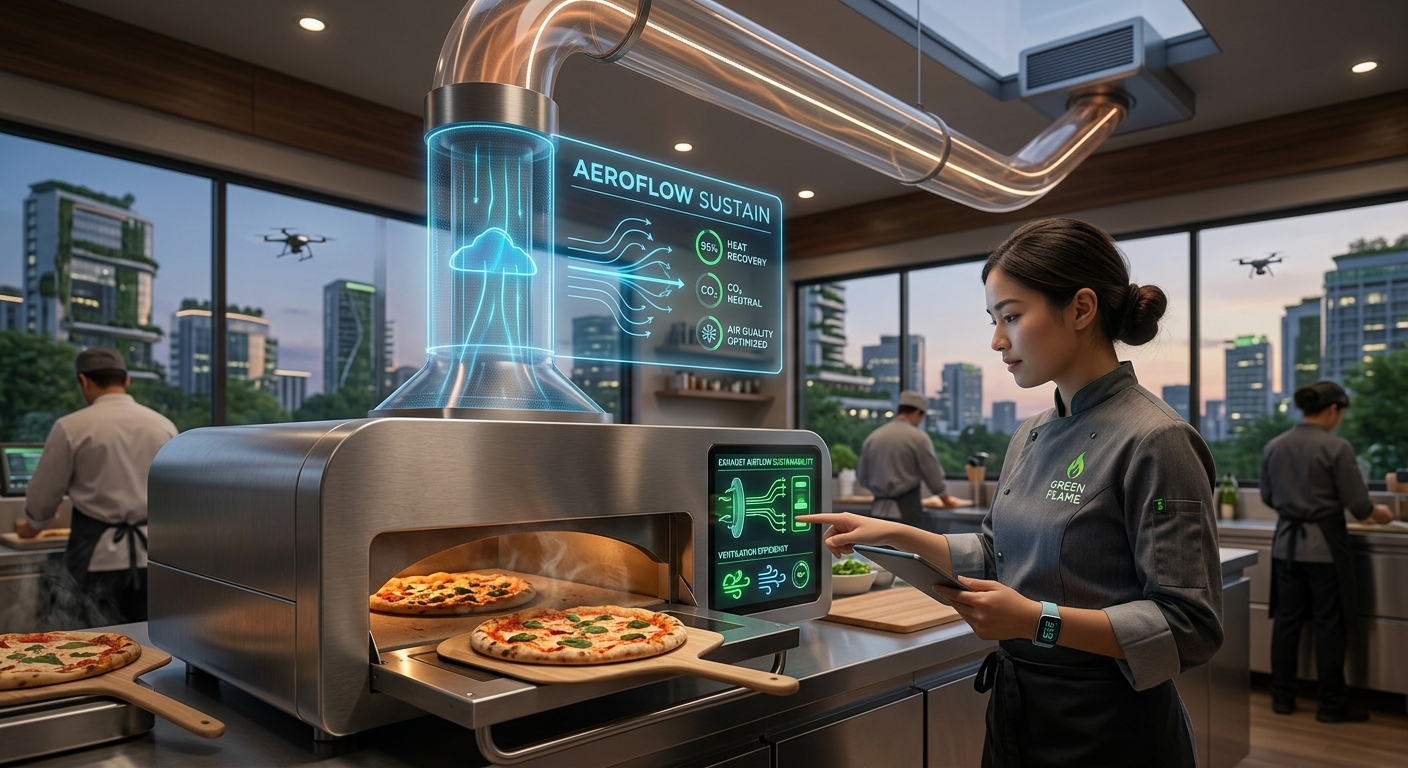
- Ventilation systems in commercial settings play a vital role in capturing and treating oven exhaust before it enters the atmosphere.
- Consumer education and responsible operation practices are key to maximizing the sustainability of any pizza oven.
Understanding Pizza Oven Exhaust Dynamics
At its core, a pizza oven is a specialized combustion chamber designed to reach and maintain extremely high temperatures necessary for cooking pizza quickly and achieving that characteristic crispy crust and perfectly blistered toppings. The airflow within this system is a delicate balance that dictates everything from heat retention to the quality of the cook and, critically, the nature of the exhaust. For sustainability, we need to understand how air moves through the oven and what byproducts this movement creates.
The Combustion Process And Air Requirements
Combustion is a chemical reaction that requires three elements: fuel, oxygen, and heat, often referred to as the “fire triangle.” In a pizza oven, the fuel is typically wood, and the oxygen is drawn from the surrounding atmosphere. The efficiency of combustion is directly tied to the amount of oxygen available.
- Under-ventilation: If there isn’t enough airflow, the combustion will be incomplete. This leads to smoldering, producing more smoke, soot, and harmful particulate matter (PM). It also results in wasted fuel as not all the combustible material is burned.
- Over-ventilation: Too much airflow can draw heat away from the cooking chamber too quickly, leading to inefficient operation and potentially struggling to reach desired temperatures. While less common for emissions in well-designed ovens, it can still indicate a system not operating at its peak efficiency.
The goal for sustainable operation is optimal ventilation, ensuring a complete and efficient burn that maximizes heat output while minimizing undesirable emissions. This involves carefully managing the intake of fresh air and the expulsion of exhaust gases.
Byproducts Of Combustion: What Goes Up The Chimney?
When wood burns, it releases a complex mixture of gases and particles. Understanding these byproducts is key to assessing and improving the sustainability of pizza oven exhaust.
- Carbon Dioxide (CO2): A natural byproduct of complete combustion and a greenhouse gas. While unavoidable, complete combustion minimizes the amount of CO2 relative to other pollutants.
- Carbon Monoxide (CO): A colorless, odorless, and highly toxic gas produced by incomplete combustion. High CO levels are a direct indicator of inefficient burning and pose a significant safety hazard.
- Particulate Matter (PM): Tiny solid or liquid particles suspended in the air, including soot, ash, and unburned hydrocarbons. PM2.5 (particles less than 2.5 micrometers in diameter) is particularly concerning for respiratory health and environmental impact.
- Volatile Organic Compounds (VOCs): Organic chemicals that easily evaporate at room temperature. Many VOCs are harmful to human health and contribute to ground-level ozone formation.
- Nitrogen Oxides (NOx): Gases formed at high temperatures when nitrogen and oxygen in the air react. NOx contributes to smog and acid rain.
The primary goal of sustainable pizza oven design and operation is to minimize the release of PM, VOCs, and CO through efficient combustion and effective exhaust management.

Credit: outdoorhome.com
The Role Of Chimney And Vent Design
The chimney is the unsung hero of a pizza oven’s exhaust system. Its design, size, and placement are critical not only for drawing smoke away effectively but also for influencing the overall airflow dynamics that govern combustion efficiency and emissions.
A well-designed chimney system is a cornerstone of sustainable pizza oven operation.
Chimney Height And Diameter: Balancing Draft And Efficiency
The draft is the force that pulls air into the firebox and pushes exhaust gases up the chimney. It’s primarily driven by the temperature difference between the exhaust gases and the outside air, and the height of the chimney.
- Height: A taller chimney generally creates a stronger draft. However, excessively tall chimneys can lead to over-ventilation, cooling the oven prematurely. For residential ovens, heights typically range from 3 to 6 feet above the oven opening, while commercial installations might require more complex calculations based on local building codes and specific oven models.
- Diameter: The diameter of the chimney must be appropriately sized for the oven’s firebox.
- Too small: Restricts airflow, leading to poor draft, smoke spillage, and incomplete combustion.
- Too large: Can result in insufficient draft, especially in cooler weather, and may also pull too much air through the oven, leading to rapid heat loss.
A common guideline for wood-fired ovens is for the chimney’s internal diameter to be roughly 8-10 inches for standard home units, and often a similar or slightly larger diameter relative to the oven opening size. For commercial ovens, manufacturers provide specific recommendations.
Baffles And Dampers: Controlling Airflow
Advanced chimney designs often incorporate features to further refine airflow and emissions.
- Baffles: These are internal plates or obstructions within the chimney or flue path. They can be used to:
- Increase the travel path of exhaust gases, allowing more time for secondary combustion or heat exchange.
- Create turbulence, which can promote more complete burning of uncombusted gases.
- Dampers: These are adjustable plates that can restrict or open the chimney flue.
- Controlling draft: Dampers are essential for regulating the amount of air pulled through the oven, especially during different phases of cooking or when the oven is cooling down.
- Minimizing heat loss: Closing the damper when the oven is not in use prevents valuable heat from escaping and stops downdrafts of cold air.
Smoke Spillage: A Sign Of Poor Design Or Operation
When smoke escapes from the oven opening rather than going up the chimney, it’s known as smoke spillage. This is a clear indicator of an airflow problem. Common causes include:
- Insufficient draft: Chimney too short, too narrow, or blocked.
- Improper fuel loading: Overloading the firebox can overwhelm the exhaust system.
- Wind conditions: Downdrafts can be exacerbated by poor chimney design.
- Oven door placement: For ovens with doors, the opening needs to be integrated with the chimney placement to ensure smoke is drawn away.
Addressing smoke spillage is not just about comfort; it’s about containing harmful emissions and ensuring efficient operation.
Advanced Emission Control Technologies
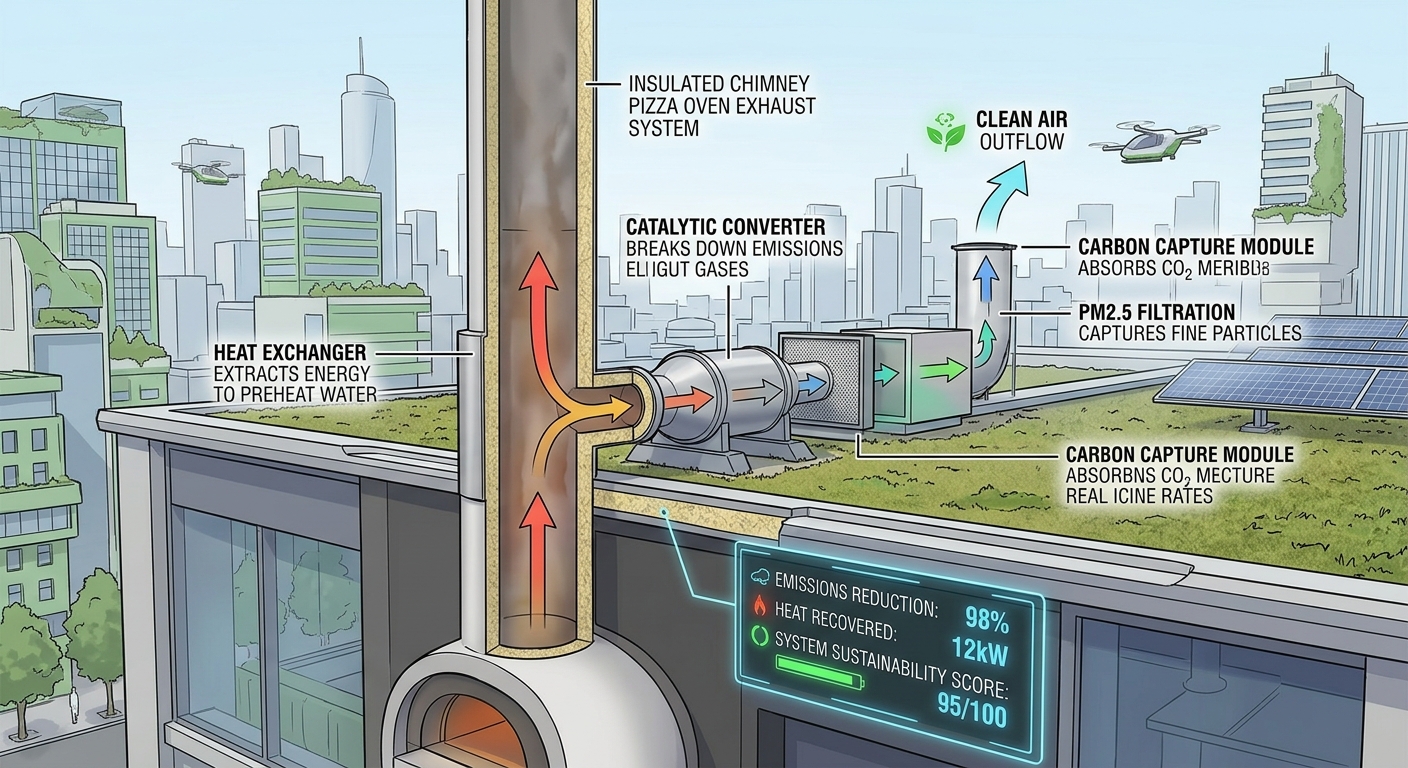
Beyond basic chimney design, manufacturers are increasingly integrating advanced technologies into pizza ovens to significantly reduce their environmental footprint. These innovations focus on ensuring more complete combustion and treating the exhaust gases before they are released.
Secondary Combustion Systems
Many modern wood-fired ovens are designed with a secondary combustion system. This involves introducing pre-heated air into the upper part of the firebox or a dedicated chamber above the main fire.
- How it works: This secondary air ignites the unburned gases and smoke particles that escape the primary combustion zone. These volatile gases, which would otherwise be released as pollutants, are burned at high temperatures, releasing more heat and producing cleaner exhaust.
- Benefits: Significantly reduces smoke opacity, PM emissions, and VOCs. It also increases the overall thermal efficiency of the oven, meaning less fuel is needed to achieve and maintain desired temperatures.
Many high-end residential and commercial ovens now feature designs that inherently promote secondary combustion through careful air intake and firebox geometry.
Catalytic Converters
Similar to those found in automobiles, some advanced pizza ovens utilize catalytic converters in their exhaust systems.
- Function: A catalytic converter uses a catalyst (often platinum or palladium) to promote chemical reactions that break down harmful pollutants at lower temperatures than would otherwise be required.
- Application: These are typically installed in the flue path. As exhaust gases pass through the converter, VOCs and carbon monoxide are oxidized into CO2 and water vapor.
- Impact: This technology can dramatically reduce emissions, making ovens significantly cleaner. However, catalytic converters can be expensive, require specific operating temperatures to function effectively, and may eventually need replacement.
Airflow Management Systems
Sophisticated commercial ovens may employ active airflow management systems. These can include:
- Variable speed fans: To precisely control the intake of combustion air and the extraction of exhaust, ensuring optimal conditions regardless of external factors.
- Automated dampers: Electronically controlled dampers that adjust based on sensor readings (e.g., temperature, CO levels) to maintain peak efficiency and low emissions.
- Integrated filtration: Some systems may incorporate pre-filters or basic particulate filters in the exhaust stream, though this is less common in typical pizza ovens compared to industrial applications.
Fuel Selection And Preparation For Sustainable Burning
The type of fuel used and how it is prepared play a pivotal role in the sustainability of pizza oven emissions. Not all wood is created equal when it comes to clean burning.
Choosing The Right Wood
The density and moisture content of the wood are critical factors.
- Hardwoods: Denser hardwoods like oak, maple, and hickory burn longer and hotter, producing less creosote and fewer emissions when seasoned properly. They are generally considered the best choice for pizza ovens.
- Softwoods: Lighter softwoods like pine and fir burn faster and hotter but also produce more creosote and can release more particulate matter. While they can be used to start a fire, they are less ideal for sustained cooking.
- Avoid:
- Treated lumber: Contains chemicals that release toxic fumes when burned.
- Plywood and particle board: Adhesives in these materials release harmful VOCs.
- Green or unseasoned wood: High moisture content leads to inefficient burning, excessive smoke, and creosote buildup.
The Importance Of Seasoning (drying)
Seasoned wood, also known as cured or dry wood, is essential for sustainable burning. This means the wood has been cut, split, and air-dried for at least 6-12 months, ideally longer.
- Moisture Content: Properly seasoned wood has a moisture content of around 15-20%.
- Benefits of Seasoned Wood:
- Burns hotter and cleaner: Less energy is wasted boiling off water.
- Produces less smoke and creosote: Reduces air pollution and the risk of chimney fires.
- More efficient fuel use: You get more heat from less wood.
Pro Tip: You can use a moisture meter to test your firewood. Insert the prongs into a freshly split piece of wood to get an accurate reading.
Fuel Loading Practices
How you load the wood into the oven also impacts airflow and combustion.
- Avoid Overcrowding: Packing the firebox too tightly restricts airflow, leading to incomplete combustion and smoke.
- Maintain Air Gaps: Allow space for air to circulate around the logs. This facilitates efficient burning.
- Gradual Addition: Add wood gradually as needed, rather than piling on large amounts at once, to maintain consistent temperatures and controlled combustion.
Environmental Impact And Regulatory Considerations
The emissions from pizza ovens, particularly in urban areas and commercial settings, are increasingly under scrutiny due to their contribution to air pollution. Understanding these impacts and relevant regulations is part of the broader sustainability picture.
Contribution To Air Pollution
Pizza oven emissions, especially from traditional wood-fired models, contribute to local air quality issues.
- Particulate Matter: A significant component of wood smoke, PM can exacerbate respiratory conditions like asthma and bronchitis. It also contributes to haze and reduces visibility.
- VOCs and NOx: These contribute to the formation of ground-level ozone, a major component of smog, which is harmful to human health and vegetation.
- Black Carbon: A component of soot, black carbon is a potent short-lived climate forcer, contributing to warming.
Commercial Kitchen Ventilation Standards
In commercial settings, stringent ventilation standards are in place to manage emissions from cooking appliances, including pizza ovens.
- Capture Efficiency: Hood systems are designed to effectively capture smoke and grease-laden vapors.
- Exhaust Treatment: Depending on local regulations and the volume of emissions, exhaust streams may need to be treated through methods like electrostatic precipitation or scrubbers to remove pollutants before release.
- Building Codes: Compliance with local building and fire codes is mandatory for commercial installations, often dictating chimney height, clearances, and ventilation system design. For example, the NFPA 96 Standard for Ventilation Control and Fire Protection of Commercial Cooking Operations is a key reference in the US.
Residential Oven Regulations And Best Practices
While residential ovens typically face fewer direct regulations, there’s a growing awareness and push for cleaner operation.
- Local Ordinances: Some municipalities have ordinances regarding wood smoke nuisance or air quality.
- Best Practices: Adopting best practices in fuel selection, seasoning, and operation is crucial for responsible home use.
- Certification: Some oven manufacturers pursue certifications (e.g., EPA standards for wood stoves, though not directly applicable to all pizza ovens) to demonstrate reduced emissions performance.
Sustainable Pizza Oven Designs And Alternatives
The drive for sustainability is spurring innovation in pizza oven design and the exploration of alternative technologies.
High-efficiency Wood-fired Ovens
Modern wood-fired ovens are designed with sustainability in mind:
- Insulation: Superior insulation (e.g., ceramic fiber blankets, refractory materials) minimizes heat loss, requiring less fuel to maintain temperature.
- Firebox Geometry: Optimized shapes and air intake placements encourage complete combustion and secondary burning.
- Materials: Use of durable, high-quality refractory materials ensures longevity and reduces the need for frequent replacement.
Example: Many manufacturers now highlight “low smoke” or “clean burn” technology, often achieved through the secondary combustion principles discussed earlier. These ovens burn wood more completely, resulting in significantly less visible smoke.
Gas-powered Pizza Ovens
Propane or natural gas ovens offer a cleaner-burning alternative to wood.
- Lower Emissions: Gas combustion produces significantly fewer particulates and less smoke than wood.
- Ease of Use: Consistent temperature control and quick heat-up times are major advantages.
- Sustainability Concerns: While cleaner than uncontrolled wood burning, natural gas is a fossil fuel, and its extraction and combustion contribute to greenhouse gas emissions. Propane also carries environmental considerations.
Electric Pizza Ovens
Electric ovens represent the cleanest option in terms of direct emissions at the point of use.
- Zero Emissions: No combustion means no smoke, PM, CO, or VOCs are released from the oven itself.
- Energy Source: The overall sustainability depends heavily on how the electricity is generated. If the power comes from renewable sources (solar, wind, hydro), electric ovens can be highly sustainable.
- Performance: Modern electric pizza ovens can reach very high temperatures, rivaling wood-fired models in performance.
Hybrid Systems
Some innovative designs combine fuel sources:
- Wood-Assisted Gas/Electric: Ovens that primarily use gas or electric power but incorporate a small wood component for flavor and ambiance. This can offer a balance between convenience, emissions control, and traditional taste.
Maintenance For Optimal Airflow And Longevity
Regular maintenance is not just about keeping your pizza oven looking good; it’s crucial for ensuring its efficient operation, safety, and sustainable performance by maintaining proper airflow.
Cleaning The Chimney And Flue
Creosote buildup is a major concern in wood-fired ovens. It’s a tar-like substance formed from unburned wood particles and moisture.
- Risks: Creosote is flammable and a primary cause of chimney fires. It also restricts airflow, leading to poor performance and increased emissions.
- Frequency: The chimney should be inspected regularly (at least annually, or more often with heavy use) and cleaned as needed. Signs of buildup include a sticky or tarry coating inside the flue.
- Methods: Use specialized chimney brushes designed for your flue size and shape. For stubborn buildup, professional chimney sweeps may use chemical treatments or rotary brushing systems.
Firebox And Ash Management
- Ash Removal: Regularly remove excess ash from the firebox. While a thin layer of ash can help insulate the hearth, a thick buildup restricts airflow to the incoming wood and can impede combustion.
- Inspection: Periodically inspect the firebox for cracks or damage to the refractory materials. Small cracks can often be repaired with specialized refractory cement, preventing them from worsening and maintaining the oven’s integrity and thermal efficiency.
Checking Air Intakes And Vents
- Clear Obstructions: Ensure that all air intake vents and the primary chimney opening are free from debris, leaves, or obstructions that could impede airflow.
- Damper Functionality: Check that any dampers operate smoothly and can be fully opened and closed. Lubricate hinges if necessary.
Example: In my experience maintaining a commercial pizza oven, neglecting chimney cleaning led to a noticeable decrease in cooking temperature and increased smoke spillage. A thorough cleaning restored optimal airflow and performance, highlighting the direct link between maintenance and efficiency.
Frequently Asked Questions
What Is The Main Goal Of Sustainable Pizza Oven Airflow?
The primary goal is to achieve complete and efficient combustion. This means ensuring enough oxygen reaches the fuel to burn it thoroughly, thereby maximizing heat output while minimizing the release of harmful pollutants like smoke, particulate matter, and carbon monoxide. Efficient airflow directly translates to lower emissions and better fuel economy.
How Does Wood Moisture Affect Emissions?
Wet or unseasoned wood contains a high percentage of moisture (over 20%). When burned, significant energy is consumed just to evaporate this water. This lowers the burning temperature, leads to incomplete combustion, and produces much more smoke, soot, and creosote. Dry, seasoned wood (15-20% moisture) burns hotter, cleaner, and more efficiently, drastically reducing emissions.
Are Gas Or Electric Pizza Ovens More Sustainable Than Wood-fired Ones?
Gas and electric ovens generally produce fewer direct emissions at the point of use compared to traditional wood-fired ovens. Gas ovens burn fossil fuels but release less particulate matter. Electric ovens have zero direct emissions, but their overall sustainability depends on the source of electricity generation. Wood-fired ovens, when operated efficiently with seasoned wood and good airflow design, can be carbon-neutral if the wood is sustainably sourced, but they inherently produce more smoke and particulates without advanced emission controls.
What Is “secondary Combustion” In A Pizza Oven?
Secondary combustion refers to the process where unburned gases and smoke particles released from the primary fire are ignited and burned in a secondary chamber or at a higher point in the firebox. This is achieved by introducing pre-heated air. It results in more complete fuel utilization, higher heat output, and significantly cleaner exhaust by burning off pollutants like VOCs and CO.
How Often Should I Clean My Pizza Oven’s Chimney?
The cleaning frequency depends heavily on how often and how you use your oven, as well as the type of wood burned. For frequent users, especially those burning less-than-ideal wood, an annual inspection and cleaning is a minimum. If you notice significant smoke, poor draft, or visible buildup, it should be cleaned more often. A professional chimney sweep can assess the buildup and recommend an appropriate schedule.
The pursuit of pizza oven exhaust airf low sustainability is an ongoing journey that blends traditional craftsmanship with modern engineering and environmental consciousness. By understanding the fundamental principles of combustion, the critical role of chimney design, the benefits of advanced emission control technologies, and the importance of proper fuel management and maintenance, both commercial operators and home enthusiasts can significantly reduce the environmental impact of their beloved ovens. As technology advances and consumer demand for greener options grows, we can expect further innovations that make enjoying delicious, wood-fired pizza even more compatible with a sustainable future.

As the author of the “Ultimate Pizza Guide: Recipes, Tips & Secrets Revealed,” I’m dedicated to sharing my love for pizza and empowering others to create delicious homemade pizzas with ease. Join me on a journey to uncover the secrets to perfecting your pizza game!