
Ensuring your pizza oven operates at peak performance and longevity requires a structured approach to maintenance. Unlike a simple home appliance, commercial pizza ovens, whether wood-fired, gas, or electric, are substantial investments that face intense daily use. Neglecting their upkeep can lead to costly downtime, inconsistent cooking results, and a significantly shortened operational lifespan. This is where pizza oven service interval planning becomes not just advisable, but essential for any serious pizzeria or restaurant.
Establishing a regular maintenance schedule prevents minor issues from escalating into major breakdowns. It guarantees that your oven is always ready to meet demand, producing the perfectly cooked pizzas your customers expect. From cleaning ash and debris to inspecting critical components like heating elements or gas valves, each task plays a vital role.
This proactive strategy minimizes unexpected repair costs, optimizes energy efficiency, and, most importantly, safeguards your business’s reputation for quality.
Key Takeaways
- Proactive maintenance is crucial for the longevity and performance of pizza ovens.
- Service intervals should be tailored to oven type, usage frequency, and manufacturer recommendations.
- Regular cleaning (daily, weekly, monthly) is fundamental to preventing debris buildup and maintaining efficiency.
- Inspections of critical components like burners, thermostats, seals, and insulation are vital for early problem detection.
- Professional servicing at least annually is recommended for in-depth checks and calibration.
- Record-keeping of all maintenance activities ensures a clear history and aids in future planning.
- Training staff on basic cleaning and operational checks is a cost-effective way to supplement professional service.
Understanding Pizza Oven Types And Their Maintenance Needs
The type of pizza oven you operate significantly influences its specific maintenance requirements and service intervals. While general principles of cleanliness and operational checks apply across the board, the materials, energy sources, and critical components vary. Understanding these differences is the first step in creating an effective service plan.
Wood-fired Pizza Ovens
Wood-fired ovens, the traditional heart of many pizzerias, rely on combustion and radiant heat. Their maintenance is often more hands-on and frequent due to the nature of burning wood.
- Daily/After Each Use:
- Ash Removal: This is paramount. Accumulated ash can smother the fire, reduce heat, and impact pizza quality. Use a specialized ash shovel or brush to carefully remove cooled ash from the oven floor and dome. Ensure all embers are fully extinguished before cleaning.
- Brushing the Hearth: A stiff wire brush should be used to sweep any loose debris or burnt food particles from the cooking surface. This ensures a clean cooking environment for the next bake.
- Weekly:
- Exterior Cleaning: Wipe down the exterior surfaces, especially if they are made of brick or stone, to remove soot and grease.
- Chimney Check: Inspect the chimney for creosote buildup. While a full chimney sweep is usually annual, a visual check for significant blockages is wise weekly.
- Monthly/Quarterly:
- Dome Inspection: Check the interior dome for any cracks or spalling (flaking of the refractory material). Small hairline cracks can often be repaired with specialized refractory cement.
- Door and Seal Check: Inspect the oven door and any seals for wear and tear. A good seal is crucial for heat retention.
- Chimney Sweep (Professional Recommended): For significant creosote buildup, a professional chimney sweep is recommended to prevent fire hazards.
- Annually:
- Comprehensive Inspection: A professional should inspect the overall structure, refractory integrity, and chimney system. They can identify potential issues before they become critical.
Gas Pizza Ovens
Gas ovens offer convenience and precise temperature control. Their maintenance often focuses on the gas components, burners, and thermostat accuracy.
- Daily/After Each Use:
- Interior Wipe Down: Remove any food debris or spills from the oven floor and walls.
- Burner Area Check: Visually inspect the gas burners for any obvious blockages or damage. Ensure flames are consistent and blue.
- Weekly:
- Exterior Cleaning: Clean the stainless steel or enameled exterior surfaces.
- Ventilation Check: Ensure exhaust vents are clear of debris.
- Monthly:
- Burner Cleaning: If performance dips, the burners may need gentle cleaning with a soft brush to remove carbon buildup. Never use water directly on gas components.
- Thermostat Calibration Check: Monitor temperature readings against a calibrated oven thermometer. Minor drifts can sometimes be adjusted, but significant inaccuracies may require professional attention.
- Semi-Annually/Annually (Professional Recommended):
- Gas Line and Valve Inspection: A certified technician should inspect gas lines, connections, and valves for leaks and proper function.
- Ignition System Check: Ensure the igniter and flame sensor are working correctly.
- Burner Performance Tuning: Professionals can ensure optimal gas-to-air mixture for efficient combustion.
- Thermostat Calibration and Servicing: Professional recalibration or replacement if necessary.
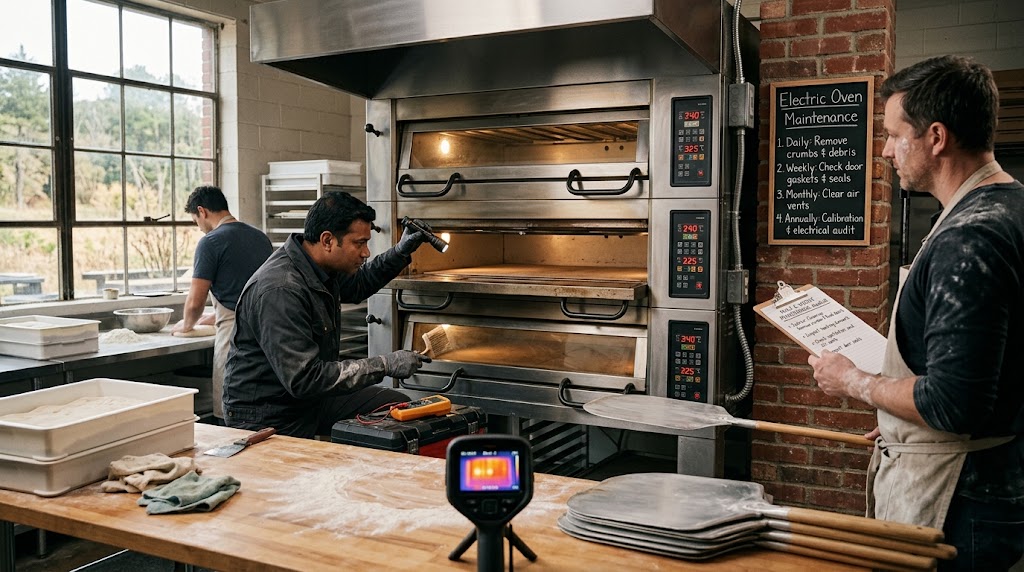
Electric Pizza Ovens
Electric ovens are known for their ease of use and consistent heat. Maintenance primarily involves cleaning and ensuring the heating elements and electrical components are in good order.
- Daily/After Each Use:
- Interior Cleaning: Remove crumbs and food debris. A damp cloth or scraper can be used, ensuring the oven is cool.
- Element Inspection: Visually check heating elements for any signs of damage, corrosion, or discoloration that might indicate failure.
- Weekly:
- Exterior Cleaning: Wipe down the exterior surfaces.
- Ventilation Check: Ensure air vents are clear.
- Monthly:
- Element Cleaning (Carefully): If there’s minor buildup on elements, a soft brush can be used. Avoid harsh chemicals or abrasive materials that could damage the element coating.
- Door Seal Check: Inspect the door gasket for damage or wear that could lead to heat loss.
- Semi-Annually/Annually (Professional Recommended):
- Electrical Component Check: A qualified technician should inspect wiring, connections, contactors, and control boards for wear or potential failure.
- Heating Element Performance Test: Verify elements are heating to the correct temperature and drawing appropriate amperage.
- Thermostat/Controller Calibration: Ensure accurate temperature regulation.
Developing Your Pizza Oven Service Interval Plan
A robust pizza oven service interval plan is a dynamic document, not a static one. It should be built upon a foundation of manufacturer guidelines, adjusted for your specific operational realities, and regularly reviewed.
1. Consult Manufacturer Recommendations
The original equipment manufacturer (OEM) is your primary source of information. Their manuals typically provide detailed schedules for cleaning, inspection, and professional servicing. These recommendations are based on extensive testing and are designed to ensure optimal performance and safety.
- Key Information to Look For:
- Recommended cleaning frequency for different parts (hearth, dome, burners).
- Specific lubricants or cleaning agents approved for use.
- Inspection points for critical components.
- Recommended intervals for professional servicing, often tied to hours of operation or calendar time.
- Troubleshooting guides for common issues.
2. Assess Your Usage Patterns
How often and how intensely is your pizza oven used? This is a critical factor in determining how frequently maintenance is needed.
- High-Volume Operations: Restaurants serving hundreds of pizzas daily will require more frequent cleaning and checks than a casual eatery with lower throughput. For high-volume settings, consider:
- Daily deep cleaning of the hearth and ash removal (even if it’s a gas oven, crumbs accumulate).
- Weekly checks of burners or heating elements.
- Quarterly inspections of seals and structural integrity.
- Semi-annual professional servicing.
- Moderate/Low-Volume Operations: If your oven is used only a few times a week or for shorter periods, you might extend some intervals. However, never skip essential daily cleaning and always adhere to safety checks.
- Daily cleaning.
- Monthly checks of key components.
- Annual professional servicing.
3. Factor In Environmental Conditions
The environment where your oven operates can impact its maintenance needs.
- Dusty or Grimy Environments: Ovens in locations prone to dust, grease in the air, or outdoor settings exposed to weather may require more frequent cleaning of external surfaces and ventilation systems.
- High Humidity: Can accelerate corrosion on metal parts, especially in gas and electric ovens. Regular checks for rust and moisture are important.
4. Define Cleaning Schedules (daily, Weekly, Monthly)
Break down cleaning tasks into manageable frequencies.
- Daily Tasks: These are non-negotiable and usually performed by kitchen staff.
- Cool Down Period: Always allow the oven to cool sufficiently before cleaning to prevent burns and damage to tools or the oven itself.
- Ash Removal (Wood-Fired): Thoroughly clear all ash and embers.
- Hearth Brushing/Wiping: Remove food debris and crumbs.
- Interior Wipe Down: Clean walls and any visible spills.
- Exterior Wipe Down: Quick clean of accessible surfaces.
- Weekly Tasks: These might require slightly more time and attention, possibly involving specific cleaning agents.
- Deeper Hearth Cleaning: Scrubbing the hearth if needed.
- Burner Area Inspection/Gentle Cleaning: Checking flame patterns (gas) or element condition (electric).
- Door Seal Cleaning: Removing any accumulated grease or debris.
- Ventilation Check: Ensuring air intakes and exhausts are clear.
- Monthly Tasks: These often involve more detailed inspections and potentially minor upkeep.
- Dome/Interior Cavity Inspection: Look for cracks, spalling, or excessive soot buildup.
- Seal Integrity Check: Assess wear and tear on door gaskets.
- Thermostat Accuracy Check: Compare oven temperature to a calibrated thermometer.
- Exterior Detailing: More thorough cleaning of the oven’s exterior.
5. Schedule Periodic Inspections
Beyond cleaning, regular visual and functional inspections are key to catching issues early.
- Component-Specific Checks:
- Seals/Gaskets: Look for cracks, tears, or areas where they are pulling away from the oven body. These are critical for heat retention and efficiency.
- Refractory Materials (Wood-Fired/High-Temp): Inspect for hairline cracks, spalling, or loose bricks.
- Burners (Gas): Check for even flame, consistent color (should be blue), and listen for irregular noises.
- Heating Elements (Electric): Look for glowing evenly, signs of corrosion, or physical damage.
- Thermostats/Controllers: Verify they are responding correctly and maintaining set temperatures.
- Insulation: While often hidden, signs of overheating on the exterior might indicate insulation issues.
- Chimney/Flue: Check for blockages, excessive creosote (wood-fired), or corrosion.
6. Plan For Professional Servicing
Even with diligent in-house maintenance, professional servicing is indispensable. This should be scheduled at least annually, or more frequently for high-volume operations or if specific issues arise.
- What a Professional Service Typically Includes:
- Safety Checks: Gas leak detection, electrical safety checks.
- Calibration: Precise calibration of thermostats and temperature controls.
- Component Testing: Thorough testing of burners, igniters, heating elements, and control boards.
- Deep Cleaning: Specialized cleaning of burners or internal components that are difficult to access.
- Minor Repairs: Sealing small cracks, replacing worn gaskets, tightening connections.
- Performance Tuning: Optimizing gas/air mixture for efficiency and performance.
- Structural Assessment: Expert evaluation of the oven’s overall condition.
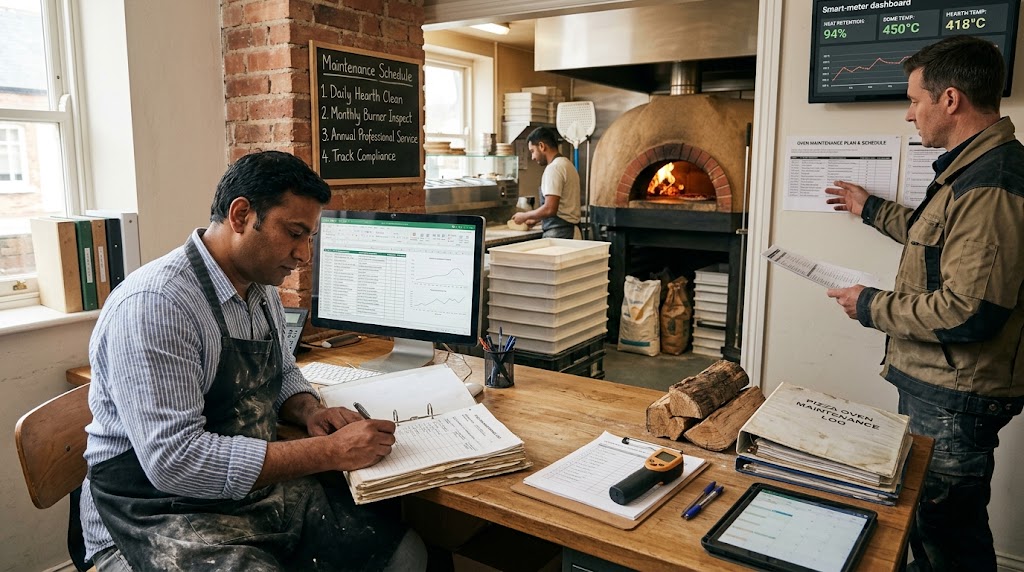
7. Implement A Maintenance Log
Consistent record-keeping is vital. A pizza oven maintenance log serves as a historical record and a tool for planning.
- What to Record:
- Date of service/cleaning.
- Task performed (e.g., “Daily Hearth Clean,” “Monthly Burner Inspection,” “Annual Professional Service”).
- Who performed the task (staff member or service company).
- Any issues noted or repairs made.
- Readings from temperature checks.
- Recommendations from professional technicians.
- Benefits:
- Tracks compliance with the planned schedule.
- Helps identify recurring problems.
- Provides data for future planning and budgeting.
- Useful for warranty claims or insurance purposes.
- Demonstrates due diligence in maintaining equipment.
Daily Cleaning Protocols: The Foundation Of Oven Care
Daily cleaning is the most critical element of any pizza oven service interval plan. It’s the frontline defense against performance degradation and premature wear. These tasks are typically integrated into the end-of-day or start-of-day routines for kitchen staff.
Daily Cleaning For Wood-fired Ovens
For wood-fired ovens, daily cleaning revolves around managing the byproducts of combustion.
- Allow for Safe Cooling: Before any cleaning begins, ensure the oven has cooled significantly. Embers can remain hot for hours. A simple test is to place a gloved hand near the hearth, if it feels excessively hot, wait longer.
- Thorough Ash Removal: Use a long-handled metal shovel or scoop designed for ash. Carefully sweep all ash from the oven floor towards the opening. Dispose of ash in a metal container away from flammable materials. Never use a vacuum cleaner to remove ash, as hot embers can ignite the vacuum bag or internal components.
- Hearth Brushing: Once ash is cleared, use a stiff-bristled wire brush (specifically for ovens) to sweep the cooking surface. This removes any burnt flour, food particles, or debris, ensuring a clean surface for the next bake. Brush towards the oven opening.
- Exterior Wipe Down: A quick wipe of the exterior surfaces with a damp cloth removes soot or grease that may have accumulated during the day’s operation.
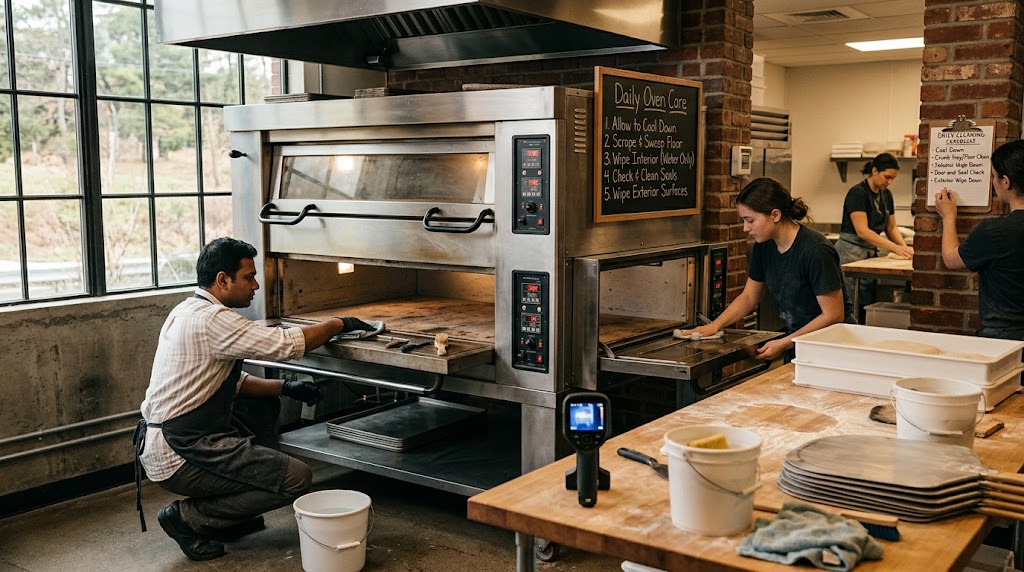
Daily Cleaning For Gas And Electric Ovens
Gas and electric ovens, while not producing ash, still require daily attention to maintain hygiene and efficiency.
- Cool Down: Similar to wood-fired ovens, allow the oven to cool down before cleaning to prevent burns and thermal shock to oven components.
- Crumb Tray/Floor Cleaning: Remove any food debris, crumbs, or spills from the oven floor. For ovens with a crumb tray, empty and clean it. A non-abrasive scraper or brush can be useful here.
- Interior Wipe Down: Use a damp cloth (water only, or mild, oven-safe cleaner if specified by the manufacturer) to wipe down the interior walls and ceiling. Avoid spraying cleaners directly onto heating elements or burner ports.
- Door and Seal Check: Wipe down the inside of the oven door and the door seal. Accumulated grease or food particles on the seal can impair its effectiveness, leading to heat loss.
- Exterior Wipe Down: Clean the exterior surfaces with a damp cloth to remove fingerprints, grease splatters, or dust.
Pro Tip: Train all kitchen staff on these daily protocols. Consistency is key. Create a simple checklist that staff can initial after completing tasks. This ensures accountability and reinforces the importance of daily care.
Weekly And Monthly Maintenance Checks
Moving beyond daily routines, weekly and monthly checks address slightly deeper cleaning and initial inspection points, helping to maintain optimal performance and catch minor issues before they escalate.
Weekly Maintenance Tasks
These tasks require a bit more time and attention than daily cleaning.
- Wood-Fired Ovens:
- Deeper Hearth Scrub: If the hearth appears stained or has stubborn residue, a more vigorous scrub with the wire brush might be needed. For very tough spots, a paste of baking soda and water can sometimes help, but ensure it’s thoroughly rinsed and dried.
- Chimney Visual Inspection: Look up the chimney (if safe to do so) for any obvious signs of heavy creosote buildup or blockages like bird nests.
- Exterior Detailing: A more thorough cleaning of the oven’s exterior, paying attention to areas that collect grease or soot.
- Gas Ovens:
- Burner Port Inspection: Visually inspect the small holes (ports) on the gas burners. If any appear clogged with carbon or debris, they can be *gently* cleared with a fine wire or a specialized tool. Never use anything sharp or forceful that could damage the burner. Ensure the gas is off and the oven is cool.
- Flame Observation: During a brief test run (if feasible and safe), observe the flame. It should be mostly blue with possibly a slight yellow tip. Inconsistent, flickering, or predominantly yellow flames can indicate an issue with gas/air mixture or a dirty burner.
- Ventilation Check: Ensure exhaust vents and air intakes are free from dust, grease, or obstructions.
- Electric Ovens:
- Heating Element Check: Visually inspect heating elements for any signs of corrosion, discoloration (beyond normal use), or physical damage. Ensure they are securely mounted.
- Drip Pan/Grease Trap Cleaning: If your oven has removable drip pans or grease traps, clean them thoroughly.
Monthly Maintenance Tasks
These tasks involve more detailed inspection and are crucial for identifying potential problems.
- Wood-Fired Ovens:
- Dome and Arch Inspection: Carefully examine the interior dome and arch for any new hairline cracks or signs of spalling (where the refractory material flakes off). Small cracks can often be repaired with refractory cement, but larger ones may require professional assessment.
- Door Seal Check: Inspect the oven door gasket or seal for signs of wear, cracking, or if it’s becoming detached. A damaged seal allows significant heat loss, reducing efficiency and affecting cooking times.
- Gas Ovens:
- Thermostat Accuracy Check: Use a calibrated oven thermometer placed in the center of the oven. After the oven reaches its set temperature, compare the readings. Significant discrepancies (more than 15-20°F or 8-11°C) might indicate a need for recalibration or servicing.
- Ignition System Check: For ovens with electronic ignition, listen for consistent ignition sounds. If it struggles to ignite, this is an early warning sign.
- Electric Ovens:
- Heating Element Performance: While a full test is professional, you can observe if elements heat up evenly and reach temperature within a reasonable time. Uneven heating or slow heat-up times can signal a failing element.
- Door Seal Integrity: Similar to wood-fired ovens, check the door seal for wear, damage, or gaps.
- Control Panel Check: Ensure buttons, dials, and displays are functioning correctly without any intermittent issues.
Example: A busy pizzeria using their wood-fired oven 12 hours a day, 7 days a week, found that their hearth started showing significant wear after only 6 months. By increasing their weekly hearth brushing to a more vigorous scrub and inspecting for micro-fractures monthly, they were able to identify the need for a minor refractory patch sooner, preventing a larger, more costly repair down the line.
Professional Servicing And Repairs: When To Call The Experts
While regular cleaning and in-house checks are vital, there comes a time when professional expertise is indispensable. Professional pizza oven servicing ensures safety, maintains optimal performance, and can prevent minor issues from becoming major, costly breakdowns.
Annual Professional Service (minimum)
For most commercial pizza ovens, a comprehensive professional service check at least once a year is highly recommended. This is especially true for high-volume operations.
- Key Areas Covered by Professionals:
- Safety Systems: Thorough inspection of gas lines, connections, valves, and electrical wiring for leaks, wear, or potential hazards. This is non-negotiable for safety.
- Component Performance Testing: Using specialized tools, technicians can accurately test the performance of burners, heating elements, thermostats, control boards, and igniters. They can detect subtle issues that aren’t visible during routine checks.
- Calibration: Precise calibration of thermostats and temperature controllers ensures accurate cooking temperatures, which is critical for consistency and quality. Many ovens drift over time, impacting bake consistency.
- Internal Cleaning: Professionals have the tools and knowledge to safely clean components like burner assemblies or internal ducting that are difficult for staff to access.
- Structural Integrity Assessment: Expert evaluation of refractory materials, insulation, and the overall structural soundness of the oven. They can identify stress points or potential failure areas.
- Efficiency Tuning: For gas ovens, this involves adjusting the air-to-gas mixture for optimal fuel efficiency and complete combustion, reducing wasted energy and minimizing carbon monoxide.
- Preventive Maintenance: Replacing worn gaskets, tightening connections, lubricating moving parts (if applicable), and performing minor repairs before they lead to failure.
When To Call For Emergency Service
Don’t wait for your annual service if you notice any of the following critical issues:
Gas-Related Issues (Gas Oven)
- If you smell gas — Any amount of gas leak is an immediate emergency. Turn off the gas supply, ventilate the area, do not operate the oven, and call your gas company and a qualified technician.
- If the flame is yellow or orange instead of blue — This indicates incomplete combustion, which can produce carbon monoxide.
- If ignition repeatedly fails — The igniter, gas line, or safety valve may be faulty.
- If the flame goes out shortly after ignition — The thermocouple or flame sensor may be malfunctioning.
Electrical Issues (Electric Oven)
- If you notice sparking, flashing, or a burning smell — Turn off the power at the breaker and call a qualified electrician.
- If the breaker trips repeatedly — There may be a short circuit in the wiring or a component.
- If a heating element breaks or there is a risk of electric shock — Keep the oven switched off.
Temperature-Related Issues
- If the temperature suddenly spikes or drops dramatically — The thermostat, control board, or gas valve may have failed. Continuing to cook under these conditions is dangerous.
- If the oven no longer heats properly — There may be a serious issue with the element, burner, or control board.
Wood-Fired Oven Issues
- If a chimney fire occurs — Stop adding fuel immediately, attempt to extinguish the fire only if it is safe to do so, and call the fire brigade. Creosote buildup in the chimney is a serious fire hazard.
- If smoke enters the room — This may indicate a chimney blockage or draft problem. Shut down the oven and have the chimney inspected by a professional.
- If large cracks appear in the dome or walls — Structural damage can be dangerous; stop using the oven.
Structural Damage
- Large cracks, crumbling, or spalling in the dome, hearth, or chimney — A weakened structure poses a safety risk.
- If insulation becomes exposed or damaged — This leads to heat loss and creates a safety hazard.
What to Do Before Professional Service Arrives
- Shut down the oven — Disconnect the gas or power supply.
- Ventilate the area — Especially in cases of gas leaks or smoke.
- Do not attempt repairs yourself — Particularly for gas or electrical issues.
- Keep the manufacturer’s instructions and warranty information on hand.
- Document the problem — Note what happened, when it happened, and what symptoms appeared — this will help the technician.
Remember: Safety always comes first. When in doubt, shut down the oven and call a professional. A small problem left unattended can turn into a serious accident.
Frequently Asked Questions
How often should a commercial pizza oven be professionally serviced?
At least annually for most commercial ovens. High-volume operations serving hundreds of pizzas daily should consider semi-annual or quarterly servicing. Always follow manufacturer recommendations.
Can I perform maintenance myself, or do I need a professional?
Daily cleaning and visual inspections can and should be performed by trained kitchen staff. However, gas line inspections, electrical component checks, thermostat calibration, and structural assessments should be handled by qualified professionals.
What happens if I skip regular maintenance?
Skipping maintenance leads to reduced oven efficiency and higher fuel costs, inconsistent cooking results and poor pizza quality, increased risk of breakdowns and costly repairs, shortened oven lifespan, and potential safety hazards such as gas leaks, electrical faults, and chimney fires.
How do I know if my oven’s thermostat is inaccurate?
Place a calibrated oven thermometer inside the oven and compare its reading to the oven’s built-in thermostat. If the difference exceeds 15–20°F (8–11°C), recalibration or replacement may be needed.
What’s the most important daily maintenance task?
For wood-fired ovens, ash removal is paramount—accumulated ash smothers the fire and reduces heat. For gas and electric ovens, interior wiping and debris removal prevent buildup and maintain hygiene.
Can I use regular cleaning products on my pizza oven?
No. Avoid harsh chemicals, especially on cooking surfaces. Use only food-safe, oven-appropriate cleaners. For refractory surfaces, avoid water and chemicals—use a dry brush or scraper.
How do I protect my oven during off-season or low-usage periods?
Clean thoroughly, ensure the oven is completely dry, and cover with a breathable, waterproof cover. Inspect periodically for moisture, pests, or damage.
When should I call for emergency service?
If you smell gas, notice sparking or a burning smell, see a chimney fire, find large structural cracks, or experience sudden temperature spikes or drops—shut down the oven immediately and call a professional.
Conclusion
Pizza oven service interval planning is the framework that keeps your oven running reliably year after year. Daily ash removal, weekly burner and element checks, monthly thermostat and seal inspections, and annual professional servicing—each step protects your investment, ensures safety, and delivers the consistent quality your customers expect. Wood-fired ovens demand more hands-on daily care; gas and electric ovens require attention to burners, elements, and controls. Professional servicing—at least annually—ensures calibration, safety, and efficiency that in-house staff cannot provide. Keep detailed records, train your team, and act quickly when warning signs appear. A well-maintained oven is a reliable oven—and a reliable oven is the backbone of a successful pizzeria.

As the author of the “Ultimate Pizza Guide: Recipes, Tips & Secrets Revealed,” I’m dedicated to sharing my love for pizza and empowering others to create delicious homemade pizzas with ease. Join me on a journey to uncover the secrets to perfecting your pizza game!


