When it comes to making the perfect pan pizza at home, temperature is everything. You might have the best dough and toppings, but if your oven or pan isn’t heated just right, your pizza could end up soggy, undercooked, or burnt.
You want that golden, crispy crust with melted, bubbly cheese every time. So, how do you find the sweet spot for your pizza pan cooking temperature? This guide will walk you through the ideal temperature ranges and share simple tips to help you master pan pizza baking.
Keep reading, and you’ll soon be serving up restaurant-quality pizza that’s crispy on the outside and soft on the inside—right from your own oven.
Ideal Temperature Ranges
Finding the right temperature for cooking pizza in a pan is key to great results. The ideal temperature range depends on the crust type and cooking method. Different ovens and pans may require small adjustments.
Choosing the right heat level helps balance crust crispiness and even cooking. Below are common temperature settings for pan pizza cooking.
Standard Oven Settings
Most pan pizzas cook well between 375°F and 425°F (190°C – 220°C). This range produces a crispy crust and melts cheese evenly. It is perfect for thin to medium crusts. Preheating the oven ensures consistent heat throughout baking.
High-heat For Thick Crusts
For thick or deep-dish styles, use higher heat from 450°F to 500°F (230°C – 260°C). The intense heat creates a crunchy outer crust and a soft inside. Cast iron pans benefit from preheating at these temperatures to avoid soggy bottoms.
Low And Slow Methods
Lower temperatures around 300°F to 350°F (150°C – 175°C) suit slow cooking and delicate toppings. This method allows the dough to rise more and cook fully without burning. It works well for stuffed or pan pizzas with extra cheese and sauce.
Choosing The Right Pan
Choosing the right pan affects pizza texture and cooking time. Different pans hold and transfer heat uniquely. This guide helps you pick the best pan for your pizza style and oven setup.
Cast Iron Advantages
Cast iron pans heat evenly and hold heat well. They create a crispy crust with a slight char. Preheating cast iron ensures a crunchy bottom. These pans are heavy but durable and last for years. They work well in ovens and on stovetops.
Sheet Pan Options
Sheet pans are lightweight and easy to handle. They heat quickly but may cause softer crusts. Ideal for thinner, crispier pizzas like New York style. Choose a pan with a rim to hold toppings. Aluminum pans spread heat evenly and resist warping.
Non-stick Vs Metal
Non-stick pans prevent sticking and ease cleanup. They may produce a softer crust than metal pans. Metal pans, like stainless steel, give better browning and crispiness. Non-stick coatings can wear out over time. Metal pans often need oil or flour to stop sticking.
Preheating Techniques
Preheating is key for cooking pizza in a pan. It helps the crust cook evenly and become crispy. Proper preheating ensures your pizza bakes at the right temperature from the start. This section covers simple techniques to preheat your oven and pan correctly.
Oven Preheat Tips
Set your oven to the recommended temperature at least 20 minutes before baking. This allows the oven to reach a steady heat. Avoid opening the door frequently during preheating to keep the temperature stable. Use an oven thermometer to check the actual temperature inside. This helps prevent under or overcooking your pizza.
Preheating The Pan
Preheat the pizza pan along with the oven. A hot pan creates a crispy crust quickly. For cast iron pans, place the empty pan in the oven while it heats. Use oven mitts to carefully remove the hot pan when ready to add dough. Avoid placing cold dough on a cold pan, as this causes soggy crust.
Rack Placement For Heat
Place the pizza on the lowest oven rack for the best heat from below. This setting crisps the pan’s bottom and cooks the dough evenly. Avoid racks too close to the top heating element to prevent burning the cheese. Centering the pan horizontally also helps heat distribute evenly.
Cooking Time Guidelines
Understanding the right cooking time is key for perfect pizza in a pan. The time needed depends on the dough type and thickness. Adjusting cooking time can help achieve a crispy crust and properly melted toppings. Below are guidelines to help you cook your pan pizza just right.
Thin Crust Timings
Thin crust pizzas cook faster than thick ones. Usually, they need about 10 to 15 minutes at 425°F (220°C). Keep an eye on the crust edges. They should turn golden brown and crisp quickly. Thin crust cooks evenly with less time, so avoid overcooking to prevent dryness.
Thick Crust Adjustments
Thick crust pizzas take longer to cook fully. Plan for 18 to 22 minutes at 400°F (205°C). Lower heat helps cook the dough inside without burning the top. Thick crust needs time to rise and bake through. Check the center for doneness by pressing lightly; it should feel firm, not doughy.
Frozen Vs Fresh Dough
Frozen dough requires a slightly longer bake time than fresh dough. Add 3 to 5 extra minutes to the cooking time. Thaw frozen dough before cooking for best results. Fresh dough cooks faster and rises better in the oven. Adjust baking time to avoid undercooked or soggy pizza bases.
Achieving Crispy Crust
Achieving a crispy crust is key to a delicious pan pizza. The right cooking temperature and techniques make all the difference. A crispy crust adds texture and enhances the pizza’s flavor. Controlling heat and using the right tools help create the perfect crust every time.
Heat Distribution Tips
Even heat is crucial for a crispy crust. Use a heavy pan that spreads heat well. Cast iron pans are great for this. Preheat the pan in the oven before adding dough. This jump-starts the cooking process and crisps the crust. Place the pizza on the lower rack to get more heat from the oven’s bottom.
Avoiding Soggy Bottoms
Moisture causes soggy crusts. Avoid adding too much sauce or watery toppings. Drain vegetables well before placing them on the pizza. Let the dough rest before baking to prevent steam buildup. Use a perforated pan to allow steam to escape. This keeps the crust dry and crispy.
Using Baking Stones
Baking stones absorb and hold heat evenly. Place the stone in the oven while it preheats. Slide the pizza directly onto the hot stone for fast, even cooking. This method mimics a traditional pizza oven. The stone’s heat crisps the crust from below. It also helps avoid cold spots in the pizza.

Credit: www.amazon.com
Monitoring Pizza Doneness
Monitoring pizza doneness is key to a perfect pan pizza. It ensures the pizza is cooked evenly and tastes great. Watching the pizza closely helps avoid undercooked or burnt results. Simple checks during baking guide you to the ideal finish. Below are some easy ways to tell when your pizza is ready.
Visual Cues
Look at the pizza’s surface for bubbles and browning. Small bubbles show the dough is cooking well. Large bubbles may need to be popped to cook evenly. The cheese should be melted and slightly browned. Avoid a pale, raw look or overly dark spots. These signs help judge the cooking progress at a glance.
Cheese And Toppings
Cheese changes texture and color as it cooks. It should be bubbly and golden, not just melted. Toppings like vegetables or meats should be cooked through. Watch for slight caramelization on edges for better flavor. If toppings look raw or soggy, the pizza needs more time. Properly cooked toppings make the pizza tasty and safe.
Crust Color And Texture
The crust color is a strong doneness indicator. A golden-brown crust means it is baked well. The crust edges should look crisp, not doughy or pale. Texture matters too; it should feel firm but not hard. A soft, chewy crust shows it is cooked inside. Checking the bottom for a deep golden color confirms even heat.
Troubleshooting Common Issues
Cooking pizza in a pan can sometimes bring challenges. Common problems include uneven cooking, burnt bottoms, and underbaked centers. These issues often relate to temperature settings and oven use. Fixing them improves your pizza’s taste and texture. Below are tips to solve these common pizza pan cooking problems.
Uneven Cooking
Uneven cooking happens when heat is not distributed well. This can cause some parts of the pizza to be done while others remain raw. Make sure to preheat the oven and the pan thoroughly. Use a pan that heats evenly, like cast iron or heavy steel. Placing the pizza on the lowest oven rack helps heat the crust evenly. Rotate the pizza halfway through cooking for consistent results.
Burnt Bottoms
Burnt bottoms occur when the oven temperature is too high or the pizza stays too long on the bottom rack. Lower the oven temperature by 25 degrees Fahrenheit to prevent burning. Use a baking sheet or a pizza stone under the pan to act as a heat buffer. Avoid preheating the pan too long before placing the dough inside. Check the pizza regularly to catch burning early.
Underbaked Centers
Underbaked centers mean the dough is not cooked fully in the middle. This often happens with thick toppings or too low oven heat. Increase the oven temperature slightly or bake the pizza longer. Use thinner dough or fewer toppings for better heat penetration. Cover the pizza loosely with foil if the crust cooks faster than the center. This helps the center cook without burning the crust.
Credit: www.martinispa.com
Additional Tips For Perfection
Achieving the perfect pan pizza involves more than just setting the right oven temperature. Small details during preparation and serving greatly affect the final taste and texture. These additional tips help enhance your pizza’s quality and ensure each bite is delicious.
Popping Air Bubbles
Air bubbles often form under the dough while baking. Large bubbles can cause uneven cooking and dough to rise too much in spots. Use a fork or toothpick to gently pop them before baking. This keeps the crust flat and cooks evenly, giving a consistent texture.
Using Oil Or Cornmeal
Greasing the pan with a little oil prevents the pizza from sticking. Olive oil adds flavor and helps create a crispy crust. Alternatively, sprinkle cornmeal on the pan before placing the dough. Cornmeal acts like tiny ball bearings, making it easier to slide the pizza out after baking.
Resting Before Serving
Let the pizza rest for a few minutes after baking. This allows the cheese to set and toppings to cool slightly. Cutting too soon can cause cheese and sauce to slide off. Resting improves texture and makes the slices neater and easier to handle.
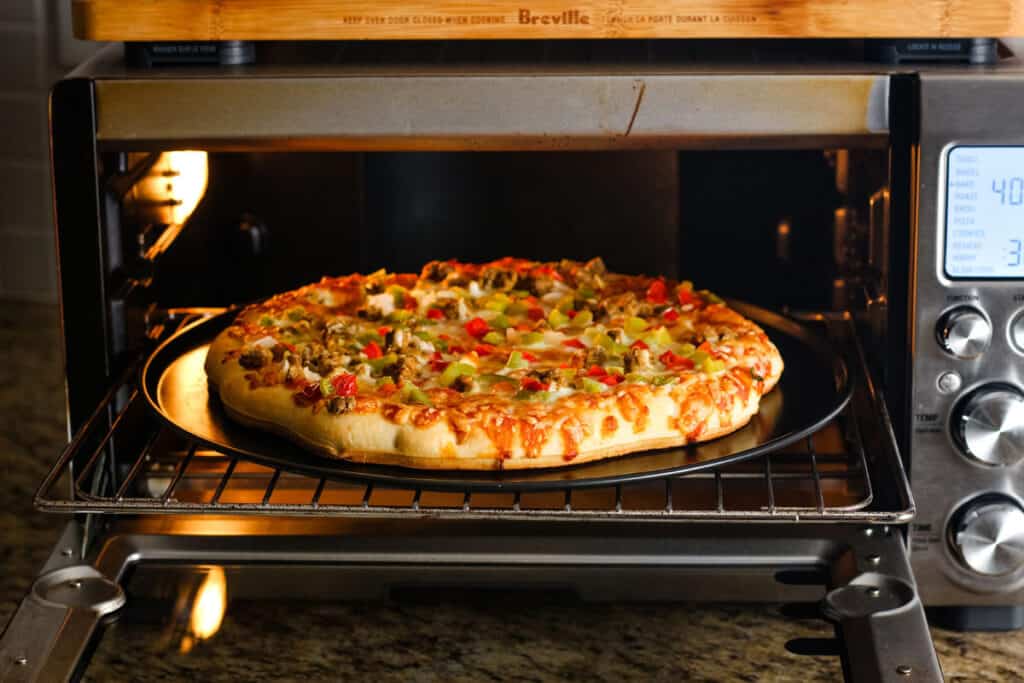
Credit: toasterovenlove.com
Frequently Asked Questions
What Temperature Do You Cook Pizza In A Pan?
Cook pizza in a pan at 400°F to 425°F for a crispy crust and even cooking. Preheat pan and oven.
Should Pizza Be At 375 Or 400?
Bake pizza at 400°F for a crisp crust and even cooking. Use 375°F for thicker, denser pan pizzas. Preheat oven and pan for best results.
How Long To Cook Pan Pizza At 550 Degrees?
Cook pan pizza at 550°F for 8 to 12 minutes. Preheat oven and pan for a crispy crust. Check for golden-brown edges and bubbly cheese before removing.
What Temperature To Cook Pizza On A Metal Pan?
Cook pizza on a metal pan at 400°F to 425°F for a crispy crust and even cooking. Preheat oven and pan.
Conclusion
Finding the right pan cooking temperature makes all the difference. Aim for a balance between crisp crust and cooked toppings. Preheating your oven and pan helps achieve a golden-brown finish. Keep an eye on your pizza to catch bubbles or uneven spots.
Using these simple tips, you can enjoy tasty pan pizzas every time. Happy cooking and enjoy your delicious homemade pizza!

As the author of the “Ultimate Pizza Guide: Recipes, Tips & Secrets Revealed,” I’m dedicated to sharing my love for pizza and empowering others to create delicious homemade pizzas with ease. Join me on a journey to uncover the secrets to perfecting your pizza game!