Are wooden pizza peels safe to use? If you love making pizza at home, this question probably crosses your mind.
You want to handle your dough easily, avoid sticking, and keep your kitchen tools clean and hygienic. Wooden pizza peels are popular for their natural feel and non-stick qualities, but are they truly safe for your food and your health?
You’ll discover the truth about wooden pizza peels, their benefits, potential drawbacks, and how to use and care for them properly. Keep reading to find out if a wooden peel is the right choice for your pizza nights.

Credit: www.qcc.edu
Wooden Vs Metal Peels
Choosing between wooden and metal pizza peels depends on how you use them. Both types have unique qualities that suit different pizza-making steps. Understanding their strengths helps you pick the right peel for your kitchen.
Benefits Of Wooden Peels
Wooden peels hold a natural non-stick surface. They absorb some moisture from the dough, preventing it from sticking. This makes them perfect for building and launching pizzas. Their thicker surface gives more control when shaping the dough. Wooden peels also feel sturdy and comfortable in hand. They do not get hot from oven heat. A wooden peel is ideal for pizza prep work.
Advantages Of Metal Peels
Metal peels have very thin edges. This helps slide easily under cooked or uncooked pizzas. Their slim design makes transferring pizzas simpler. Metal peels are durable and easy to clean. They do not absorb odors or stains. Some metal peels have perforations that let excess flour fall off. This stops burning flour on pizza bottoms. Metal peels can get hot, so use care when handling them.
When To Use Each Type
Use a wooden peel to shape and launch your pizza. Its non-stick surface helps slide the pizza into the oven smoothly. After baking, switch to a metal peel to remove the pizza. The thin metal edge slides under the crust without damaging it. Many cooks keep both peels ready for different steps. This method makes pizza-making easier and safer.
Safety Concerns With Wooden Peels
Wooden pizza peels are popular for their natural look and ease of use. Yet, some safety concerns arise when using them. Understanding these issues helps keep your kitchen safe and your pizzas perfect.
Heat Resistance And Handling
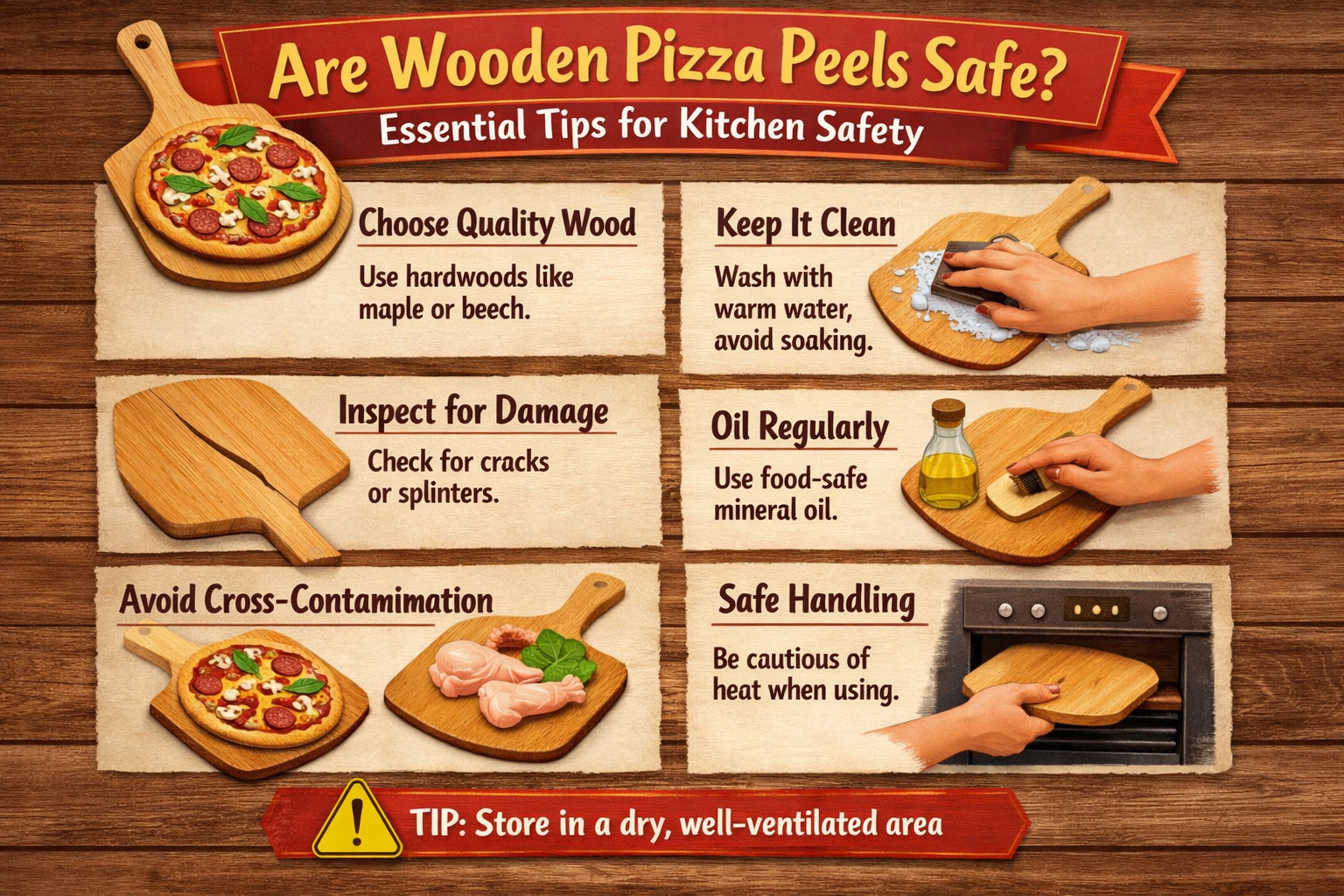
Wood handles heat better than metal. It does not get as hot to touch. This reduces the risk of burns while moving pizzas. However, wooden peels can char or crack near very high heat. Avoid placing them too close to the oven fire. Always use oven mitts as a safety measure.
Hygiene And Cleaning Challenges
Wood is porous, meaning it absorbs moisture and food particles. This can lead to bacteria growth if not cleaned well. Wooden peels cannot be soaked in water for long. Instead, wipe them with a damp cloth and dry immediately. Regular oiling helps keep the surface sealed and cleaner.
Potential For Odor Absorption
Wood can absorb strong smells from food. This affects the taste of future pizzas. Garlic, onions, and spices may leave lingering odors. To prevent this, clean the peel soon after use. Occasionally, sanding the surface removes trapped smells and refreshes the wood.
Maintaining Wooden Pizza Peels
Wooden pizza peels need regular care to stay safe and last long. Proper maintenance stops damage and keeps the peel clean. A well-kept wooden peel also prevents food contamination. Small efforts in cleaning, oiling, and storing make a big difference.
Proper Cleaning Techniques
Clean the peel right after use. Use warm water and mild soap. Avoid soaking the wood for a long time. Scrub gently with a soft brush or sponge. Do not use harsh chemicals or steel wool. Dry it quickly with a clean towel. Let it air dry standing up to avoid moisture build-up.
Oiling And Conditioning Tips
Apply food-grade mineral oil to keep the wood hydrated. Rub the oil evenly with a cloth. Let the oil soak in for a few hours or overnight. Wipe off any extra oil before using again. Condition the peel once a month or when it looks dry. This prevents cracks and keeps the surface smooth.
Storage Recommendations
Store the peel in a dry place away from heat. Avoid leaving it near ovens or direct sunlight. Keep it standing or hanging to prevent warping. Do not stack heavy items on top of the peel. Proper storage helps maintain shape and prevents damage.

Credit: www.qcc.edu
Tips For Safe Use
Using wooden pizza peels safely ensures a smooth cooking experience. These tips help prevent accidents and improve handling. Follow simple steps to protect your hands and keep your pizza slide-ready.
Proper care makes wooden peels last longer and stay effective in the kitchen.
Avoiding Burns And Injuries
Wooden peels do not conduct heat like metal ones. Still, the handle and edges can get hot near the oven. Always wear oven mitts or heat-resistant gloves. Keep your hands clear of the oven door to avoid burns. Use long, steady movements to prevent slipping and dropping your pizza. Never leave the peel resting on a hot surface.
Using Flour Or Semolina For Easy Sliding
Sprinkle flour or semolina on the peel before placing dough. These powders reduce sticking and help the pizza slide off smoothly. Do not use too much; a light dusting is enough. Semolina works well because its coarse texture creates space under the dough. This tip saves time and avoids tearing your pizza while transferring.
Combining Wooden And Metal Peels
Wooden peels are perfect for building pizzas. Metal peels work best for moving pizzas in and out of the oven. Use the wooden peel to assemble and launch your pizza. Use the metal peel to retrieve the cooked pizza quickly. This method keeps your pizza intact and prevents burns. Each peel plays a clear role in the cooking process.
Choosing The Right Peel
Choosing the right pizza peel can affect your cooking ease and pizza quality. Each type offers unique benefits. Wooden peels feel traditional and natural. Metal peels provide strength and precision. Understanding your needs helps pick the best option for your kitchen.
Considering Your Cooking Style
Think about how you prepare your pizza. Wooden peels work well for assembling dough and toppings. They prevent sticking because wood absorbs moisture slightly. Metal peels slide easily under cooked pizzas for quick removal. Choose a peel that fits your usual pizza-making steps.
Durability And Longevity Factors
Wooden peels require gentle care to last longer. They can absorb moisture and odors if not dried properly. Metal peels resist heat and are easier to clean. They last longer in busy kitchens. Consider how often you cook and how much maintenance you want.
Budget And Personal Preference
Wooden peels are often less expensive and have a classic look. Metal peels cost more but offer high durability. Your budget may guide your choice. Also, pick the peel you feel comfortable using. Handling ease matters for a smooth cooking experience.

Credit: www.amazon.com
Frequently Asked Questions
Is It Better To Use A Wooden Or Metal Pizza Peel?
Wooden peels prevent dough from sticking, ideal for assembling pizzas. Metal peels have thin blades, perfect for sliding pizzas in and out of ovens. Use wooden peels for prep and metal peels for baking to get the best results.
Can You Use A Wooden Pizza Peel?
Yes, you can use a wooden pizza peel. It prevents dough from sticking and works well for assembling and launching pizzas.
What Are The Benefits Of A Wooden Pizza Peel?
Wooden pizza peels prevent dough from sticking by absorbing moisture. They provide a natural non-stick surface and are ideal for assembling pizzas. Their thicker design offers sturdy support, making launching pizzas easier. Wooden peels stay cool and add a traditional touch to pizza preparation.
Do You Need To Oil A Wooden Pizza Peel?
Yes, oiling a wooden pizza peel helps prevent drying and cracking. Use food-safe mineral oil for best results. Apply oil regularly to maintain its condition. Avoid vegetable oils as they can become sticky or rancid. Proper oiling extends the peel’s lifespan and keeps it smooth.
Conclusion
Wooden pizza peels are generally safe when used properly and maintained well. They help prevent dough from sticking and offer a natural, non-stick surface. Cleaning them regularly and avoiding prolonged moisture keeps them in good shape. For best results, many use a wooden peel for assembling pizzas and a metal peel for oven handling.
This combination balances safety, ease, and functionality in pizza making. Choose the peel that fits your cooking style and care routine for safe, enjoyable pizza preparation.

As the author of the “Ultimate Pizza Guide: Recipes, Tips & Secrets Revealed,” I’m dedicated to sharing my love for pizza and empowering others to create delicious homemade pizzas with ease. Join me on a journey to uncover the secrets to perfecting your pizza game!