When was the last time you gave your pizza cutter blade some real attention? You might think it’s just a simple kitchen tool, but keeping your pizza cutter sharp and clean can make a huge difference every time you slice through that cheesy, delicious pie.
If your blade feels dull or sticky, it’s not just annoying—it can affect how smoothly you cut and even the taste of your pizza. In this guide, you’ll discover easy, practical tips to maintain your pizza cutter blade so it stays razor-sharp and ready for action.
Stick with me, and you’ll never struggle with a dull pizza wheel again. Ready to make every slice perfect? Let’s dive in!
Blade Cleaning Techniques
Keeping your pizza cutter blade clean is key for safe and easy slicing. Proper blade cleaning techniques help stop rust and keep the blade sharp. Clean blades also prevent old food bits from sticking and causing bad smells.
Follow simple cleaning steps after every use. This protects your cutter and makes pizza nights hassle-free.
Hand Washing Tips
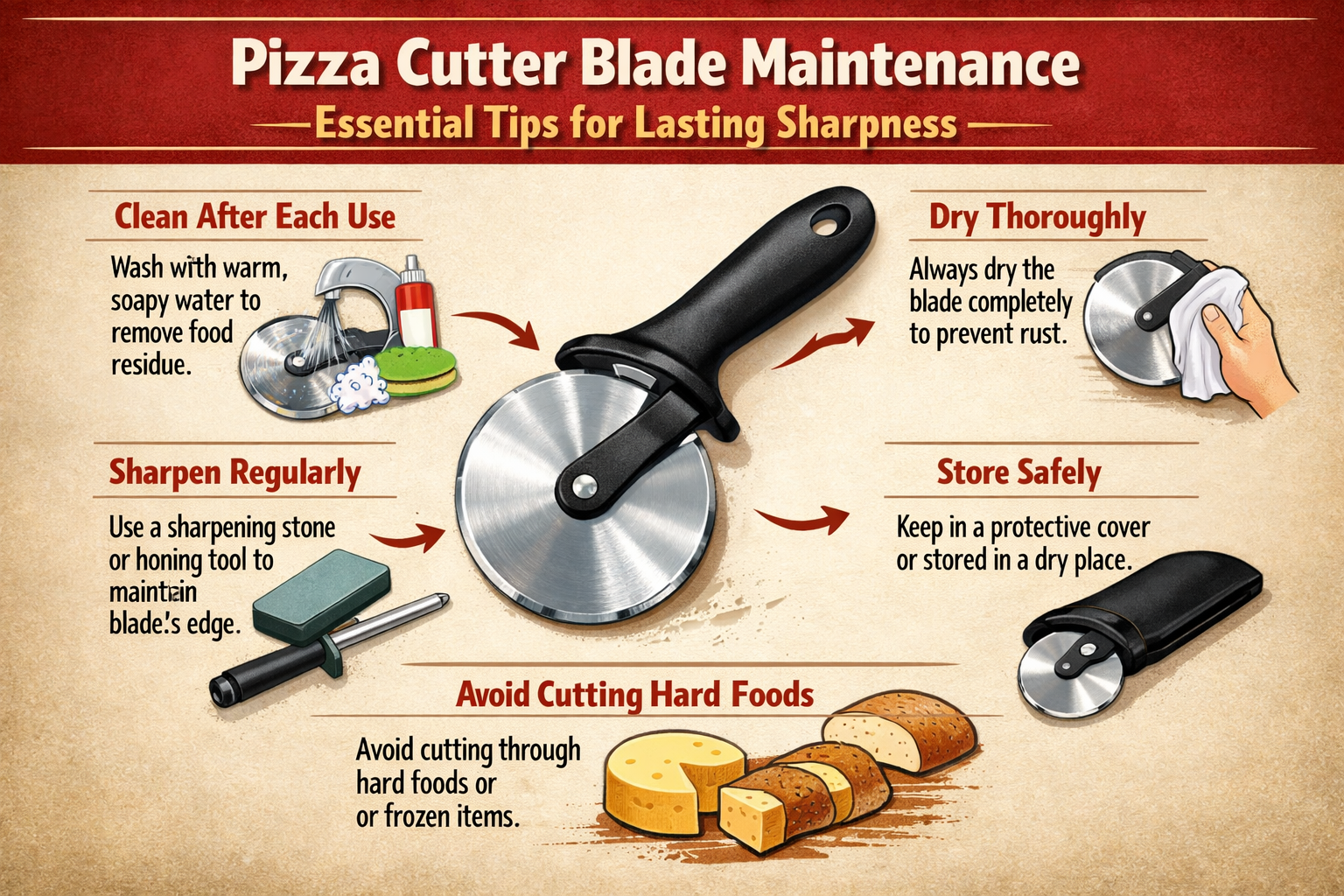
Always wash your pizza cutter blade by hand. Use warm water and mild dish soap. Clean the blade carefully to avoid cuts. Hold the handle firmly and wipe the blade with a soft sponge. Rinse off all soap to stop buildup.
Avoiding Harsh Scrubbers
Do not use steel wool or rough scrubbers. These can scratch and dull the blade. Scratches hold food and germs. Stick to soft cloths or non-abrasive sponges. Gentle cleaning keeps the blade smooth and safe.
Removing Stubborn Residue
For stuck-on cheese or sauce, soak the blade in warm soapy water. Let it sit for 10 minutes. Use a soft brush or cloth to scrub off residue. For tough spots, try a paste of baking soda and water. Rub gently, then rinse well.
Sharpening Methods
Maintaining a sharp pizza cutter blade ensures smooth, clean cuts every time. Dull blades tear the crust and make slicing difficult. Various sharpening methods keep the blade in top shape. Some tools require skill, while others are simple for anyone to use. Choose the best method to keep your pizza cutter effective and safe.
Using Whetstones
Whetstones offer a traditional way to sharpen pizza cutter blades. Soak the stone in water for 5 to 10 minutes before use. Hold the blade at a 20-degree angle. Move it across the stone in a circular or back-and-forth motion. Repeat on both sides until the blade feels sharper. Whetstones provide a smooth edge and last a long time.
Alternative Sharpening Tools
Diamond sharpeners and ceramic rods work well for quick blade touch-ups. These tools are easy to use and require less preparation. Glide the blade along the sharpener at a consistent angle. Use light pressure to avoid damaging the blade. These tools are portable and great for fast maintenance.
When To Sharpen Your Cutter
Sharpen your pizza cutter when it no longer slices cleanly. If you feel resistance or the blade drags on the crust, it needs sharpening. Regular use means sharpening every few months. For occasional use, sharpen once or twice a year. Keeping the blade sharp saves time and improves cutting quality.
Disassembly For Maintenance
Regular disassembly of your pizza cutter blade helps keep it sharp and hygienic. Taking the cutter apart allows you to clean hidden spots and remove food bits. This step improves the cutter’s lifespan and performance. Below are simple steps for safe disassembly and maintenance.
How To Take Apart Your Cutter
Start by placing the cutter on a flat surface. Hold the handle firmly. Look for a screw or bolt near the blade center. Use a screwdriver or wrench to loosen it slowly. Remove the screw and separate the blade from the handle. Keep small parts safe for reassembly.
Cleaning Between Components
Use warm, soapy water to wash the blade and handle parts. A soft brush can reach tight spots between the blade and handle. Avoid harsh cleaners that can dull the blade. Rinse each piece well to remove soap. Dry all parts completely to stop rust or damage.
Reassembling Safely
Align the blade and handle back together carefully. Insert the screw or bolt into its original place. Tighten it gently but firmly to hold parts in place. Check that the blade spins freely without wobbling. Your pizza cutter is ready for use again.

Credit: kyokuknives.com
Preventing Rust And Damage
Preventing rust and damage is key to keeping your pizza cutter blade sharp and safe. Rust weakens the metal and makes cutting harder. Damage like nicks or bends can ruin the blade’s edge. Simple care steps extend the life of your cutter and improve your pizza experience.
Proper Drying Techniques
After washing, dry the blade immediately. Use a soft cloth to remove all moisture. Avoid air drying because water spots can cause rust. Make sure to dry both sides and the handle area. Proper drying keeps the metal shiny and strong.
Storage Recommendations
Store your pizza cutter in a dry place. Avoid leaving it in damp drawers or near the sink. Use a blade guard or a case to protect the edge. Keep it separate from other utensils to prevent scratches. Good storage stops rust and keeps the blade ready to use.
Avoiding Dishwasher Damage
Dishwashers can harm your pizza cutter blade. The hot water and harsh detergents cause corrosion. The blade may also hit other items and get nicked. Hand wash your cutter with warm, soapy water instead. This gentle cleaning method preserves the blade’s quality.
Routine Care Habits
Routine care habits keep your pizza cutter blade sharp and safe. Simple steps extend its life and improve cutting performance. Consistent maintenance prevents rust and buildup. Follow these easy habits for a clean and smooth-cutting blade.
After-use Cleaning
Rinse the blade immediately after use. Use warm water and mild soap to remove food residue. Avoid harsh scrubbers that can damage the blade. Dry the blade completely with a soft cloth. Store in a dry place to prevent rust.
Regular Inspection
Check the blade for nicks or dull spots every week. Look at the handle for loose parts or cracks. Tighten screws or bolts if needed. Replace the blade if it becomes too dull or damaged. A sharp blade cuts more easily and safely.
Lubrication Tips
Apply a small drop of food-safe oil to the blade’s axle. This keeps the wheel spinning smoothly. Wipe off any extra oil to avoid sticky buildup. Repeat lubrication every few weeks or after deep cleaning. Proper lubrication reduces wear and tear.

Credit: garrettwade.com

Credit: www.amazon.com
Frequently Asked Questions
Are You Supposed To Sharpen A Pizza Cutter?
Yes, you should sharpen a pizza cutter to maintain its cutting efficiency. Use a sharpening stone or foil for quick touch-ups. Regular sharpening keeps the blade sharp and extends its lifespan.
How Do You Clean A Cutter Blade?
Clean a cutter blade by wiping off debris carefully with a soft cloth. Use warm, soapy water to wash. Avoid soaking handles. Dry the blade immediately to prevent rust. For stubborn residue, use baking soda or vinegar gently. Always handle the blade cautiously to avoid cuts.
How To Care For A Pizza Cutter?
Unscrew the handle to separate the blade. Wash the blade in warm, soapy water or dishwasher. Wipe and dry the handle only. Avoid soaking the handle. Sharpen blade occasionally with a file or whetstone for smooth cuts.
How To Make A Cutter Sharp Again?
Sharpen a cutter by sliding the blade along a sharpening stone or fine file. Repeat a few times per side. Clean and dry the blade after sharpening to maintain sharpness.
Conclusion
Proper pizza cutter blade maintenance keeps your tool sharp and safe. Clean the blade after each use with warm, soapy water. Avoid soaking the handle to prevent damage. Regularly check the blade for dull spots and sharpen as needed. Store the cutter in a dry place to stop rust.
Simple care extends your cutter’s life and improves every slice. Taking these small steps saves money and effort later. Enjoy perfectly cut pizza every time with a well-maintained blade.

As the author of the “Ultimate Pizza Guide: Recipes, Tips & Secrets Revealed,” I’m dedicated to sharing my love for pizza and empowering others to create delicious homemade pizzas with ease. Join me on a journey to uncover the secrets to perfecting your pizza game!