You love serving pizza on a beautiful wooden board—it adds charm and makes your meal feel special. But have you ever wondered how to keep that pizza serving board looking great and safe to use?
If you want your board to last and stay clean without harboring unwanted bacteria, you need to care for it the right way. You’ll discover simple, effective tips to clean, maintain, and protect your pizza serving board so it stays fresh and ready for every delicious slice.
Keep reading to learn how easy it is to extend the life of your favorite kitchen companion!

Credit: www.walmart.com
Choosing The Right Pizza Serving Board
Choosing the right pizza serving board enhances your pizza experience. The board must suit your style and needs. It should be durable, easy to clean, and look good on your table. This guide helps you pick the best board for your pizza nights.
Types Of Materials
Pizza serving boards come in many materials. Wood is popular for its natural look and durability. Bamboo is lightweight and eco-friendly. Plastic boards offer easy cleaning but may scratch easily. Marble boards stay cool and add elegance. Each material has pros and cons to consider.
Wood Vs. Other Options
Wood boards absorb moisture and help keep pizza warm. They give a rustic, cozy feel. Plastic boards resist stains and are dishwasher safe. Marble boards are heavy and cold, perfect for thin crust pizzas. Wood requires regular oiling to stay in good shape. Plastic and marble need less maintenance but may lack charm.
Size And Shape Considerations
Boards come in round, square, and rectangular shapes. Round boards match pizza shape well. Rectangular or square boards offer more space for toppings. Choose a size that fits your pizza and table space. A larger board works for family pizzas. Small boards suit personal pizzas or appetizers.
Cleaning Techniques
Keeping your pizza serving board clean is key to its longevity and safety. Proper cleaning techniques remove food residue and prevent bacteria buildup. Follow these simple steps to maintain your board’s beauty and hygiene.
Daily Washing Tips
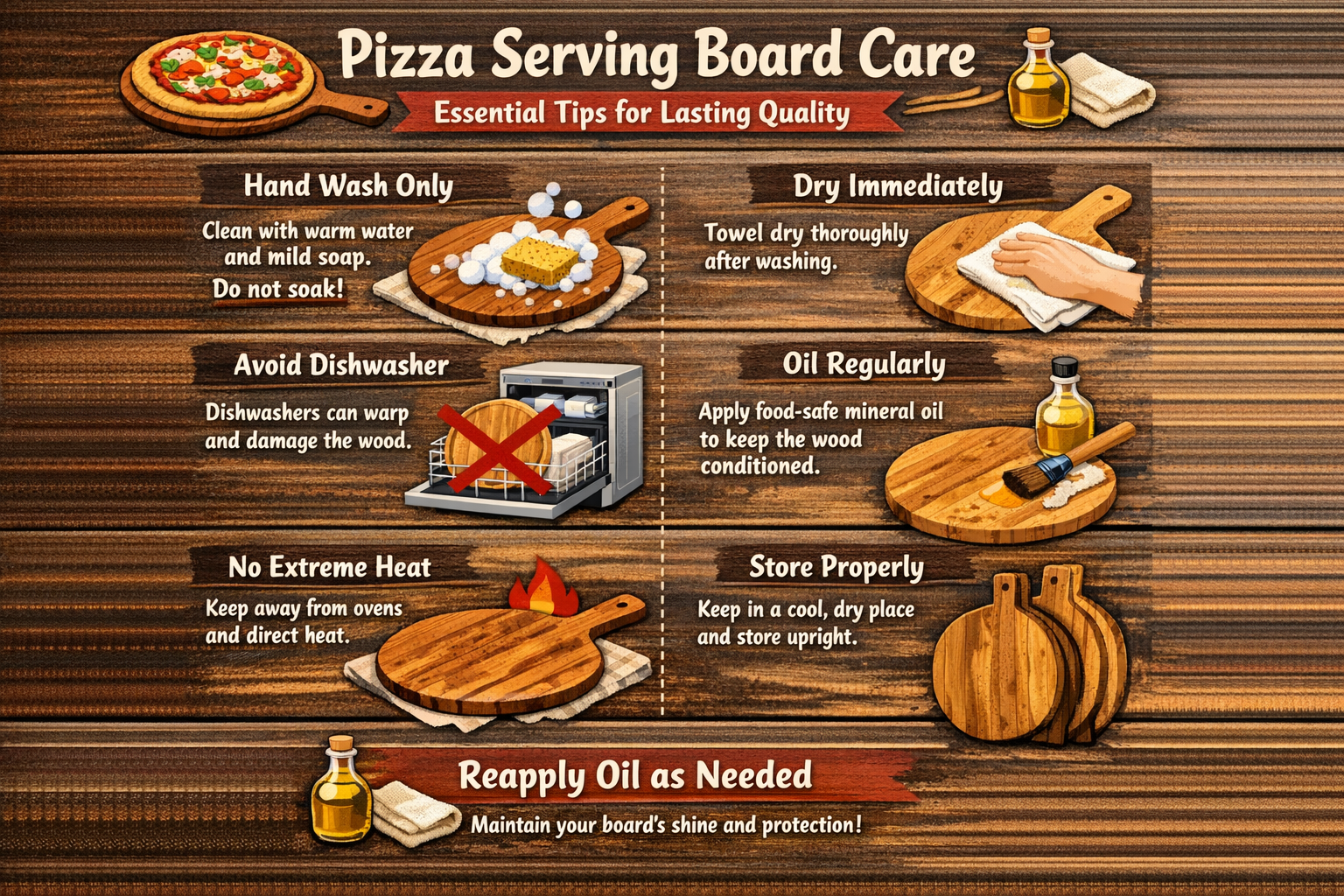
Use warm water and mild dish soap after each use. Avoid soaking the board in water to prevent warping. Gently scrub with a soft sponge or cloth. Rinse well to remove all soap. Dry the board immediately with a clean towel. Stand it upright to air dry completely.
Removing Stains And Odors
Sprinkle coarse salt over the board surface. Cut a lemon in half and rub it on the salt. Let it sit for five minutes to absorb stains and smells. Rinse with warm water and dry thoroughly. This natural method brightens the wood and freshens odors. Repeat monthly or as needed for best results.
Sanitizing Safely
Mix one part white vinegar with four parts water for a safe sanitizer. Wipe the board with this solution using a clean cloth. Avoid harsh chemicals that can damage the wood. Let the board air dry after sanitizing. Regular sanitizing keeps your pizza board safe and clean without harming its surface.
Drying And Storage
Proper drying and storage are essential for keeping your pizza serving board in top shape. Moisture left on the board can cause damage and shorten its lifespan. Storing the board correctly prevents warping and maintains its natural beauty.
Proper Drying Methods
After washing, wipe the board with a clean cloth. Stand it upright or lean it against a wall to air dry. Avoid laying the board flat while wet. This helps air reach all sides and speeds drying. Never put a wooden board in the dishwasher. High heat and water can damage the wood.
Avoiding Warping And Cracks
Rapid drying or uneven moisture can cause warping. Keep the board away from direct heat sources like ovens or sunlight. Let it dry slowly at room temperature. Regularly oil the board with food-safe oil to keep it hydrated. This reduces the risk of cracks and splits.
Ideal Storage Conditions
Store the board in a cool, dry place with good air circulation. Avoid stacking heavy items on top of it. If possible, store the board vertically. This prevents pressure and moisture buildup. Proper storage keeps your pizza board flat and ready to use.

Credit: www.amazon.com
Conditioning Your Board
Conditioning your pizza serving board keeps it strong and beautiful. Wood can dry out and crack without care. Conditioning adds moisture and protects the surface. This helps prevent stains and odors from soaking in. Proper care also makes cleaning easier and extends the board’s life. Use the right products and methods to keep your board in top shape.
Using Food-grade Oils
Food-grade oils soak into the wood to keep it hydrated. Mineral oil is a popular choice because it is safe and odorless. Apply a small amount of oil with a clean cloth. Rub it evenly over the entire board surface. Let the oil absorb for several hours or overnight. Wipe off any extra oil before using the board again. Avoid cooking oils; they can go rancid and smell bad.
Applying Wax And Creams
Wax and creams add an extra protective layer on top of the oil. They seal the surface and help repel water and stains. Use a beeswax-based product for the best results. Warm the wax slightly before applying. Spread it evenly with a soft cloth or your fingers. Let it set for a few hours, then buff it to a shine. This step helps maintain the board’s smooth feel and durability.
Frequency Of Conditioning
Condition your pizza serving board regularly to keep it healthy. A good rule is once a month for frequent use. For boards used less often, every two to three months is enough. Check the wood’s dryness by dropping a few water drops on it. If the water soaks in quickly, it is time to condition. Consistent care prevents cracks and keeps the board looking fresh.
Handling Wear And Damage
Pizza serving boards face daily wear from knives, heat, and moisture. Proper care helps keep them safe and long-lasting. Knowing how to handle wear and damage protects your board’s look and function.
Small scratches and marks are normal. Watch for deeper damage that can trap food or bacteria. Timely repairs and knowing when to replace the board keep your pizza service hygienic.
Detecting Deep Cuts
Look closely at your board’s surface. Deep cuts appear as grooves or cracks. These spots collect food crumbs and moisture. This can cause bacteria buildup and odors.
Use a bright light to spot uneven surfaces. Run your fingers over the board to feel grooves. If cuts are rough or wide, the board needs attention.
When To Replace Your Board
Replace the board if cracks go through the wood. Large splits weaken the structure and risk breaking. Also, if deep cuts cannot be sanded out, get a new board.
Boards with strong odors or stains that don’t clean well should be replaced. A damaged board risks food safety and affects your presentation.
Minor Repairs And Maintenance
Fix small scratches with fine sandpaper. Sand lightly along the grain to smooth the surface. Clean the board after sanding to remove dust.
Apply food-safe mineral oil or board cream to protect the wood. This helps prevent cracks and keeps moisture out. Repeat oiling regularly for best results.
Preventing Bacterial Growth
Preventing bacterial growth on your pizza serving board is key for safe and enjoyable meals. Boards can harbor bacteria if not properly cared for. Understanding how different materials behave helps you keep your board clean and safe. Simple steps maintain a hygienic surface and extend your board’s life.
Wood’s Natural Properties
Wood has tiny pores that absorb moisture and bacteria. Bacteria get trapped inside the wood and dry out. Without moisture, bacteria cannot survive long. Some wood types contain natural oils that fight bacteria. This makes wooden boards less prone to harmful germs. Wood also heals small cuts, reducing places for bacteria to hide.
Comparing Wood And Plastic Boards
Plastic boards can develop deep grooves from knives. These grooves trap food and bacteria easily. Bacteria multiply quickly in these hidden spots. Plastic surfaces stay wet longer, helping bacteria survive. Wooden boards dry faster and trap bacteria inside. This helps kill bacteria naturally over time. Wood is often safer if cleaned properly.
Maintaining Sanitary Surfaces
Clean your board right after use with hot, soapy water. Avoid soaking wood in water to prevent warping. Dry the board fully with a towel or air dry. Regularly apply food-safe mineral oil to protect the wood. Oil creates a barrier against moisture and stains. Replace boards if deep cracks or cuts appear. These areas are tough to clean and hold bacteria.
Tips For Longevity
Proper care extends the life of your pizza serving board. Following simple steps keeps it strong and looking good. Small daily actions prevent damage and wear. Protect your investment with easy maintenance.
Avoiding Excess Moisture
Water is the biggest enemy of wooden boards. Avoid soaking or washing with too much water. Use a damp cloth for cleaning instead of running water. After cleaning, dry the board immediately with a towel. Standing water causes wood to swell and crack. Keep the board away from humid places or direct water contact.
Using The Board Correctly
Use the board only for serving or cutting pizza. Avoid chopping hard foods like bones or frozen items on it. Heavy knives can leave deep cuts that trap bacteria. Use a soft cloth or brush for cleaning, not abrasive sponges. Do not place the board in the dishwasher or microwave. Heat and harsh detergents damage the wood.
Regular Inspection Routines
Check the board often for cracks or deep scratches. Small cracks can grow and cause bacteria build-up. Sand lightly if the surface feels rough or uneven. Apply food-safe mineral oil or beeswax regularly to keep the wood hydrated. This treatment prevents drying and cracking. Replace the board if damage becomes severe or hard to clean.
Credit: ssr.vn
Frequently Asked Questions
Is It Better To Oil Or Sanitize A Cutting Board?
Sanitize cutting boards regularly to kill bacteria and maintain hygiene. Oil wooden boards to prevent drying, cracking, and warping. Both steps ensure longevity and safety.
How To Properly Maintain A Cutting Board?
Clean cutting boards with hot, soapy water after each use. Dry completely to prevent warping. Oil regularly with food-grade mineral oil. Use salt and lemon to sanitize naturally. Replace boards with deep cuts to avoid bacteria buildup.
How Long Do Bacteria Live On A Wood Cutting Board?
Bacteria on wood cutting boards usually die within hours to a day due to wood’s natural antibacterial properties and drying effects. Proper cleaning and drying speed this process and prevent bacterial survival.
Is It Better To Oil Or Wax A Cutting Board?
Oiling a cutting board nourishes and protects the wood, preventing cracks and warping. Wax seals and adds extra moisture resistance. For best care, oil regularly and use wax occasionally.
Conclusion
Taking care of your pizza serving board keeps it strong and beautiful. Always clean it well with warm, soapy water after use. Dry the board completely to avoid cracks and warping. Regularly apply food-safe oil to protect the wood and prevent damage.
Avoid soaking the board or using harsh chemicals that can harm its surface. Replace the board if deep cuts or cracks appear to keep food safe. A well-maintained board lasts longer and makes pizza time more enjoyable. Simple care steps make a big difference every day.

As the author of the “Ultimate Pizza Guide: Recipes, Tips & Secrets Revealed,” I’m dedicated to sharing my love for pizza and empowering others to create delicious homemade pizzas with ease. Join me on a journey to uncover the secrets to perfecting your pizza game!