
As an Amazon Associate, we earn from qualifying purchases. This post contains affiliate links – if you buy through them, we may earn a commission at no extra cost to you.
Finding the right stone for your oven can change how you bake at home. Whether you want a crispy crust on a pizza or a better rise on your bread, the material and size you pick matter. An Old Stone Pizza Stone Review helps you see the differences between ceramic, cordierite, and steel surfaces. Some options focus on even heat, while others are built for high-heat grilling or extra-large batches. Each pick below is judged on the same three things — what it’s strong at, what it gives up, and what living with it would ask of you.
1. Old Stone Pizza Kitchen Rectangular Pizza Stone

Best for: Home cooks wanting a versatile, durable, all-purpose baking surface.
This rectangular stone is made from cordierite, a material built to handle high heat up to 1450°F. You can use it in your kitchen oven or on a grill for pizzas, breads, and roasted vegetables. It is a reliable choice.
Strengths:
- Withstands heat up to 1450°F safely.
- Designed to eliminate soggy pizza centers.
- Versatile for bread and vegetable baking.
- Simple rinse and air dry cleaning.
Trade-offs:
- Requires careful cooling before cleaning.
- Not for use with soap products.
Ensure your oven fits the 14×16-inch frame.
| Best for | Why |
|---|---|
| Pizza lovers | Prevents soggy centers consistently |
| Bread bakers | Transfers heat evenly for rise |
| Grill masters | Handles high heat on grills |
2. Old Stone Round Pizza Stone

Best for: Bakers who prefer a classic round shape for pizzas.
This stone is crafted from a blend of lead-free clays and is designed for use in standard home ovens. It focuses on even heat transfer to help you get restaurant-quality crusts on your homemade pizzas and pastries. Because it’s a round design, it fits easily into most round or large rectangular ovens without needing extra clearance on the sides.
Strengths:
- Built from durable, non-cracking clay.
- Transfers oven heat very evenly.
- Lead-free material construction.
- Fits well in most ovens.
Trade-offs:
- Limited to 500 degrees Fahrenheit.
- No soap cleaning allowed ever.
This stone is easy to manage for weekly round pizzas.
| Best for | Why |
|---|---|
| Round pizza fans | Perfect shape for standard pies |
| Pastry makers | Even heat for delicate crusts |
| Home bakers | Simple to use and clean |
3. Old Stone Pizza Steel

Best for: Those who want professional-style results at lower oven temperatures.
This steel surface is much more conductive than traditional stone, offering twice the heat capacity of ceramic options. It comes pre-seasoned and ready to use, with a moat on the reverse side to catch drips from fatty foods like steaks or pepperoni. Its heavy-duty construction means it’s resistant to warping, even when used at high temperatures.
Strengths:
- Pre-seasoned with vegetable oil.
- Dual-sided with a grease moat.
- Extremely resistant to warping.
- Versatile for searing or baking.
Trade-offs:
- Heavier than standard ceramic stones.
- Requires manual seasoning maintenance.
Using this steel will change your weekly routine because it heats up efficiently.
| Best for | Why |
|---|---|
| Crust enthusiasts | Mimics high-heat pizza ovens |
| Meat lovers | Moat prevents grease flare-ups |
| Busy cooks | Ready to use immediately |
4. Ohio Stoneware Pizza Stone

Best for: Buyers who want a natural, unglazed, and chemical-free baking surface.
This stone is made from vitrified stoneware that’s fired at temperatures over 2000 degrees Fahrenheit. It’s designed to be a worry-free, natural surface that absorbs and distributes heat evenly for a brown, crispy crust. Because it’s unglazed and natural, you don’t have to worry about chemical coatings.
Strengths:
- Fired at high temperatures for durability.
- Completely free of added chemicals.
- Distributes heat for even browning.
- Ideal for use in residential ovens, pizza ovens, and grills.
Trade-offs:
- Limited to 500 degrees Fahrenheit.
- Requires gentle, soap-free cleaning.
This stone is simple and natural.
| Best for | Why |
|---|---|
| Health-conscious users | Natural, unglazed, chemical-free |
| Microwave users | Safe for oven and microwave |
| Beginners | Simple, reliable heat distribution |
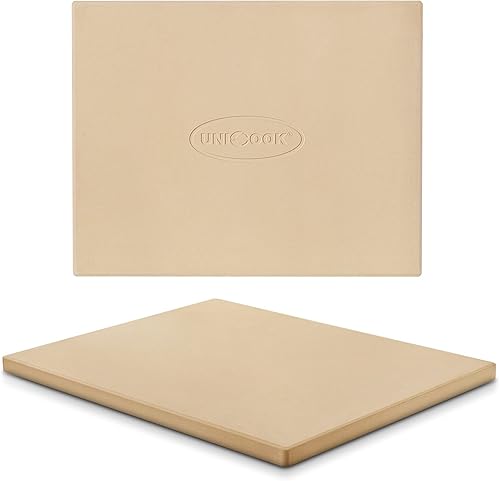
5. Unicook 15 x 12 Inch Rectangular Pizza Stone
Best for: People who enjoy grilling pizzas outdoors.
This 15×12-inch cordierite stone is designed for even heat distribution, ensuring you don’t get burnt edges or cold, soggy middles.
Strengths:
- Withstands heat up to 1450 degrees.
- Porous surface absorbs excess moisture.
- Includes a handy plastic scraper.
- Reversible for double the life.
Trade-offs:
- Needs 1-2 inches of oven clearance.
- Not suitable for larger 12-inch pizzas.
Measure your oven to ensure proper airflow.
| Best for | Why |
|---|---|
| Grill users | Handles high heat effectively |
| Frozen pizza fans | Absorbs moisture for crispness |
| Cookie bakers | Even heat prevents burnt edges |
6. RSVP International Pizza Tool Kitchen Collection

Best for: Large families needing to bake bigger pizzas.
At 16.5 inches in diameter, this cordierite stone is a great choice for large pizzas. It’s about half an inch thick, which helps it retain heat for a tender, crispy crust.
Strengths:
- Large 16.5-inch diameter surface.
- Heavy and durable cordierite material.
- Promotes an even, crispy bake.
Trade-offs:
- Requires full cooling before cleaning.
- Very heavy compared to smaller stones.
Ensure your oven accommodates its wide diameter.
| Best for | Why |
|---|---|
| Large families | Fits large, family-sized pizzas |
| Long-term users | Performance improves with age |
| Crust fans | Prevents soggy, wet bottoms |
7. 19 Inch Round Stone

Best for: Serious backyard pizza chefs.
This extra-large round stone is made in the United States and is certified non-toxic and lead-free.
Strengths:
- Guaranteed against thermal shock cracking.
- Certified non-toxic and lead-free.
- Made in the United States.
- Ideal for BBQ and wood ovens.
Trade-offs:
- Very large for standard home ovens.
- Heavier than standard baking stones.
This is ideal for large grills or outdoor ovens.
| Best for | Why |
|---|---|
| BBQ cooks | Won’t crack on grills |
| Outdoor chefs | Handles wood-fired oven heat |
| Safety-focused buyers | Certified non-toxic and lead-free |
8. Round Pizza Baking Stone 9″ Diameter

Best for: Small kitchens or single-serving baking.
This 9-inch round stone is a compact option for those who don’t need a massive baking surface. It’s non-absorbent and stick-resistant, making it great for sandwiches, toast, and pastries. It’s built to resist odors and stains, keeping it clean even after frequent use.
Strengths:
- Compact 9-inch diameter size.
- Naturally stick-resistant surface.
- Resists odors, stains, and scratches.
- Uniform baking for crispier crusts.
Trade-offs:
- Too small for standard pizzas.
- Limited to smaller baking items.
This stone is perfect if you’re mostly toasting sandwiches or baking small batches of pastries.
| Best for | Why |
|---|---|
| Single users | Perfect size for one person |
| Toast lovers | Crispier than standard surfaces |
| Small kitchens | Fits easily in any oven |
9. Old Stone Rectangle Stone
Best for: Bakers who want a reliable, engineered surface.
This 14×16-inch stone distributes heat evenly. It features a heat core designed to stop soggy centers and can handle temperatures up to 1472°F. It’s a solid, no-nonsense choice for anyone who wants a crispy, golden crust on their homemade pizza.
Strengths:
- Withstands heat up to 1472°F.
- Engineered heat core prevents soggy centers.
- Evenly distributes heat for browning.
- Simple maintenance of rinse and air dry.
Trade-offs:
- Requires a large oven space.
- Seasons slowly over many uses.
You’ll find this stone very consistent once you learn to preheat it properly.
| Best for | Why |
|---|---|
| Pizza makers | Crispy, golden crust every time |
| Frequent bakers | Seasons over time for flavor |
| Serious chefs | High heat tolerance for ovens |
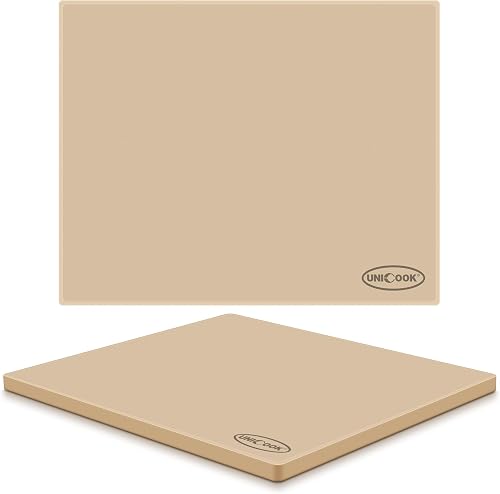
10. Unicook 20 x 16 Inch Extra Large Pizza Stone
Best for: Large batches and multi-pizza baking.
This 20×16-inch stone is massive, allowing you to bake multiple pizzas or loaves of bread at once. It’s made of cordierite and can handle temperatures up to 1450°F. The stone is reversible, so you can flip it over to extend its life if one side shows too much wear.
Strengths:
- Large surface for multiple items.
- Reversible for double the life.
- Withstands heat up to 1450°F.
- Includes a useful plastic scraper.
Trade-offs:
- Requires a very large oven.
- Heavy at 15.8 lbs.
This stone is for feeding a crowd.
| Best for | Why |
|---|---|
| Large families | Bakes 2-3 pizzas at once |
| Bread makers | Large surface for multiple loaves |
| Power users | Reversible for longer surface life |
Side by Side
The following table helps you compare the materials, sizes, and specific uses of each stone so you can find the best fit for your kitchen and cooking style.
- Made of durable cordierite
- Heat resistant up to 1450°F
- Absorbs and transfers heat evenly
- Bakes bread, pastries, and vegetables
- Crafted from lead-free clays
- Absorbs and transfers heat evenly
- Recommended up to 500 degrees
- 20x more conductive than ceramic
- Preseasoned with vegetable oil
- Dual sided with moat
- 1/4-inch thickness, 14"L x 14"W x 0.25"H
- Natural, unglazed pizza stone
- Absorbs and distributes heat evenly
- Safe up to 500 degrees F
- Fired at over 2000 degrees F
- 15" L x 12" W, 0.6" thick
- Cordierite, heat resistant up to 1450°F
- Absorbs moisture for crispy crust
- Includes plastic dough cutter
- 16.5" diameter, 0.5" thick
- Promotes even bake
- Made of durable cordierite stone
- Non-glazed, lead free, non-toxic
- Guaranteed against thermal shock
- Non-absorbent, stick-resistant surface
- Resists odors, stains, and scratches
- Made of premium cordierite
- Absorbs and transfers heat evenly
- Withstands temperatures up to 1472°F
- Heat core eliminates soggy centers
- 20" x 16" x 0.6" size
- Cordierite, heat resistant up to 1450°F
- Absorbs moisture for crispy crust
- Includes plastic dough cutter
How to Judge One of These
Material and Heat Tolerance
The material of your stone determines how well it handles the intense heat of an oven or grill. Cordierite is the most common material for pizza stones because it’s designed to resist thermal shock, which prevents the stone from cracking when it hits a hot surface. Always check the maximum temperature rating, as some stones are meant for standard home ovens while others can handle the higher heat of a BBQ or wood-fired oven. A stone that can withstand high temperatures will last longer and give you more flexibility with your recipes.
Size and Oven Clearance
Before you buy, measure the inside of your oven carefully. Most manufacturers recommend leaving at least one to two inches of space on all sides of the stone to allow for proper airflow. If the stone is too large, it may restrict airflow and prevent even cooking. Think about what you plan to cook—if you want to bake large, family-sized pizzas, you need a rectangular stone that fits your oven’s width. If you only bake small, round pizzas, a round stone is easier to store and handle. Always check the dimensions provided in the listing against your oven’s interior rack space.
Surface and Maintenance
A good pizza stone should have a porous surface that absorbs moisture from the dough, which is the secret to a crispy, golden crust. However, this porosity means you must never use soap or detergents. Soap will soak into the stone and leave a chemical taste that can ruin your food. Instead, look for a stone that comes with a scraper, which makes it much easier to remove burnt flour or cheese residue after the stone has cooled. Over time, your stone will darken and develop a natural seasoning, which is a sign that it’s working well. A stone that’s easy to clean and maintain will be much more enjoyable to use on a regular basis.
Related guides
Frequently Asked Questions
Will this stone fit in my standard home oven?
Most stones fit standard home ovens, but you must measure your rack before ordering. Ensure at least an inch of clearance on all sides for proper heat circulation. For smaller ovens, choose a 9-inch or 10-inch stone rather than a 20-inch model.
How do I clean my stone after the first use?
Never use soap to clean your pizza stone. After the stone cools completely, use a stiff brush or plastic scraper to remove food residue. You may rinse it with warm water, but ensure it air dries for a full day before reuse to prevent thermal shock.
What should I do if my stone develops dark spots?
Dark spots are a normal part of using a pizza stone and do not indicate damage. These spots occur as oils from dough and toppings soak into the porous surface. Do not scrub these spots with soap or abrasive cleaners, as this can damage the stone’s surface.
Can I use my pizza stone for more than just pizza?
These stones are versatile tools suitable for baking bread, pastries, cookies, and roasting vegetables. The porous material absorbs moisture from dough, which helps create a crispier crust and a better rise. Note that the stone may retain flavors from greasy foods like pepperoni pizza.
Is the simplest pick here enough for a beginner?
You don’t need the largest model to get great results; you just need a stone that fits your oven and heats up evenly. Focus on preheating your stone for a substantial period before you start baking, as this is the most important step for a professional-quality crust.
Conclusion
The Old Stone Rectangular Stone is the best choice for pizza enthusiasts because of its versatility and heat tolerance, while the 19 Inch Round Stone is the pick for those with outdoor grills and large-scale needs.

As the author of the “Ultimate Pizza Guide: Recipes, Tips & Secrets Revealed,” I’m dedicated to sharing my love for pizza and empowering others to create delicious homemade pizzas with ease. Join me on a journey to uncover the secrets to perfecting your pizza game!


